The Iran war is forcing markets to reprice inflation, energy security and central-bank options in one movement. The market crisis deepened on March 12, 2026
Iran War Reprices Markets
The trading day began with a frantic sell-off in Frankfurt. Traders watched screens turn red as German 10-year government bond yields surged to 2.95 percent, heights not seen since October 2023. This spike reflects a growing realization that the widening conflict in Iran will not be a short-term disruption. Borrowing costs for the Eurozone's largest economy are climbing because energy prices have breached key psychological levels. Brent crude oil now sits comfortably above $120 per barrel, forcing investors to abandon their hopes for imminent interest rate cuts. Markets are pricing in a scenario where price pressures remain stubborn through the end of the year. Inflation fears are no longer theoretical. Energy prices are dictating every move on the trading floor. Crude oil futures remain stubborn at levels that force central bankers to reconsider their previous growth-oriented promises. Bloomberg reports that German bonds fell for a second consecutive day, driving up borrowing costs for a nation already struggling with manufacturing stagnation.
Shipping Costs Feed Inflation
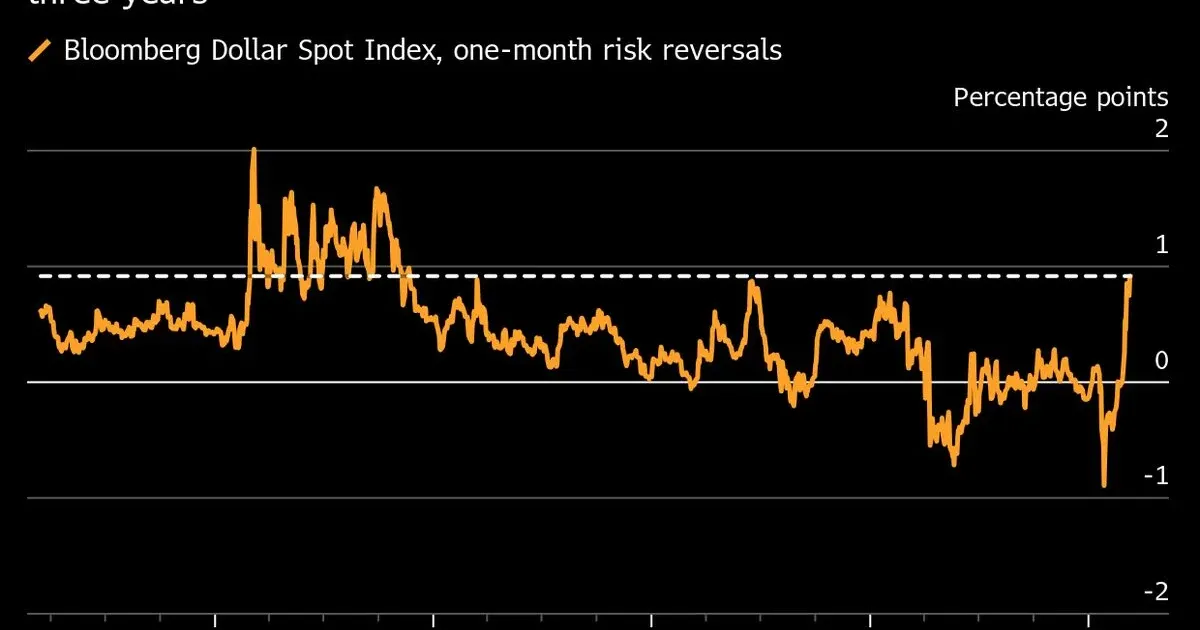
The Iran war revived the inflation problem investors hoped was fading. Investors are dumping safe-haven debt in favor of cash because they are convinced that consumer prices will remain sticky for the foreseeable future. If the conflict in the Middle East expands further, the pressure on German industry could become existential. Currency markets tell a similar story of desperation and flight to quality. Options markets show the US dollar is currently on a path toward a fresh 2026 high. Bullish sentiment surrounding the greenback has reached levels not seen since 2022. While some analysts hoped for a cooling period in the first quarter, the geopolitical reality in the Middle East has provided a structural floor for the dollar's value. Every uptick in oil prices translates directly into dollar demand because petroleum remains denominated in the American currency. This pattern of bullishness indicates that global capital is seeking the relative safety of US Treasuries and cash reserves. Options traders are paying high premiums for protection against further dollar strength. Call options, which allow investors to bet on a rising currency, have seen a massive volume increase over the last forty-eight hours.
Bonds Lose the Rate-Cut Story
Implied volatility in major currency pairs like the Euro-Dollar and Yen-Dollar has reached its highest point in eighteen months. High-stakes hedging strategies are now the primary driver of capital flows. Investors are not just looking for profit; they are desperate to preserve the purchasing power of their portfolios as inflation threatens to erode gains elsewhere. Berlin officials are grappling with the reality of an energy-starved economy. Yields on German 10-year bonds climbed because the market expects the government to increase its borrowing to fund energy subsidies. Industrialists in the Ruhr Valley are sounding the alarm. Chemical giants and steel manufacturers depend on affordable energy to maintain their competitive edge. When gas and electricity prices surge, these companies must either pass the costs to consumers or halt production. Neither option is attractive for a government trying to avoid a deep recession. This flight to the dollar illustrates how fragile the euro remains when energy security is compromised.
Companies Face Margin Pressure
Capital is voting with its feet. Risk management has become the primary concern for institutional funds. Supply chains are fraying once again under the pressure of closed shipping lanes in the Persian Gulf. Economic forecasts for the second quarter are being revised downward hourly. Still, the American economy appears more resilient than its European counterparts.
The US has the benefit of domestic energy production, which acts as a buffer against global price shocks. Still, no market is entirely immune to the inflationary ripples spreading from the Middle East. Global capital is concentrating in New York because every other destination looks increasingly risky. Policy makers in Frankfurt and Washington find themselves trapped. Christine Lagarde faces a European economy that is slowing down but experiencing high inflation.
Central banks now face the trap directly. Jerome Powell must decide if the US Federal Reserve should hike rates further to combat energy-driven price increases or hold steady to avoid a banking crisis. Both institutions are watching the bond market for clues. Yields are rising because the market believes the inflation fight is far from over. If energy costs do not stabilize soon, the central banks may be forced to choose between a deep recession and runaway price increases. Market participants are positioning for a long winter of high rates and low liquidity.
History shows that geopolitical shocks often have long tails.
Markets Are Pricing a Policy Trap
The Iran war pushed global markets toward a renewed inflationary crisis. Oil, shipping and insurance costs threatened corporate margins, while bond investors reassessed the likelihood of rate cuts. Companies face pressure from both weaker demand and higher input costs. The shock is harder to absorb because demand can weaken while import costs rise.
War can raise energy, shipping, insurance and commodity costs even when consumer demand is slowing. That is hard for central banks because they must choose between fighting inflation and protecting growth during a supply shock. The market fear is not only higher prices.
It is the policy trap created when inflation rises for reasons central banks cannot fix without hurting growth.