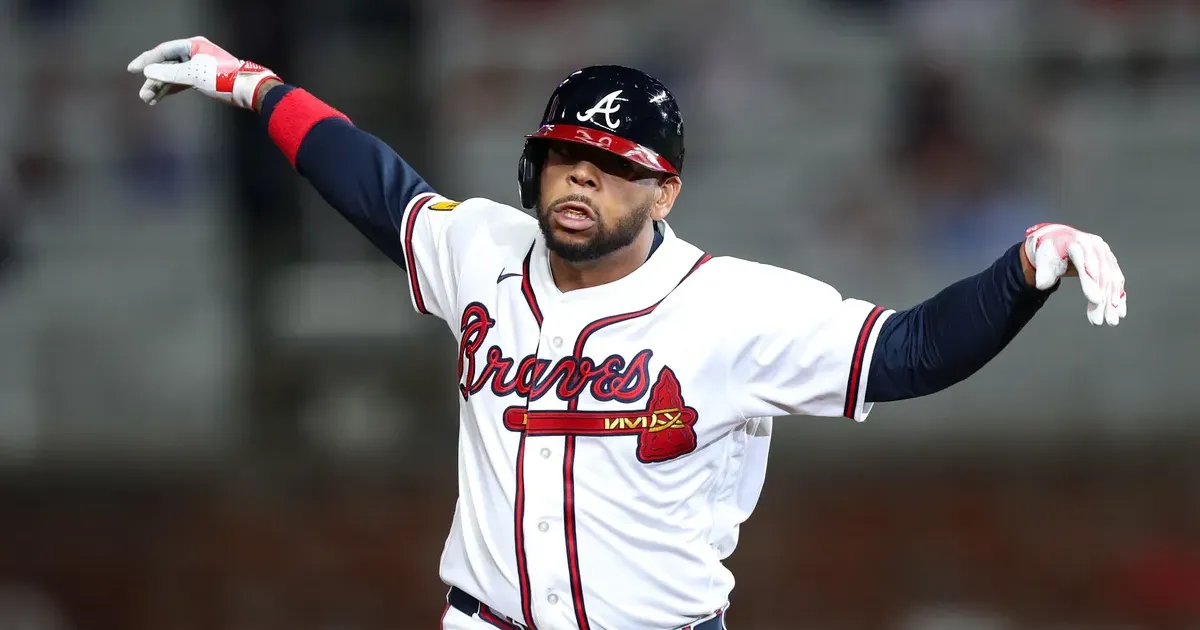
Dominic Smith's first game for Atlanta ended with the kind of swing baseball turns into instant memory. On March 28, 2026, less than two weeks after his mother Yvette LaFleur died of cancer, Smith hit a walk-off grand slam at Truist Park to beat the Kansas City Royals 6-2.
The baseball facts were rare enough on their own. Smith was making his Braves debut. Atlanta had been held down for most of the night. The ninth inning became a six-run reversal, and Smith's final swing turned a tie into a four-run win. MLB, citing Elias, noted that he became the first player to hit a walk-off grand slam in his debut with a new team.
A Six-Run Ninth Changed The Frame
The Braves did not build the night gradually. They flipped it late. Kansas City had carried the game deep enough that the ending felt less like a normal comeback than a sudden release. Smith came to the plate with the bases loaded, and one swing off the Royals bullpen gave Atlanta its first loud home moment of his Braves tenure.
That is the version the box score can hold: Braves 6, Royals 2; Smith, one homer; a walk-off grand slam; a debut no other major leaguer had matched in that exact form. But the box score is too small for what happened around it. The reason the moment spread beyond a normal highlight was not only the rarity. It was the grief attached to the swing.
The Grief Was Not A Backstory
LaFleur died March 15 after a cancer diagnosis the previous fall. Smith had left Braves camp when her health worsened, then returned to a club still deciding how he fit. People and MLB reported that he spoke afterward about feeling her presence and missing her constantly. The interview did not read like a tidy celebration. It read like a son trying to stay upright after a public release of private pain.
Smith said, "I feel her every day."
The line calls for care in telling the story. Sports coverage can easily turn grief into a device that explains a heroic finish. Smith's loss would have been just as real if he had struck out. His mother's death was not made meaningful by the homer; the homer simply gave the public a way to see a small piece of what he was carrying.
A Split Contract Raised The Stakes
Smith's career context sharpened the pressure. A former Mets first-round pick, he had played for the Mets, Nationals, Red Sox, Reds and Giants before reaching Atlanta. The Braves had given him a path, but it was not a ceremonial one. He was trying to turn a spring opportunity and a split major league deal into a defined role on a club with real expectations.
That is the part the sentimental version can miss. A player can be grieving and still be evaluated. A clubhouse can be compassionate and still belong to an industry that makes quick roster decisions. Smith was not only stepping into an emotional night. He was stepping into an at-bat that could shape how a new fan base and a new organization saw him.
By that measure, he could not have given a more emphatic first answer. Braves teammates met him with the usual walk-off celebration, but the tone around him was more protective than theatrical. Manager Walt Weiss and the clubhouse had already treated the family situation as larger than baseball. The swing did not create that support, but it made it visible.
Baseball Got The Ending It Rarely Gives
Baseball likes to present itself as patient and everyday, yet it often asks players to process life on an unforgiving schedule. Games keep coming. Injuries, grief, illness and family crises have to fit around batting practice, travel and roster math. Smith's night resonated because, for once, the schedule gave something back.
The sport is more comfortable with sorrow when it arrives with a tidy ending. A walk-off grand slam gives grief a shape that fans can cheer. Most players dealing with a death in the family do not get that kind of scene. They play quietly, fail publicly or disappear from view for a few days and return to the same measurements as everyone else.
This moment should therefore not be reduced to a neat inspirational clip. It was historic because of the record. It was moving because of LaFleur. It was revealing because Smith had to carry both a mother's death and a player's uncertainty into the same batter's box. For one night, the game did not fix the loss. It simply met him there.