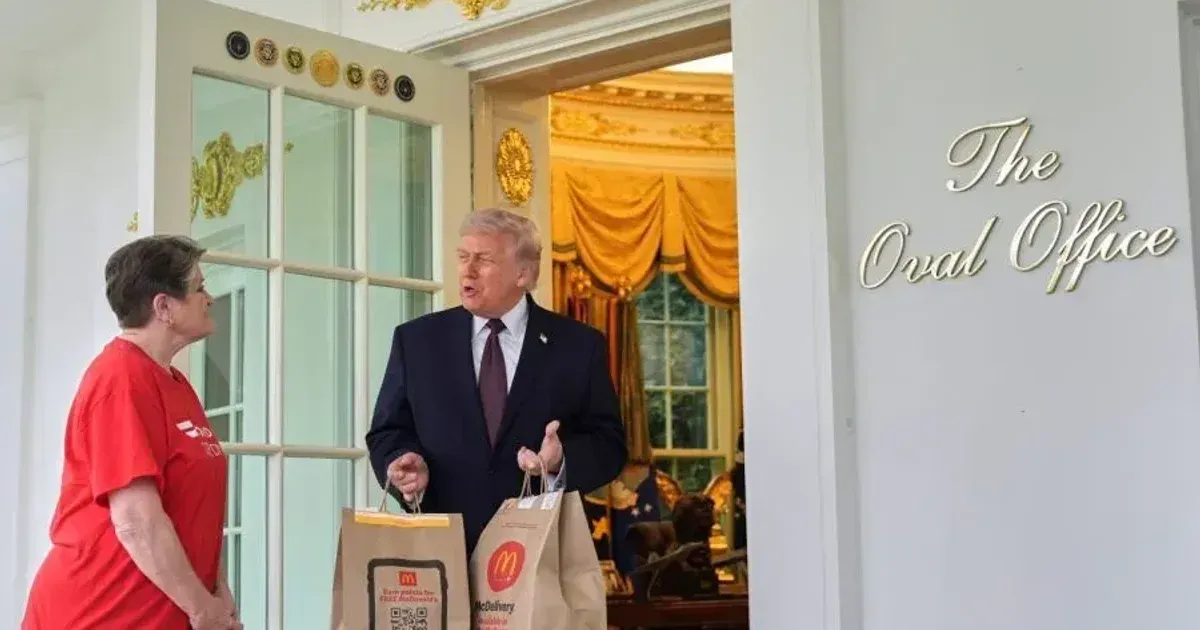
Donald Trump turned a McDonald's delivery with a DoorDash worker into a campaign-style pitch for his no-tax-on-tips proposal, using the event to highlight service and gig-economy jobs. By April 13, 2026, the staging blended fast-food branding, tax policy and working-class messaging ahead of the midterm fight.
McDonald's as Policy Theater
Trump framed the order as proof that the policy reaches workers who depend on tips rather than only business owners. A cash tip, cameras and familiar fast-food imagery allowed the White House to turn a tax rule into a simple visual message. Advisers see delivery drivers, restaurant staff and hotel workers as a politically useful audience because many of them feel squeezed by prices but disconnected from traditional tax debates.
“The reason for this is that I heard you picked the best items, and I wanted to show people what our no tax on tips law looks like in action, Donald Trump said to the delivery driver.”
The event also connected the service economy with gig platforms. Delivery workers occupy a gray area between formal employment and independent contracting, which makes tip taxation especially visible in weekly take-home pay. DoorDash and similar platforms have become part of the administration's argument that flexible work should receive tax relief without waiting for broader labor-law changes.
That framing avoids a harder employment debate. Gig workers often lack the benefits, predictable hours and bargaining structures attached to traditional payroll jobs. By focusing on tips, the White House can promise relief without deciding whether platform workers should be treated more like employees. The political message is clean, even if the labor-policy questions remain unresolved. It also lets Trump speak to workers who may not see themselves in corporate-tax arguments or broader supply-side messaging. The camera-friendly order therefore functions as a shortcut from fiscal design to household budgeting, which is where the campaign wants the issue to live.
No-Tax-on-Tips Fiscal Tradeoff
Supporters say the exemption can raise disposable income quickly for workers in restaurants, delivery, hotels and personal services. The White House has cited large cumulative savings, while critics warn that the policy could encourage employers to hold down base wages and shift more compensation into customer-funded tips. Budget analysts also worry that a broad exemption could reduce federal revenue if more industries try to classify pay as gratuities.
The policy's strongest political appeal is its immediacy. A worker can understand a larger weekly payout faster than a complex credit or deduction. That simplicity helps Trump present the measure as a working-class tax cut even as economists debate its distributional effects and long-term cost.
Implementation will decide how far the promise can go. Congress would need to define which tips qualify, how employers report them and whether high-income workers in tip-heavy industries can benefit. Without clear limits, the exemption could invite aggressive reclassification of pay. With limits that are too narrow, the campaign promise may reach fewer workers than the event suggested. Treasury guidance would also have to separate genuine gratuities from service charges, bonuses and platform incentives, because each category can be reported differently. Those definitions will decide whether the policy is administratively clean or becomes another tax-planning opportunity. State tax treatment may add another layer because workers could see different results depending on where they live and how local governments conform to federal changes. Payroll software, employer reporting and year-end documentation would all need quick updates if Congress moves the proposal on a compressed political calendar.
The White House is defending the cost as part of a worker-focused tax pitch. Officials argue that money left with lower-wage workers will circulate quickly through local spending. Opponents counter that the same workers still lack stable benefits, predictable hours and retirement protections. The unresolved question is whether the policy is a bridge to broader labor reform or a substitute for it.
The delivery staging also showed how the administration wants the debate to look. Instead of focusing on budget tables, Trump presented the proposal through a single worker, a familiar food brand and the promise of visible take-home pay. That image is easier to campaign on than the technical design of a tax exclusion.
Restaurants, delivery platforms and hotel operators will also watch the details closely. Some businesses may welcome a rule that makes tipped work easier to recruit for, while labor advocates will ask whether employers should raise base wages instead. The proposal therefore sits between a tax cut, a campaign symbol and a larger argument over who should carry the cost of service-sector income. That tension explains why the visual event matters. It narrows a complicated distributional fight into a question of whether a worker should keep more of the money a customer already chose to give.
Populist Branding Around Tips
The no-tax-on-tips campaign is a masterclass in the politics of symbolic economics. Donald Trump understands that voters often respond more to tangible gestures than to macroeconomic aggregates. By handing cash directly to a delivery driver in front of cameras, he converts an abstract tax exemption into a visceral transaction. This is not accidental. It is the same instinct that turned fast food into a presidential aesthetic rather than a dietary preference.
Democrats risk underestimating the emotional power of the proposal. Economists can produce legitimate warnings about deficits and wage distortions, but those arguments are difficult to translate into a worker's weekly budget. For a server or driver who keeps an extra $100, the fiscal model matters less than the immediate relief. That is the political terrain Trump wants to occupy.
The policy still deserves scrutiny. A poorly designed exemption could reward employers who shift compensation into tips and leave non-tipped low-wage workers behind. Yet the campaign logic is potent because it speaks in the language of paychecks, not white papers. Whether Congress can write a fair version of the proposal may matter less politically than whether Trump can convince service workers that he saw them first.