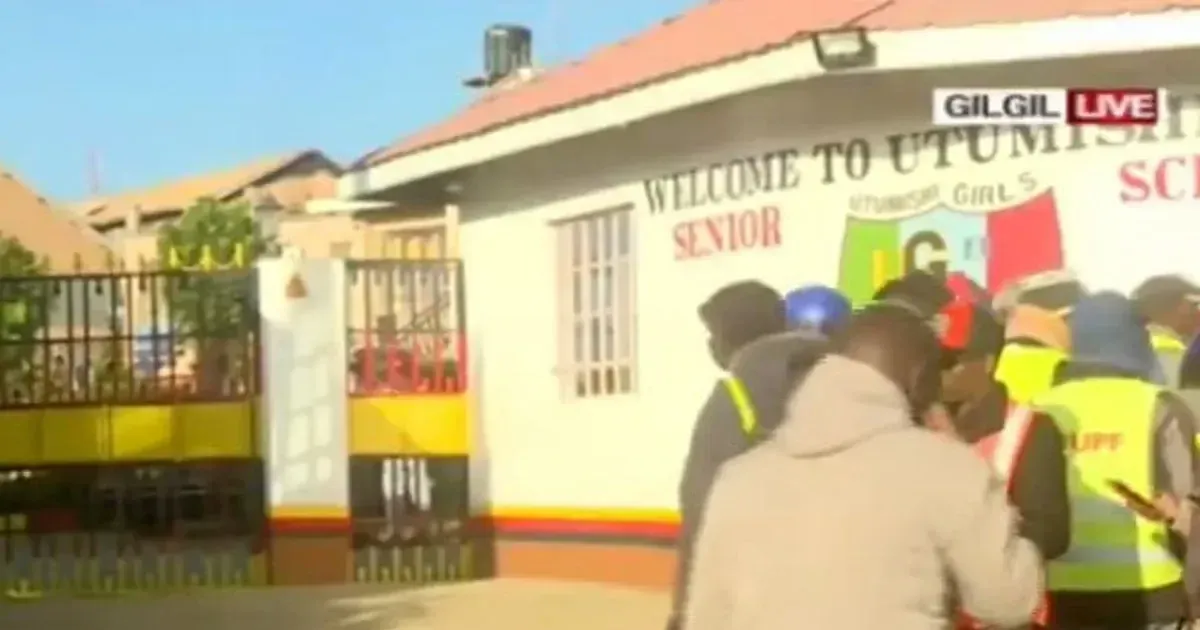
Emergency responders in central Kenya recovered the bodies of 16 students from the charred remains of a girls' boarding school dormitory. The dormitory fire has intensified scrutiny of boarding-school safety standards across Kenya. Parents are demanding to know whether exits, alarms and nighttime supervision were strong enough before the blaze. Proper identification of the victims began early on May 28, 2026, as families arrived at the scene. Law enforcement officials confirmed that the blaze started deep in the night, trapping children before they could reach emergency exits. Search teams continue to sift through the wreckage for any pupils still missing from the registration logs.
Police reports indicate the fire erupted around 1 AM in a single dormitory building. Kenya Police officials stated that the swift movement of the flames prevented many students from escaping the upper floors. Survivors described a scene of panic as smoke filled the narrow corridors of the sleeping area. Forensic teams have begun a methodical sweep of the site to locate any additional victims buried under the collapsed roof.
Medical facilities in the region are currently treating 73 injured pupils. Many victims suffered from smoke inhalation and burns sustained during the frantic evacuation. Hospitals in the surrounding district increased their staffing levels to manage the sudden influx of patients. Specialists are monitoring several students who remain in critical condition after sustaining severe respiratory injuries.
Local law enforcement deployed specialized search-and-rescue units to the site immediately. DW News reported that these teams are working through the structural debris to ensure every student is accounted for. Authorities have not yet released a final manifest of the students who were present in the building when the fire broke out. This process requires cross-referencing school attendance records with the lists of survivors at various medical centers.
Overnight Dormitory Fire and Rescue Operations
Central Kenya has faced scrutiny over school infrastructure and emergency preparedness in recent years. This tragedy has reignited discussions about the enforceability of safety codes in residential educational facilities. Building regulations require specific window and door configurations to allow for rapid exit, but investigators have not confirmed if the dormitory met these standards. Previous safety audits often found that metal grilles on windows, designed for security, often block emergency egress.
Sixteen fatalities were officially recorded by midday local time. BBC World noted that the death count remains fluid as rescue operations proceed. First responders used heavy machinery to clear collapsed roofing materials that blocked several entry points to the dormitory. Smoke still rose from the site hours after the main fire was extinguished by local brigades.
Search-and-rescue operations are ongoing, with the number of casualties yet to be confirmed.
Education ministry representatives arrived at the school to begin an administrative review of the incident. These officials are coordinating with police to determine the exact origin of the fire. Early theories suggest an electrical fault may have triggered the blaze, although technical experts have yet to verify this claim. Electrical systems in older boarding schools are frequently cited as a major risk factor by fire safety inspectors.
Safety audits for boarding schools in the region were supposedly updated last year. Records show that many institutions struggle with overcrowding, which complicates evacuation procedures during a crisis. The sheer number of students assigned to the affected dormitory may have contributed to the high casualty count. Overcrowding often results from the high demand for boarding placements in high-performing rural schools.
Investigation into Boarding School Safety Standards
Kenyan police have cordoned off the school grounds to preserve evidence. Forensic teams are examining the wiring and kitchen areas near the dormitories. Witnesses reported seeing flames near the center of the building before the fire spread to the roof. Investigators are also speaking with school security guards to establish the exact timeline between the discovery of the fire and the arrival of emergency services.
Relief organizations are providing counseling to the surviving students and their families. Many parents stood outside the school gates for hours awaiting news of their children. The school has been closed indefinitely while the investigation continues. Red Cross teams have set up a temporary station to provide food and water to the distraught families waiting for news.
Government leaders have promised a transparent inquiry into the causes of the disaster. Public calls for stricter oversight of private and public boarding schools have intensified in the hours following the news. Legislative changes regarding school housing safety are expected to be fast-tracked in the coming weeks. Local governors have ordered immediate inspections of all similar facilities in the neighboring counties.
Every dormitory in the county is now under immediate review by local safety inspectors.
What the Investigation Could Change
Regional governments across East Africa face mounting pressure to overhaul school dormitory infrastructure. The frequency of residential school fires in the territory points to a persistent gap between established safety regulations and actual building maintenance. While Kenya has detailed guidelines regarding dormitory spacing and fire exits, the implementation of these rules varies sharply between districts. Failure to enforce these standards often leaves the most vulnerable populations at risk during nocturnal emergencies. The disaster will likely force a reorganization of how education ministries conduct periodic safety inspections.
Beyond immediate physical repairs, the psychological toll on the student population creates a long-term challenge for regional education boards. The ability of public authorities to guarantee the safety of children in residential schools is a core measure of institutional trust. If the subsequent investigation reveals negligence or a failure to address known hazards, the political fallout could extend to the national education leadership. Stricter licensing for boarding facilities may be the only path forward to prevent a recurrence of such a high-casualty event.