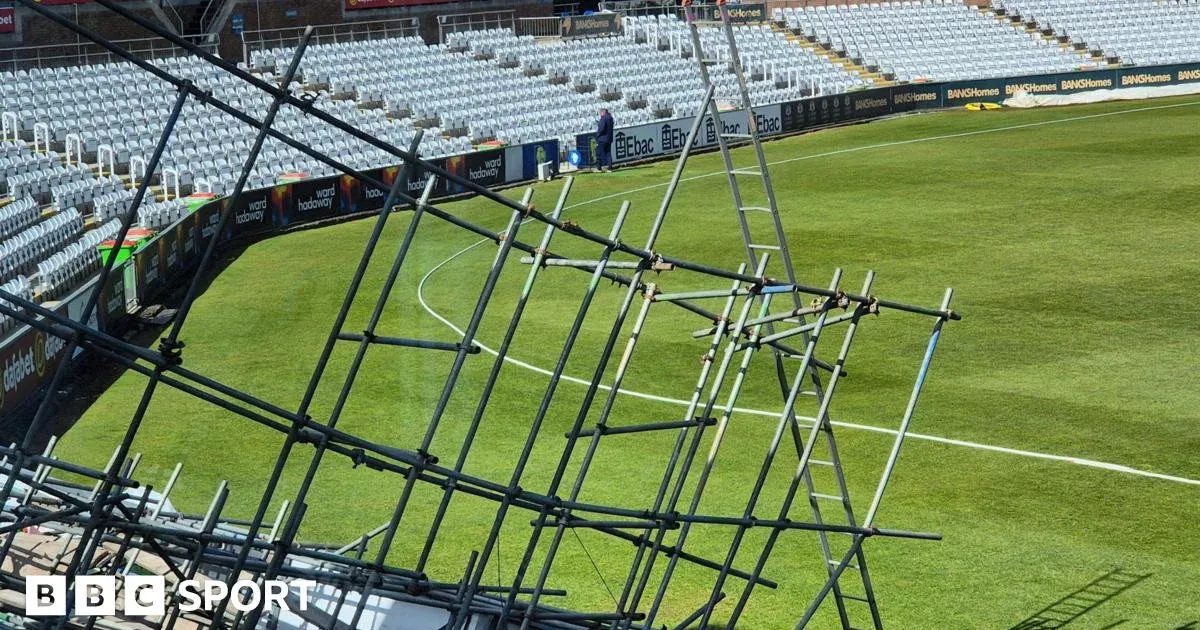
The safety call mattered because cricket grounds depend on public trust as much as scheduling. A county cricket fixture became a public-safety problem before play could resume. Durham County Cricket Club officials ordered the immediate closure of The Riverside ground after structural damage from Storm Dave rendered the venue hazardous for spectators. The April 5, 2026 decision followed an early safety inspection. Maintenance crews discovered the debris and compromised seating areas during a dawn inspection, leading to an urgent request for fans to avoid the vicinity of Chester-le-Street. Security personnel established a cordoned zone around the main pavilion and the temporary seating banks late Saturday night. Meteorologists recorded wind gusts exceeding 70 miles per hour across the North East, causing visible damage to the roofing and lighting gantries at the stadium. Operations ceased entirely by 9:00 AM as engineers conducted a tier-by-tier assessment of the spectator facilities.
Wind and Engineering Limits at The Riverside
Structural integrity became the primary concern for the safety team after the western stands bore the brunt of the overnight gale. Observations from the ground suggest that high-altitude wind patterns accelerated between the stands, creating a localized pressure effect that dislodged perimeter fencing and advertising hoardings. Officials confirmed that the safety of the public cannot be guaranteed until a full forensic engineering report is completed. Rather than risking injury to the thousands of supporters expected for the third day of the County Championship match, the club opted for a total lockout. Every gate remained locked throughout the morning session as staff cleared heavy debris from the pedestrian walkways.
Technical specifications for the venue, which opened in 1995, were tested by the sustained intensity of the pressure systems moving off the North Sea. Earlier reports from the site indicated that loose materials from the roof of the Don Robson Stand had fallen onto the seating below. Repair costs are expected to reach tens of thousands of pounds if structural welding is required on the lighting towers. Insurance adjusters arrived at noon to begin the documentation process. Ground staff focused their efforts on securing the pitch cover mechanisms, which also suffered mechanical stress during the storm.
Storm Dave and the Disruption of Professional Cricket
While The Riverside sat in silence, eight of the nine other professional grounds across England and Wales saw play start as scheduled. This contrast highlights the specific geographic vulnerability of the Chester-le-Street site to northwestern weather fronts. Leicestershire's Grace Road, despite facing similar breezy conditions, managed to proceed with its fixture against Glamorgan. Reporters at other venues noted that while winds were high, the infrastructure remained intact enough to support a crowd. Fans who traveled to Durham from across the county were met with road closures and digital signage advising them to return home.
"Ian Holland has the ball here at Grace Road, a fierce west wind blowing across the ground and billowing at the flags up on the pavilion," noted Tanya Aldred in a live report for The Guardian.
Conditions at Durham were far more severe than those experienced in the East Midlands. Mike McKie, an eyewitness on the spot at The Riverside, reported that the environment felt fundamentally unsafe for play or attendance. No cricket was possible before lunch, and the likelihood of any activity for the remainder of the day stayed extremely low. Internal documents from the club suggest that the decision to abandon the day was unanimous among the safety advisory group. Heavy rain accompanying the wind saturated the outfield, complicating any potential cleanup efforts. Drainage systems at the ground struggled to cope with the sudden influx of surface water.
Durham Cricket Safety Mandates and Venue Inspections
Strict adherence to the Safety at Sports Grounds Act dictated the swift response from the Durham County Cricket Club executive board. Any venue hosting professional sports must pass a rigorous assessment if extreme weather compromises any part of the public infrastructure. Experts suggest that the cantilever roofs common in modern cricket stadiums are particularly prone to uplift during high-wind events. Inspection protocols require every bolt and joint in the affected stands to be manually checked. Failure to comply with these regulations would result in the revocation of the club's safety certificate.
Legal advisors recommended the closure to reduce any potential liability claims from the public. Public announcements via social media and local radio warned against attempts to view the damage from the stadium perimeter.
Cricket matches in the North East often face delays due to precipitation, but structural closures are rare. Records indicate that The Riverside has only faced similar weather-related shutdowns twice in its thirty-year history. Staff members spent the afternoon securing loose signage that had become airborne during the height of the storm. Local police assisted with traffic management around the ground to ensure that emergency vehicles had clear access. Residents in Chester-le-Street reported hearing metal sheeting rattling throughout the night. Wind speeds dropped slightly in the afternoon, allowing for the use of cherry pickers to reach the damaged lighting rigs.
Economic Consequences for County Championship Venues
Financial losses from the abandonment of day three will impact the club’s seasonal revenue projections. Ticket refunds for the day are mandatory under the terms and conditions of the England and Wales Cricket Board. Hospitality packages, which account for a significant part of the match-day income, must also be reconciled. Food and beverage vendors reported meaningful waste as pre-prepared meals could not be sold to the absent crowd. Corporate sponsors lose visibility when television cameras are unable to broadcast from the site. Total lost revenue for a single abandoned day at this level can exceed sixty thousand pounds.
Maintenance budgets for the current fiscal year did not account for large-scale storm repairs. Club directors are likely to meet on Monday to discuss emergency funding for the necessary renovations. Long-term climate data suggests that the frequency of such extreme weather events is increasing in the British Isles. Investing in more resilient stadium materials may be necessary to prevent repeated closures in future seasons. Every hour of lost play diminishes the commercial value of the domestic game. Regional tourism also suffers when major sporting events are cancelled on short notice. Local hotels reported several cancellations from traveling fans who had booked multi-day stays.
Venue Safety Fallout
Relying on aging infrastructure while ignoring the escalating volatility of North Atlantic weather patterns is a strategy rooted in denial. The closure of The Riverside is not a freak accident but a predictable consequence of building lightweight, high-profile structures in exposed coastal corridors. Club executives who prioritize aesthetic pavilion designs over reinforced structural engineering are gambling with the safety of their patrons and the solvency of their organizations. Financial models that fail to price in the total loss of match days due to climate-driven structural failure are essentially works of fiction.
Durham must now confront the reality that its venue is no longer fit for purpose at a time of intensifying storms. Patching the roof and clearing the debris will satisfy the safety inspectors for now, but it does not address the underlying vulnerability of the site. A radical rethink of stadium architecture in the North East is required. If county cricket is to survive as a spectator sport, the venues must be as durable as the athletes on the pitch. This is a call for hardening the infrastructure, even if it comes at the cost of the traditional cricket aesthetic.
Hardened steel and reinforced concrete must replace the flimsy sheet metal and decorative flags that Storm Dave so easily tossed aside. Survival requires pragmatism.