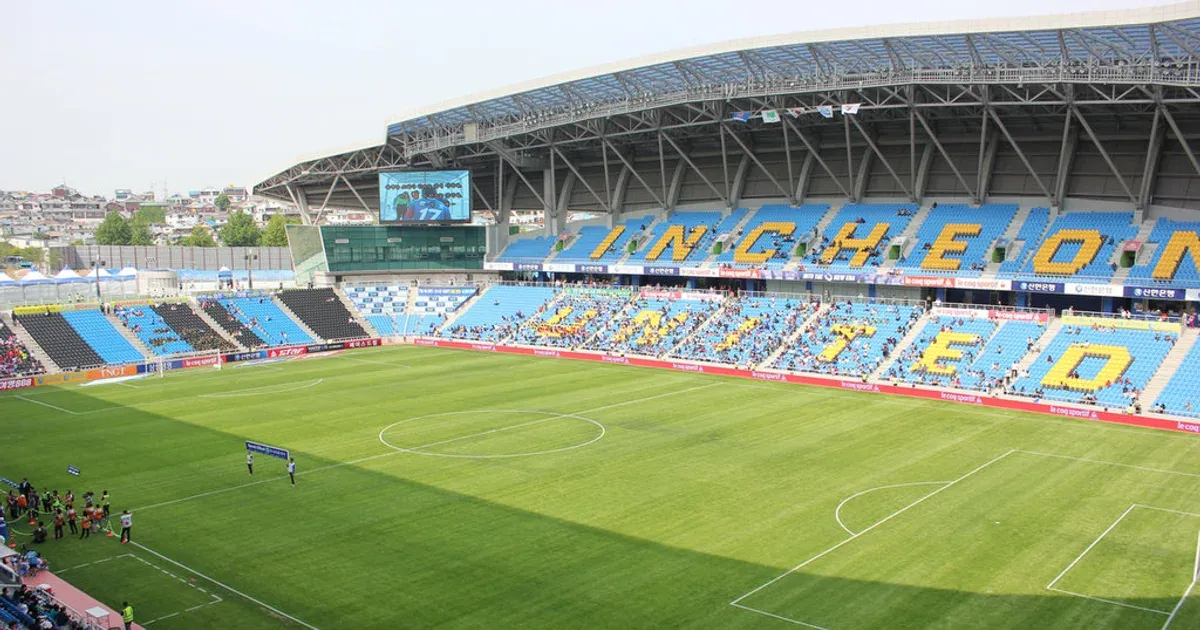
Incheon United forward Stefan Mugosa scored twice that week to secure a 2-1 victory over Gimcheon Sangmu at the Incheon Football Stadium. Victory in this key fixture moved the home side out of last place in the K League 1 standings. The result landed on April 5, 2026, as Incheon tried to climb away from the bottom of the table. Montenegrin striker Stefan Mugosa found the net in both halves, bringing his personal season tally to six goals. His scoring efficiency continues to be the primary reason for the club's recent resurgence in domestic competition. Supporters at the Incheon Football Stadium witnessed the first set of consecutive wins for their team in the 2026 campaign. As a result, the club moved up the table to eleventh place, leapfrogging competitors who failed to secure points during the weekend matches.
Gimcheon Sangmu, the military-affiliated side, struggled to contain the physical presence of the Incheon attack throughout the ninety minutes. Players serving their mandatory military duties make up the entirety of the Gimcheon roster, leading to frequent turnover in the starting eleven. Defense lines for the visitors crumbled early when Mugosa capitalized on a defensive lapse in the 15th minute. Scoring the opener allowed Incheon United to dictate the tempo of the game. Statistics from the first half showed the home side maintaining 58 percent of possession. Midfield control remained with Incheon as they sought to exploit gaps in the tired Gimcheon backline before the interval.
Incheon United Tactical Resurgence
Tactical adjustments implemented by the coaching staff have prioritized a more direct approach to the final third. Long balls aimed at the 192-centimeter frame of Mugosa provided a consistent outlet for under-pressure defenders. This direct style of play bypassed the high press often used by younger, more energetic squads like Gimcheon. Records show that Incheon had struggled with possession-based systems earlier in the spring. Switching to a counter-attacking model has yielded immediate results for the Blue and Black. Scoring opportunities increased by 30 percent over the last two matchdays compared to the season opener.
Incheon United has historically relied on the individual brilliance of its foreign legion to survive relegation battles. Mugosa represents the most successful example of this reliance, having returned to the club after a brief stint in Japan. His familiarity with the K League 1 environment allows him to anticipate the movements of domestic defenders with ease. Later in the match, his positioning during a corner kick sequence resulted in the decisive second goal. Precision in these set-piece situations is now a hallmark of the current Incheon strategy. Training sessions in the week leading up to the Gimcheon match focused heavily on these dead-ball scenarios.
According to a match report from Yonhap Sports, Incheon United used the scoring prowess of Stefan Mugosa to secure their first consecutive wins of the 2026 season.
Stefan Mugosa Impact and Scoring Efficiency
Consistency in front of goal defines the career of the Montenegrin international in South Korea. Stefan Mugosa reached his 5th and 6th goals of the season on April 5, 2026, placing him at the top of the league's scoring charts. Scoring twice in a single match highlights his role as the focal point of the offense. His first goal came from a low drive into the bottom corner after a clever flick from the midfield. Successive matches with multiple goals have boosted team morale sharply. Fans now view the striker as the essential component for avoiding the drop to the K League 2. Professionalism shown by the veteran forward is a model for the younger academy graduates in the squad.
His second goal arrived just before the halftime whistle, effectively crushing the momentum Gimcheon had built in the preceding ten minutes. Scoring at such a critical moment forced the visitors to alter their defensive shape in the second half. Incheon defenders then dropped deeper to protect the two-goal cushion. Physical exhaustion became a factor for the older Incheon squad members late in the game. Substitutions made in the 70th minute helped maintain the energy levels required to see out the win. Managing the workload of key players is a priority for the medical staff during this congested April schedule.
Gimcheon Sangmu Defensive Vulnerability
Gimcheon Sangmu found a late consolation goal but could not bridge the gap created by the early Mugosa brace. Defensively, the military side appeared disorganized when faced with rapid transitions. Players arriving for their service periods often lack the cohesive chemistry found in traditional clubs. Gimcheon Sangmu operates on an 18-month cycle that sees their best talent return to parent clubs just as they reach peak form. Losing established defenders every season creates a perpetual state of rebuilding for the coaching staff. As a result, the team often starts seasons strongly before fading as the physical toll of the top flight accumulates.
Mistakes in the buildup play led directly to the second Incheon goal. Gimcheon midfielders lost possession in their own half, allowing a quick turnover that found Mugosa in space. Pressure from the Incheon supporters amplified the stress on the young Gimcheon defenders. Visiting teams often struggle with the atmosphere at the specialized football stadium in Incheon. Management at Gimcheon will likely look to the summer intake of conscripted players to strengthen their ranks. Current standings show the team sitting in the middle of the pack, though they remain vulnerable to a downward slide. Defeat on April 5, 2026, marks their third loss in five outings.
K League 1 Standings Shift
Tables across the K League 1 underwent serious changes following the Sunday results. Incheon United climbed from 12th to 11th, a move that provides needed breathing room from the direct relegation spot. Survival in the top tier is worth millions in broadcasting revenue and sponsorship deals for the club. Meanwhile, other teams at the bottom of the table failed to capitalize on their home fixtures. Competitive parity in the league means that a single win can propel a team several places upward. Every point collected in April proves essential when the league splits for the final round later in the year.
Relegation fears have plagued the Incheon fanbase for several seasons, earning the club the nickname of survival specialists. Success against Gimcheon suggests that the team is finding its rhythm at the right time. Tactical discipline shown by the veteran players prevented a late Gimcheon comeback. Both teams now look forward to the upcoming midweek fixtures with different objectives. Incheon seeks to extend their winning streak to three matches, while Gimcheon must find a way to solidify their backline. Results from other stadiums indicate a tightening race for the championship playoffs. Every goal scored by Mugosa moves Incheon one step closer to mid-table security.
What the Win Changes
The result gives Incheon breathing room, but it does not solve the larger consistency problem. Mugosa can carry a match, yet the club still needs defensive stability to make the climb last.