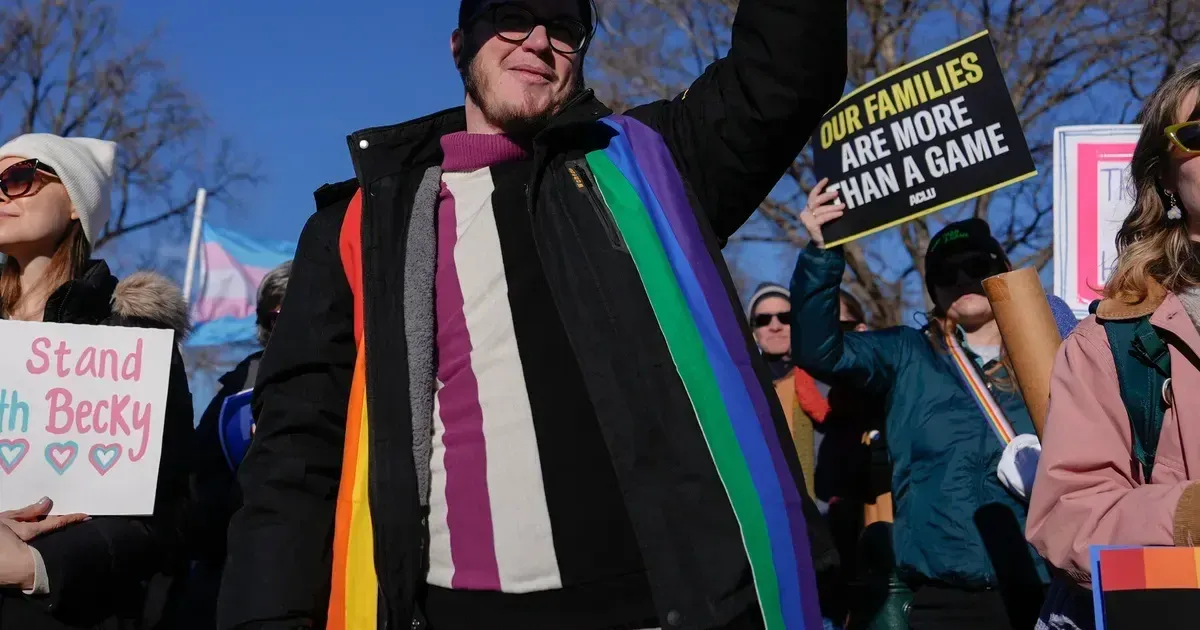
The Education Department's decision to void civil rights settlements involving transgender students creates a direct test of federal power. The move does not simply change future policy; it attempts to unwind agreements that districts had already signed.
Officials confirmed the terminations on April 6, 2026, arguing that earlier settlements relied on an unlawful reading of Title IX. School districts now face uncertainty over whether to keep existing protections, revise them under state pressure or wait for courts to decide whether the federal government can walk away from active agreements.
Federal Oversight and Administrative Reversal
Legal experts have identified no precedent for a federal agency unilaterally terminating settlements that were reached to resolve civil rights complaints. Traditionally, once a resolution agreement is signed, it remains in effect until the Education Department determines that the school district has met every specific requirement. Ending these agreements mid-term creates a vacuum in oversight that has not been seen since the inception of the Office for Civil Rights in the 1960s. Department leadership maintains that the original legal basis for the settlements was flawed from the start. Under current interpretations, the agency views gender-identity protections as a misapplication of the 1972 Title IX statute.
Attorneys specializing in education law noted that this move could trigger a wave of breach-of-contract litigation. If a school district relied on a federal settlement to justify policy changes to its community, the sudden removal of that federal mandate leaves local officials exposed to state-level political pressure. Some districts had already spent substantial portions of their budgets on facility renovations to comply with the now-voided agreements. Whether these districts will continue their current paths or revert to previous policies remains a choice for individual superintendents. Documents obtained by investigative teams show that at least $11 million in planned facility upgrades across twelve districts may now be stalled.
The Education Department said there was no precedent for the federal government terminating settlements stemming from civil rights investigations into schools.
Constitutional Arguments Against Existing Agreements
White House advisors have pointed to the Spending Clause of the Constitution as a justification for the rollback. They argue that the federal government cannot impose new conditions on school funding that were not clearly stated when the funding was accepted. Since Title IX does not explicitly mention gender identity, the administration contends that the previous settlements were an unconstitutional form of regulatory overreach. This interpretation seeks to limit the Education Department to the exact text passed by Congress decades ago. Several Republican-led states filed amicus briefs supporting this narrow view during recent appellate hearings.
Opposing legal teams from the Department of Justice under previous leadership had argued that sex discrimination naturally covers gender-based harassment. The Supreme Court decision in Bostock v. Clayton County, which applied similar logic to employment law, was the foundation for the now-rescinded school settlements. Current Education Department appointees, however, insist that the Bostock ruling does not apply to the specific environment of K-12 education. They maintain that the privacy rights of other students outweigh the gender-identity claims of transgender individuals. This fundamental disagreement on the scope of the law continues to drive the administration's policy revisions.
Impact on Local School District Autonomy
National associations representing school boards have voiced mixed reactions to the news. While some celebrate the return of local control, others worry about the potential for increased local litigation. Without a federal settlement to point to, school boards may find themselves caught between parents demanding strict gender policies and families of transgender students filing private lawsuits. Federal settlements once provided a shield for districts, allowing them to claim their policies were mandated by Washington. That shield has effectively been removed for districts involved in the terminated agreements.
Voters in several states recently passed ballot initiatives that restrict gender-affirming policies in public institutions. The Trump administration appears to be aligning its federal actions with these state-level shifts. By pulling out of the settlements, the department is signaling that it will not interfere with state laws that conflict with former federal guidance. The decentralization of civil rights enforcement is a major change in the relationship between the federal government and state education agencies. Public funding for education has long been tied to compliance with federal civil rights standards, but the definition of compliance is now being rewritten.
Career staff within the agency reportedly expressed internal concerns regarding the stability of future settlements. If a new administration can simply walk away from a signed agreement, the incentive for school districts to settle civil rights complaints diminishes. Districts might prefer to litigate cases in court rather than enter into agreements that may be torn up after the next election cycle. Such a shift would sharply increase the workload for federal courts and prolong the time students wait for resolution. Current leadership remains undeterred by these procedural concerns. Officials stated that their primary obligation is to align agency actions with the executive branch's current reading of the law.
School districts in conservative-leaning counties have welcomed the news. Many of these districts felt coerced into signing settlements to avoid losing federal grants that make up a substantial portion of their operating budgets. Administrators in these areas are already preparing to reinstate policies that define sex as a binary, biological trait. Teachers in these districts have been told that federal monitors will no longer be auditing their classroom practices or pronoun usage. The suddenness of the announcement has left many human resources departments scrambling to update their handbooks before the next semester begins.
A Title IX Fight Moves Back to Court
Did the concept of a binding federal contract just become a relic of the past? The decision to terminate settled civil rights agreements is a calculated demolition of administrative permanence. For decades, the Education Department operated on the assumption that a signed resolution was a finality, a stable bridge between two different legal eras. By burning that bridge, the current administration has signaled that every federal agreement is now as ephemeral as a campaign slogan. The move does not just target transgender students; it targets the very idea that the federal government can be a reliable partner in long-term policy reform.
School districts now find themselves in an unstable position. They are no longer just managing classrooms; they are navigating the debris of a broken federal promise. If a settlement can be voided at the whim of a new cabinet secretary, the Office for Civil Rights has lost its most effective tool for non-litigious conflict resolution. Why would any district negotiate in good faith when the terms of the deal can be erased before the ink is dry? The administration is gambling that the return to local autonomy will outweigh the chaos of legal instability. It is a high-stakes bet that prioritizes ideological purity over institutional credibility.