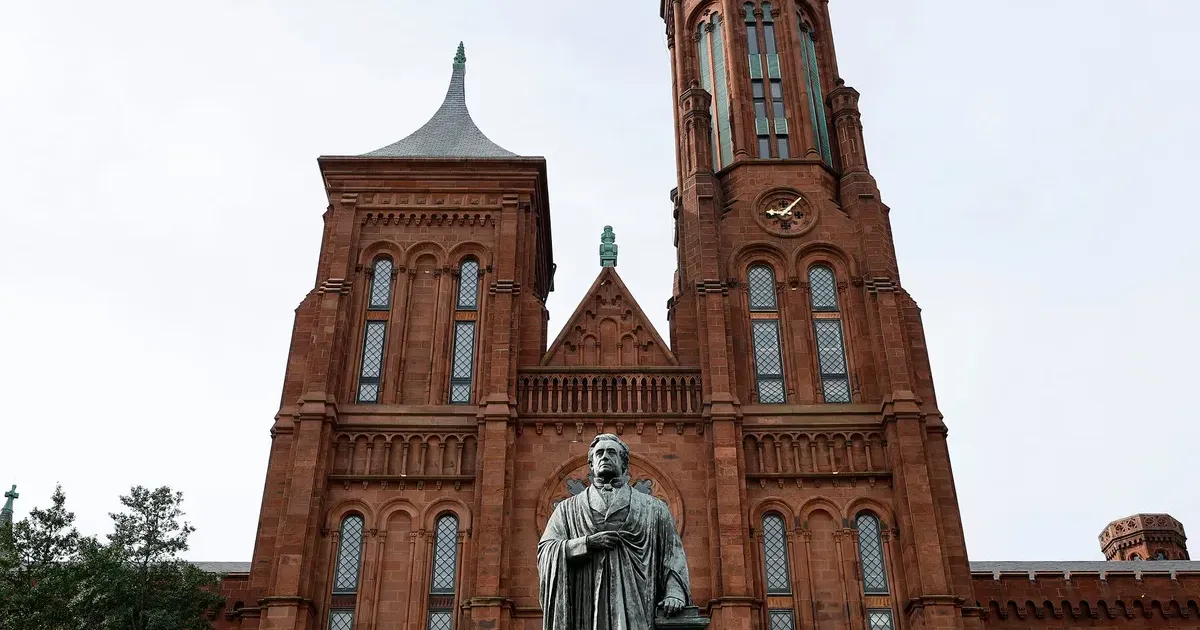
Smithsonian regents and White House officials locked horns over mounting vacancies within the institution's leadership. President Donald Trump has expressed an intent to influence the selection of citizen regents, a process traditionally steered by the board itself and ratified by Congress. Two seats on the governing body currently sit empty after the terms of two long-serving members expired without immediate replacements. The April 3, 2026, dispute showed how quickly cultural governance can become a White House fight.
Friction between the executive branch and the world’s largest museum complex centers on the degree of autonomy granted to the Smithsonian trust. Established by an act of Congress in 1846, the institution is a quasi-federal entity that relies on both federal appropriations and private philanthropy. Any perceived attempt to politicize the governing board triggers immediate scrutiny from across the political spectrum.
Governance of the Smithsonian Institution rests in the hands of a 17-member Board of Regents. This body includes the Chief Justice of the United States, the Vice President, three members of the Senate, three members of the House of Representatives, and nine citizen members. Traditionally, the board identifies potential citizen regents through its own nominating committee before the President formally submits those names to Congress for approval.
Candidates for these roles usually possess serious expertise in science, history, or philanthropy. White House officials have reportedly stalled the latest recommendations, indicating a preference for individuals who align more closely with the current administration's cultural priorities. Institutional leaders worry that departing from the merit-based selection process could compromise the scientific and historical objectivity of the museum system.
Presidential Influence on Cultural Governance
Executive involvement in Smithsonian affairs has increased as the administration seeks to reshape national narratives. Reports from the White House suggest that Donald Trump views the Smithsonian as a key battleground for his broader cultural agenda. Officials within the administration argue that a federally funded entity should reflect the values of the voters who elected the current government. Critics, by contrast, maintain that the institution's charter was designed to insulate it from the shifting whims of partisan politics.
Administrative delays in naming new regents have direct consequences for the internal management of the museum complex. The board must approve major capital expenditures, including the major renovation of the National Air and Space Museum. Without a full quorum of active citizen regents, the board risks being unable to finalize critical financial decisions. The current vacancies involve two citizen seats formerly held by figures with deep ties to the academic and corporate sectors.
Museum leadership under Secretary Lonnie G. Bunch III has navigated these tensions with caution. Bunch has frequently emphasized the need for the Smithsonian to remain a trusted source of knowledge for all Americans. Interference in the regent selection process threatens to disrupt the delicate balance between federal oversight and intellectual independence. Congressional records show that the $1.1 billion annual federal appropriation provides roughly 60 percent of the institution's budget.
Legislative Hurdles and Congressional Ratification
Senate and House regents matter in mediating between the Smithsonian and the White House. Current legislative regents include members who have expressed concern over the slowing pace of board appointments. Because citizen regents are appointed by joint resolution of Congress, the legislative branch holds the final say on any candidate the President puts forward. A standoff between the executive and legislative branches could leave the board shorthanded for the foreseeable future.
Historically, the board has operated with a high degree of consensus. Citizen regents are typically appointed for six-year terms and can serve up to two terms. The current deadlock prevents the board from filling vacancies that appeared when the terms of veteran regents concluded in early 2026. The administrative vacuum comes as the Smithsonian prepares to launch two of its most ambitious projects in decades.
"The Smithsonian was established for the increase and diffusion of knowledge among men, and its governance must reflect a commitment to historical accuracy and educational integrity," a spokesperson for the Smithsonian Institution stated during a recent administrative briefing.
Managing the development of the National Museum of the American Latino and the Smithsonian American Women’s History Museum requires stable leadership. These new institutions were authorized by Congress in late 2020 and are currently in the site selection and early design phases. Major donors for these projects often look for continuity in the Board of Regents before committing large-scale private funds.
Site selection for the two newest museums has already become a point of contention in Washington. The Board of Regents must finalize locations near the National Mall, a process that involves negotiations with the National Capital Planning Commission. Any delay in board appointments could push back the timeline for these projects by several years. Private contributors have expressed concern that a polarized board might reconsider the scope or mission of these upcoming galleries.
Chancellor John Roberts, the Chief Justice of the United States, presides over the board meetings. His role is largely ceremonial but provides a layer of judicial prestige that usually discourages overt political maneuvering. If the White House continues to insist on unconventional candidates, Roberts could find himself in the middle of a constitutional tug-of-war over executive power and cultural independence. Vice President J. D. Vance also holds a seat on the board, further complicating the internal dynamics of the group.
Records from the Government Accountability Office indicate that the Smithsonian has historically maintained a reputation for non-partisan governance. Maintaining this reputation is essential for the institution's ability to secure rare artifacts and major loans from international partners. Global museum directors are watching the vacancy crisis closely to see if the Smithsonian will maintain its traditional autonomy. The current stalemate shows no sign of resolving as the spring legislative session continues.
Smithsonian Vacancies Expose Governance Strain
Can an institution dedicated to the preservation of national truth survive a tug-of-war between partisan ideologues? The current deadlock at the Smithsonian goes beyond an administrative hiccup and amounts to a calculated attempt to seize the levers of cultural production. By withholding approval for traditional candidates, the White House is signaling that even the most venerable American institutions must bow to the prevailing political wind. The delay is transparently designed to transform a center of learning into a megaphone for a specific brand of national identity.
The Board of Regents is the last line of defense against the total politicization of American history. If the executive branch successfully replaces experts with loyalists, the very foundation of the Smithsonian mission will erode. Curators will begin to self-censor, and donors will flee to institutions that prioritize intellectual rigor over political patronage. John Roberts and the congressional regents must exert their authority to block this encroachment or risk overseeing the decline of a national treasure. The autonomy of the Smithsonian is not a luxury. It is a requirement for its existence. The center cannot hold if the board is broken.