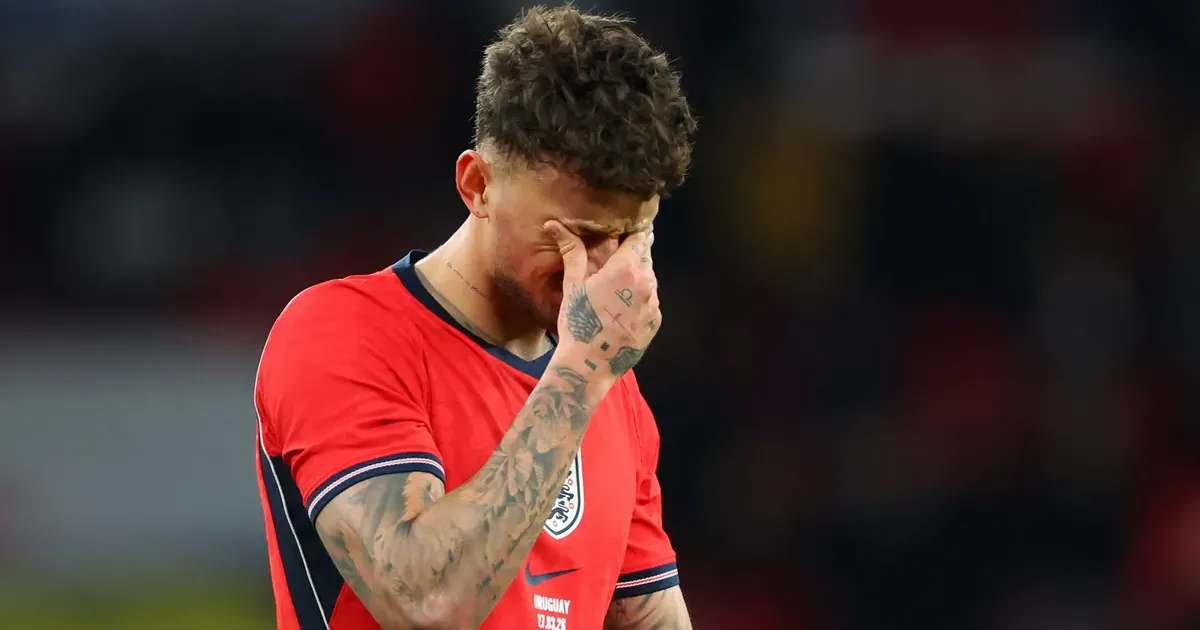
Ben White's return to England duty became the central story of a tense Wembley draw with Uruguay. The Arsenal defender was jeered by sections of the home crowd, scored after coming on and later conceded the penalty that left the friendly at 1-1. Thomas Tuchel wanted the match to test squad depth. Instead, it reopened England's unresolved argument over loyalty, selection and forgiveness.
White's absence from the national setup after the 2022 World Cup has followed him for years. His return was meant to strengthen an experimental side and give Tuchel another option at full-back. The crowd reaction made clear that some supporters still view the episode as unfinished business. That hostility changed the mood of a match that had already struggled for rhythm.
Uruguay made the game awkward. Their defensive shape compressed space, disrupted England's passing lanes and turned the friendly into a physical test rather than an exhibition. England had possession without enough incision for long spells, forcing Tuchel to use the bench for a different angle of attack. White entered that environment carrying both tactical responsibility and public resentment.
Ben White Substitution Triggers Wembley Backlash
The reaction to White's introduction was immediate. Boos followed his first touches, even though England needed the width and composure he can provide. He responded on the pitch, arriving during a set-piece scramble to score from close range and give England the lead. For a moment, the story looked like it might turn into a clean redemption arc.
It did not last. Some of the crowd softened after the goal, but the tension never fully disappeared. Uruguay kept the game alive and began finding more space as England's structure loosened late on. The match had the feel of a friendly in personnel terms, but not in temperature. Every White involvement carried more attention than the passage of play deserved.
The decisive moment came when Uruguay broke into the area and White mistimed a recovery challenge. The referee pointed to the spot, and Uruguay converted. A player who had briefly given England control had also handed Uruguay the equalizer. That swing made the post-match narrative unavoidable.
Thomas Tuchel Defends Player Selection
Tuchel refused to let the crowd's reaction pass without comment. He said he was disappointed by the booing while also making clear that White would have to absorb the pressure that comes with returning to the national side. That balance matters. The manager cannot pretend the crowd reaction does not exist, but he also cannot allow public grievance to dictate selection.
Thomas Tuchel said he was "disappointed" by England fans booing Ben White in the draw with Uruguay but insisted the defender must take it on the chin.
From a tactical perspective, the draw gave England mixed evidence. The defensive structure held for long stretches, and Uruguay created little from open play. The late penalty was an individual error rather than proof that the whole system failed. But friendlies are judged by narrative as much as analysis, and the narrative belonged to White.
The Football Association has not turned the crowd response into a formal disciplinary issue, but the situation is now part of Tuchel's man-management challenge. White's teammates know the past will keep being raised if he remains in the squad. The internal view may be that he has trained well and moved on. The public view is less generous.
Penalty Concession Erases England Lead
White's night was unusually compressed: hostile reception, goal, then penalty concession. That sequence would be difficult for any player, but it is sharper for someone returning under suspicion. Scoring should have helped reset his relationship with the crowd. The late foul gave critics a cleaner line of attack.
England now has to decide how much weight to give that noise. Tuchel has shown he values tactical utility over public mood, and White offers qualities that fit a possession-heavy side. He can step into midfield zones, combine on the flank and give the back line technical security. Those traits do not disappear because a section of Wembley wants a morality play.
The draw itself still matters. England lacked ruthlessness, struggled to turn territory into clear chances and allowed a manageable match to slip. Tuchel can point to defensive organization, but supporters will see a side still searching for a sharper identity. The White story should not obscure that larger issue, even if it dominates the headlines.
Reports from around the camp suggested White has handled the return professionally. That is the part Tuchel can control: training standards, squad integration and match preparation. He cannot control whether every supporter accepts a player back on the timeline the manager prefers. That conflict will follow England into the next window.
What England Must Decide
Patriotism in sport often resembles a grievance ritual more than a celebration of talent. The treatment of Ben White at Wembley suggests that parts of the English football public value the performance of loyalty over the performance of the sport itself. A professional who made a personal choice years ago is being treated like a permanent offender, even when he is contributing for the badge his critics claim to protect. That hypocrisy is the mark of a fanbase that confuses employment with a sacred oath.
Tuchel is right to be disappointed, but he is naive if he thinks good coaching alone can erase the punitive habits around the England team. The job is as much about managing public resentment as it is about picking a back four. White is a tactical asset, but in the eyes of part of the Wembley crowd, he remains a symbol of betrayal. If the FA wants to move forward, it must stop pandering to the loudest voices in the stands and back the manager's right to pick the best squad. The boos do not show passion. They show a refusal to let a professional evolve beyond one decision. England will not grow while its supporters care more about moral policing than football excellence.