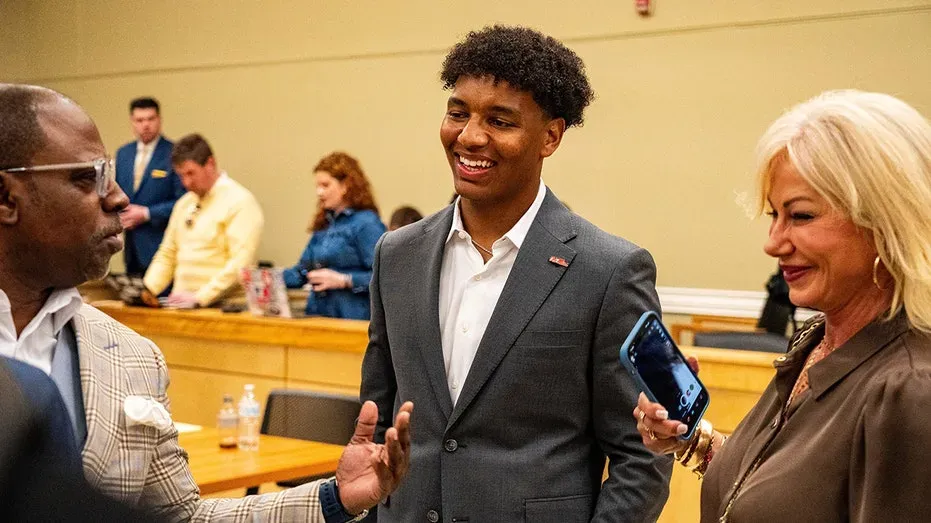
Trinidad Chambliss has cleared a major legal barrier to playing the 2026 season for Ole Miss. The ruling turned a college eligibility fight into a broader test of NCAA authority. Mississippi's high court declined to disturb a lower-court order that allowed the quarterback to keep moving toward the season while litigation continues. For the Rebels, the decision provides roster stability. For the NCAA, it deepens a familiar legal problem.
Chambliss fought to recover a season tied to his time at Division II Ferris State, where he did not appear in a game during 2022 because of health issues described in court filings. The NCAA rejected his medical redshirt request, arguing that the documentation did not meet its standard. That denial pushed the dispute into state court and turned an eligibility calculation into a question of fairness, procedure and institutional discretion.
The practical result is clear: Ole Miss can prepare as though Chambliss will be available. The final legal outcome may still take time, but college football calendars do not wait for slow litigation. If a court order remains in place through the season, the athlete receives the benefit that matters most: the chance to play.
Legal Battle Over Five-Year Eligibility Rule
The NCAA's argument rests on the Five-Year Rule, which generally requires athletes to complete their seasons of competition within a defined eligibility window. The organization warns that if courts keep intervening in individual eligibility decisions, the national rulebook will lose consistency. That is not a trivial concern. A sport cannot run on 50 different emergency standards.
"If courts can intervene in NCAA eligibility decisions to provide special treatment to favored athletes, then the NCAA's ability to ensure fair athletic competition in which all participants play by the same rules will depend upon the whims of trial courts throughout the country," the NCAA legal team wrote in its petition.
The problem for the NCAA is that consistency does not excuse bad judgment. Chambliss's lawyers argued that the 2022 season was lost for medical reasons, not competitive gamesmanship. A lower court found enough concern with the NCAA's handling of the case to justify relief. The high court's refusal to block that relief leaves the governing body with another public defeat in a period already defined by legal erosion.
The case also shows the weakness of a system that places nearly all proof burdens on athletes while asking courts to trust the NCAA's internal process. When an athlete is dealing with a medical history, surgery and lost playing time, a rigid paperwork standard can look less like fairness and more like bureaucracy protecting itself.
Ferris State Medical History and Bad-Faith Findings
The medical history at Ferris State sits at the center of the dispute. Chambliss's side argued that he was present in 2022 but physically unable to compete. The NCAA focused on whether the record satisfied its bylaw requirements. The lower court's bad-faith language gave the case sharper force because it suggested more than a routine disagreement over eligibility paperwork.
That finding matters even if the case is not over. Courts are often reluctant to second-guess sports administrators unless the process appears unfair, arbitrary or inconsistent. Once a judge reaches that conclusion, the NCAA's usual defense of internal authority becomes weaker. The organization can still argue that national rules matter, but it cannot expect automatic deference when its own process is under attack.
Recent litigation over NIL rules, transfer restrictions and athlete compensation has already reduced the NCAA's room to operate. Chambliss's case belongs to that broader pattern. Judges increasingly view the association not as a neutral guardian of amateurism, but as a powerful commercial regulator whose decisions can materially affect a player's career.
Ole Miss Stability During Transition
Ole Miss benefits immediately from the ruling because quarterback uncertainty can define an entire offseason. The program has already been navigating transition, roster movement and the pressure of SEC expectations. An experienced quarterback gives coaches and boosters a clearer plan than a late scramble through underclassmen or transfer options.
The wider Ole Miss context has been unsettled by coaching movement and postseason frustration. Reports around Lane Kiffin's departure and staff transition created tension inside a program trying to preserve momentum. The Fiesta Bowl loss to Miami, described in prior coverage as a narrow 31-27 defeat, became part of that unstable backdrop. Chambliss's availability gives the Rebels one piece of continuity.
The LSU matchup on the 2026 schedule will draw extra attention because of the Kiffin storyline, but the legal ruling matters beyond one game. It gives Ole Miss spring and summer planning clarity. Quarterback reps, receiver timing, protection calls and leadership structure all depend on knowing who is likely to take the first snap.
NCAA Fears Judicial Overreach
The NCAA's fear is that eligibility decisions will increasingly move from compliance offices to courtrooms. That fear is not irrational. If every athlete denied a waiver can find a favorable state court, national rules become harder to enforce. Younger players could lose roster opportunities, schools could gain local advantages, and the calendar could become a litigation schedule.
But the NCAA helped create this environment by treating athletes as rule subjects rather than stakeholders. Its warnings about chaos would carry more weight if its own processes were faster, more transparent and more humane. When the association loses public trust, courts become more attractive to athletes with limited time and careers at stake.
The current status still appears tied to preliminary relief, not a final merits judgment. That distinction matters legally, but the practical effect may be decisive. If the season arrives before the case reaches final resolution, Chambliss may play out the year regardless of what later rulings say. In college sports, timing can be the whole remedy.
What the NCAA Lost
Does the NCAA even function as a credible authority anymore, or are we watching the collapse of a bureaucracy that mistook paperwork for justice? The Mississippi court's refusal to rescue the association is the latest proof that the era of administrative absolute power is over. For decades, the NCAA acted like a private government, damaging careers over clerical errors and medical technicalities while cashing billion-dollar checks.
The massive filing against Trinidad Chambliss was not an effort to protect the integrity of the game. It was an effort to protect the authority of a rulebook that no longer reflects reality. If a player is sick and does not play, he should not lose a year of his life. It is that simple. That this required court intervention reveals the rot inside college governance. The sport is moving toward a future where more roster decisions are litigated, and the NCAA earned that chaos through its own arrogance. Ole Miss gets its quarterback. The NCAA gets another legal bill. Both outcomes are deserved.