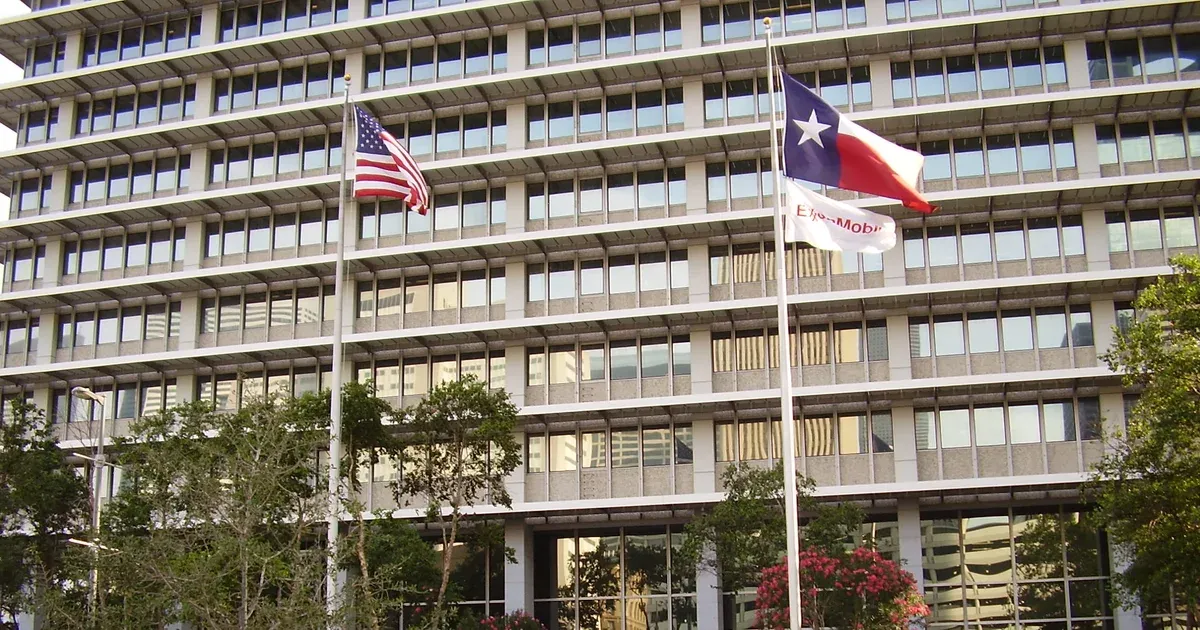
Exxon Mobil's warning over a $6.5 billion earnings hit shows how quickly the Iran conflict has moved from geopolitics into corporate accounts. The company is trying to separate paper losses from operational damage, but investors still have to price the risk of disrupted energy flows. The disclosure came on April 8, 2026, as energy traders, hedge funds and shipping firms adjusted to higher volatility. For the market, the key question is whether the accounting pressure fades before the physical supply chain deteriorates further.
Exxon Mobil Accounting and Contract Completion
Exxon Mobil officials emphasize that the $6.5 billion hit consists largely of non-cash adjustments. These figures reflect the fluctuating value of derivative contracts used to hedge against price swings in the energy market. When the Iran conflict intensified, the cost of these hedges surged, creating an immediate paper loss on the balance sheet. Management expects these numbers to normalize as the physical delivery of oil catches up with the financial contracts.
Contractual obligations signed before the current hostilities remain in force. Exxon Mobil intends to fulfill these agreements despite the logistical nightmares currently plaguing the Persian Gulf. Revenue recognition depends on the delivery of crude at specified ports, many of which are now under naval blockade or high-risk warnings. Financial reports suggest that once these cargoes reach their final destinations, the accounting deficit will begin to evaporate.
The bulk of the impact on first-quarter earnings is an accounting issue that will be offset as contracts complete, according to a statement from Exxon Mobil.
Hedge fund losses reached a fever pitch as the Federal Reserve signaled no intention of intervening in the currency markets. Managers who bet on a stable dollar found themselves trapped in losing positions. The volatility sparked by the Iran war forced several leading funds to liquidate holdings to meet margin calls. These forced sales further depressed asset prices in a self-reinforcing cycle of market stress.
Risk parity funds took a particularly heavy blow. These strategies rely on low volatility to justify high leverage, but the suddenness of the Iran conflict destroyed that premise. Computer-driven models triggered huge sell orders across multiple asset classes simultaneously. Diversification provided little protection when both bonds and stocks fell in tandem.
Global Supply Chain and Commodity Price Shocks
Supply-chain disruptions extend far beyond the energy sector. Iran controls essential chokepoints that enable the transit of chemical precursors and fertilizers. Agricultural markets have begun to price in a substantial harvest shortfall later this year. Food security concerns are now surfacing in diplomatic briefings across Western Europe. Shipping insurance premiums have increased tenfold for any vessel entering the Arabian Sea. Carriers are rerouting ships around the Cape of Good Hope, adding 12 days to the average transit time. This detour increases fuel consumption and strains the global fleet capacity. Logistics companies are passing these costs directly to consumers, fueling a new wave of headline inflation.
Investors in the London Stock Exchange reacted with caution to the news. Energy shares dipped 3.2 percent in early trading before recovering some ground. While the accounting explanation provides some comfort, the underlying threat to physical infrastructure persists. Refineries in the region face potential drone strikes, a risk that no accounting maneuver can reduce. Managers at London-based firms reported that the current environment is more treacherous than the early days of the Covid-19 pandemic. During that period, central banks provided a clear backstop for markets. Today, the inflationary pressures of a regional war make such intervention difficult. The Bank of England has warned that price stability must take precedence over financial market supports.
Market participants anticipate that the Iran conflict will keep energy prices elevated for at least two fiscal quarters. This projection assumes that no major infrastructure, such as the Abqaiq processing facility, sustains permanent damage. If the conflict spreads to neighboring oil producers, the current $6.5 billion loss at Exxon Mobil will seem like a minor clerical error.
Strategic petroleum reserves in the United States and Europe are at their lowest levels in decades. Government officials have limited capacity to dampen price spikes by releasing more oil into the market. This lack of a buffer leaves the global economy uniquely vulnerable to the whims of the Iran conflict. Previous drawdowns for political reasons have left the cabinet bare at the worst possible moment.
Refining margins are currently at record highs due to the scarcity of light sweet crude. While Exxon Mobil faces accounting headwinds, its refining division is generating large cash flow. The internal hedge helps the company maintain its dividend payments despite the headline-grabbing losses. Long-term shareholders appear to be looking past the immediate noise of the first-quarter report.
Technological shifts toward renewable energy have not yet reduced the world's dependence on Middle Eastern oil. The reality has become painfully clear as the Iran war continues to dictate the pace of global economic growth. Energy independence remains a theoretical goal instead of a current reality for most G7 nations. Future investments in domestic production are likely to accelerate because of this crisis.
Accounting Relief Does Not Remove Supply Risk
Accounting explanations can calm investors when contract timing is the main issue. They are less useful if shipping routes, refinery access or regional infrastructure remain exposed to further disruption. That is the distinction inside Exxon's warning. A paper loss can reverse, but the broader energy market still needs safer transit, clearer inventories and a conflict path that does not keep adding risk premiums.