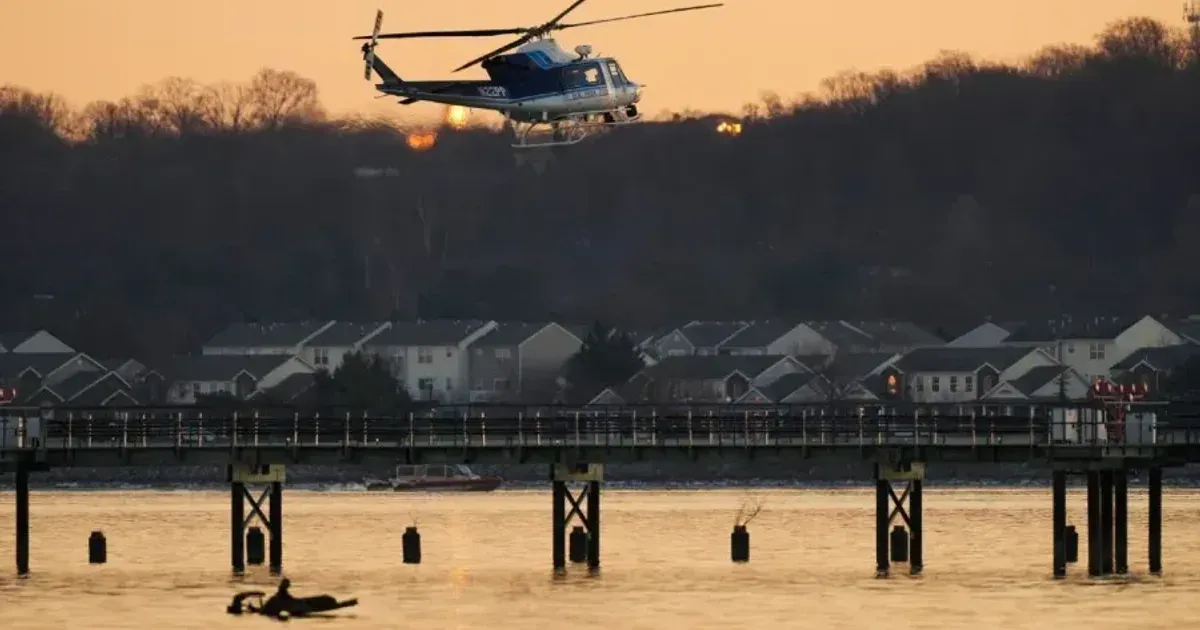
Administrator Bryan Bedford signed an emergency directive on March 18 to fundamentally restructure low-altitude flight paths surrounding Ronald Reagan Washington National Airport. Secretary Sean Duffy confirmed the policy change during a morning briefing at the Department of Transportation headquarters. This action halts specific rotorcraft operations that previously shared arrival corridors with commercial airliners. Public records indicate the decision stems from the fatal collision involving an American Airlines jet and a military helicopter over the Potomac River last year. The flight restrictions became a safety test for a corridor still carrying the weight of the Reagan National collision. Secretary Sean Duffy stated the administration would focus on the separation of commercial and non-commercial traffic in the nation's most sensitive flight zones. New exclusion circles will extend five miles from the primary runways at Reagan National. Federal authorities are also reviewing similar protocols for Dulles International and Baltimore-Washington International airports. The grounding of certain civilian and military transit routes takes effect immediately under the new federal safety mandate.
Reagan National Crash Investigation Findings
National Transportation Safety Board investigators spent months analyzing the wreckage recovered from the riverbed. Data from the flight recorders revealed a catastrophic failure in visual separation protocols during a high-traffic period. The military helicopter involved in the incident lacked the latest generation of traffic collision avoidance software required for commercial aircraft. Government analysts found that the existing Special Flight Rules Area procedures did not account for the speed differentials between modern jets and older rotorcraft models.
The current separation standards for rotorcraft in high-density terminal environments failed to prevent a tragedy that was entirely avoidable. Engineers at the FAA technical center in Atlantic City conducted simulation runs to test the new boundaries. These tests suggested that a three-minute buffer between helicopter crossings and jet arrivals sharply reduces mid-air collision risks. In fact, the previous rules allowed for simultaneous operations under visual flight rules provided pilots maintained visual contact. The investigation proved that glare and urban clutter made such visual contact nearly impossible during the late afternoon.
Department of Transportation Policy Shift Analysis
Policy changes under the current administration reflect a shift toward rigid, hardware-based safety solutions rather than pilot discretion. Secretary Sean Duffy argued that human error remains the primary vulnerability in the National Airspace System. To that end, the new rules mandate that any helicopter operating within the DC flight zone must be equipped with active transponders that broadcast precise altitude data. This requirement applies to both private charters and government-operated flights.
Critics within the general aviation community have expressed concerns regarding the speed of these implementations. Still, the FAA moved forward with the suspension to prevent a secondary occurrence during the busy spring travel season. Budget documents show the department allocated $12 million for enhanced radar monitoring stations along the Potomac corridor. These stations will provide air traffic controllers with a more detailed view of low-flying traffic that often disappears from standard radar screens. By contrast, the previous administration favored a more flexible approach that relied on existing altitude shelves. Those shelves were designed at a time when helicopter traffic was a fraction of today's volume. Urban air mobility initiatives and increased military patrols have crowded the low-altitude environment. Federal records show a 40 percent increase in helicopter movements over the District of Columbia since 2018.
Military and Civil Aviation Coordination Challenges
Military officials initially resisted the flight path alterations due to the proximity of the Pentagon and Joint Base Andrews. But the severity of the Reagan National collision forced a reconciliation of safety standards across the various branches of government. A memorandum of understanding now dictates that military pilots must adhere to FAA-directed separation minimums when entering civilian approach paths. This agreement ends decades of informal hand-offs between military and civilian controllers in the Capital region.
Tactical training flights are now rerouted away from the primary approach to Runway 19. Meanwhile, the FAA is installing automated warning systems that trigger an alert if a non-commercial aircraft enters a commercial glide slope. These systems use satellite-based tracking to predict potential conflicts before they appear on a controller's scope. The hardware installation phase is expected to conclude by the end of the fiscal year. The Army and National Guard units frequently use the river route for transit between Northern Virginia and Maryland. These flights must now maintain a minimum altitude of 1,500 feet unless granted a specific waiver for emergency operations. Controllers at Reagan National have been instructed to focus on commercial departures over all other traffic categories. The prioritization is a direct response to the delays caused by the investigation.
Industry Response to Helicopter Restrictions
Private charter companies have voiced opposition to the five-mile exclusion zones. Executives at major helicopter services claim the new routes add significant time and fuel costs to their daily operations. Some operators estimate that circumnavigating the Reagan National airspace adds 12 minutes to a standard trip between Dulles and downtown DC. Even so, the FAA remains firm on the necessity of the restrictions to maintain public confidence in the aviation system. Pilots' unions have largely supported the move. Representatives from the Allied Pilots Association noted that their members had reported numerous near-misses with helicopters in the DC area over the last three years. These reports often cited helicopters hovering near the approach path to film events or transport dignitaries. The new rules effectively ban non-essential hovering within the exclusion zone.
Aviation safety experts suggest that the Reagan National incident was a trigger for a long-overdue modernization of the DC airspace. They argue that the complexity of the region's flight rules had become a liability. According to FAA data, the number of airspace violations in the DC flight restricted zone has dropped by 15 percent since the preliminary rules were tested last month. The final rule will be published in the Federal Register next week.
The Aviation Safety Lesson Around Reagan National
Why did it take 14 months and a pile of wreckage in the Potomac to realize that heavy military metal and commercial airliners do not mix? The FAA announcement is less a masterstroke of policy and more a desperate scramble to fix a systemic failure that should have been addressed a decade ago. Bureaucratic inertia allowed outdated visual flight rules to persist in one of the most congested and sensitive airspaces on the planet. For years, pilots warned that the mixing of high-speed commercial jets and slow-moving rotorcraft was a recipe for disaster.
Those warnings were ignored in favor of maintaining the status quo for military transit and VIP transport. Secretary Sean Duffy and Administrator Bryan Bedford are finally acting, but their response is reactive, not proactive. The suspension of these flights is a necessary amputation, yet it exposes the rot of a regulatory body that only finds its teeth after a body count is tallied. We should be skeptical of the claim that technology alone will solve this problem. As long as the FAA allows exceptions for political convenience or military tradition, the skies over our capital remain a gamble for every passenger sitting in a commercial cabin.