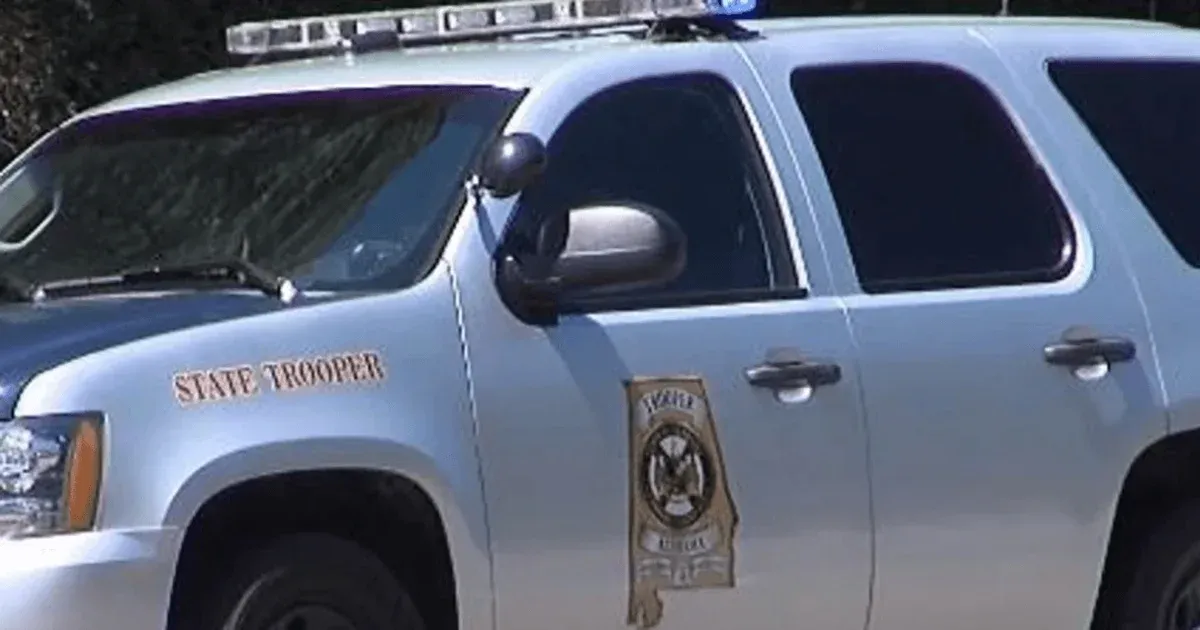
Four people died in Pike County, Alabama, after a highway patrol pursuit ended in a rural crash. Alabama Law Enforcement Agency officials said troopers had initiated the chase before the vehicle left the roadway. The fatal outcome was confirmed on April 5, 2026, as investigators examined pursuit policy, road conditions and emergency response in southeast Alabama.
Pike County remains a challenging environment for high-speed maneuvers due to its undulating secondary roads and lack of modern safety barriers. The driver reportedly accelerated to extreme speeds to distance the vehicle from the pursuing trooper. State records indicate that the pursuit began as a routine traffic enforcement action before escalating. Speed played a primary role in the vehicle's departure from the pavement. Investigators found no evidence of braking before the car entered the dense brush line.
Pike County Rural Road Safety
Pike County infrastructure often consists of two-lane highways that traverse heavily wooded areas with limited shoulder space. These conditions create extreme risks during police pursuits because even minor steering corrections at high velocity can lead to a total loss of control. Residents in southeast Alabama frequently complain about the lack of illumination on these rural corridors. Darkness likely hampered the driver's ability to see upcoming curves. The crash site is a known danger zone where the road narrows without serious warning to non-local motorists.
Law enforcement experts observe that rural pursuits frequently end in single-vehicle accidents. Fleeing suspects often overestimate their driving capabilities on uneven surfaces. Static objects like pine trees and drainage culverts act as immovable barriers that absorb the entirety of a vehicle's kinetic energy. Four people lost their lives in a matter of seconds. Evidence at the scene indicates the vehicle tumbled several times before coming to rest. Debris was scattered across a fifty-yard radius of the impact point.
Alabama Law Enforcement Agency Protocols
Alabama Law Enforcement Agency policy dictates when a trooper must terminate a pursuit based on public risk factors. Officers must weigh the severity of the initial offense against the potential for a catastrophic outcome. If the danger to the public or the occupants of the fleeing vehicle becomes too high, the protocol suggests a controlled withdrawal. Critics often point to these fatalities as evidence that pursuit policies require stricter enforcement. The agency maintains that the responsibility for the crash rests entirely with the individual who chose to flee. Every trooper receives specific training on high-speed driving and risk assessment.
State law grants troopers meaningful discretion when engaging in pursuits to apprehend suspects. Alabama courts historically provide broad immunity to law enforcement officers acting within the scope of their duties. Whether the trooper involved in the Pike County incident followed every internal guideline is a matter of ongoing review. Records from the Highway Patrol division show a recent increase in pursuit-related accidents across the state. This trend has sparked internal discussions regarding the efficacy of PIT maneuvers and other intervention techniques. No specific maneuver was reported in this instance.
The driver was trying to elude the Alabama Law Enforcement Agency's highway patrol on a rural road in southeast Alabama's Pike County when the crash occurred.
Direct testimony from the scene will form the basis of the final accident report. While the trooper survived the encounter, the psychological impact of a four-fatality event is serious. ALEA spokespeople confirmed that the officer involved has been placed on administrative leave according to standard procedure. Dashcam footage of the chase is currently under lock and key at the state headquarters. Projections from independent safety groups suggest that Alabama experiences higher pursuit death rates than neighboring states with more restrictive policies. Legal representatives for the families of the deceased have already begun requesting access to dispatch logs.
Highway-patrol pursuit data will likely shape the public review, especially if investigators examine speed, road design and the decision to continue the chase.
Data from the National Highway Traffic Safety Administration shows that pursuits account for hundreds of deaths annually across the United States. Alabama consistently ranks in the top tier for these incidents. Highway Patrol units are often the primary law enforcement presence in rural areas like Pike County where local police departments are small. This makes state troopers the first line of defense and the most likely to engage in high-speed chases. The frequency of these events remains a point of contention for civil rights advocates. Rural counties see more pursuit-related deaths per capita than urban centers.
Urban pursuits often involve more traffic, which naturally forces lower speeds or earlier terminations. Rural roads invite higher velocities because there is less perceived risk of striking other motorists. This perception is frequently fatal. Fatalities in these scenarios often involve young drivers or individuals with outstanding warrants for non-violent offenses. The driver in this case had not been publicly identified as of Sunday morning. Investigators are still working to notify the next of kin for all four victims. Identification is difficult due to the severity of the wreckage.
Southeast Alabama Emergency Response
Emergency medical technicians in Pike County face long transit times when responding to rural accidents. The distance between the crash site and the nearest trauma center can exceed thirty minutes. Minutes often determine the difference between life and death in high-velocity collisions. In this case, the impact was so severe that medical intervention was impossible upon arrival. Volunteer fire departments from neighboring towns assisted in the recovery effort. The sheer force of the crash required heavy machinery to free the victims. The recovery process lasted well into the early morning hours of April 4.
Local authorities closed the road for over six hours to enable a thorough investigation. Forensic teams mapped the path of the vehicle to determine the exact point of failure. Every piece of evidence will be scrutinized to ensure the Highway Patrol acted within its legal mandate. State officials have promised a transparent accounting of the events. Pike County residents remained at the perimeter of the scene throughout the night. Witness accounts of the pursuit describe a high-pitched engine roar followed by a deafening silence. The silence of the rural woods was only broken by the sirens of arriving deputies.
Pursuit Policy and Rural Road Risk
Does the apprehension of a traffic violator justify a death sentence for four people on a dark Alabama backroad? The persistence of the 'pursue-at-all-costs' culture within the Alabama Law Enforcement Agency reveals a systemic failure to prioritize human life over procedural dominance. While the law technically places the blame on the fleeing driver, the state cannot escape its role as the primary catalyst in these high-velocity deaths. When a trooper engages a siren, they are initiating a kinetic chain of events that frequently leads to a morgue. Pike County is merely the latest laboratory for this failed experiment in rural policing.
The Highway Patrol functions with a level of autonomy that shields it from meaningful oversight in the deep South. These rural pursuits are not about justice; they are often about the ego of the chase. If the initial offense was not a violent felony, the decision to maintain a high-speed pursuit through treacherous terrain is professionally negligent. We should expect more from those sworn to protect the public. Alabama must implement mandatory GPS tagging or aerial surveillance to replace high-speed chases. The current methodology is archaic and blood-soaked.
Death is an irreversible consequence of a 100-mile-per-hour policy. Alabama's leadership continues to ignore the data in favor of a performative 'law and order' stance. The cost of this performance is measured in coffins. Rural safety requires restraint, not adrenaline.