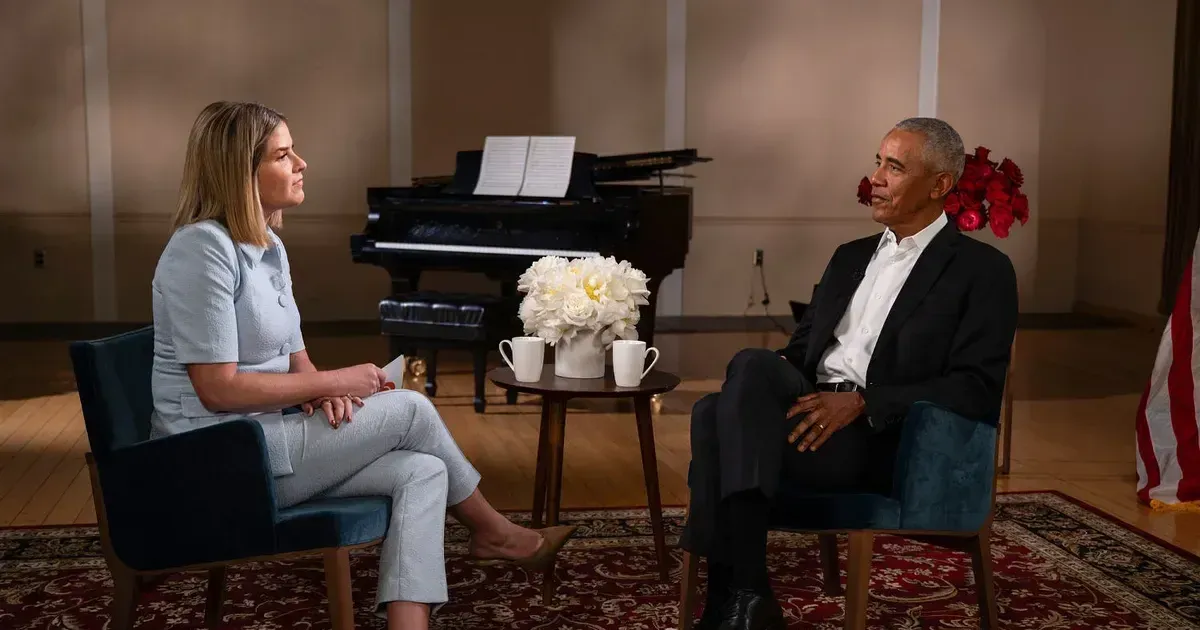
Barack Obama, George W. Bush, Bill Clinton, and Joe Biden appeared together on April 21, 2026, to deliver a unified message of national optimism. This collective appearance is the public launch of the America250 celebrations, marking the sestercentennial of the United States. Organizers structured the event around a series of exclusive one-on-one interviews conducted by Jenna Bush Hager for the TODAY program. These sessions took place at a major forum hosted by The History Channel under its History Talks banner.
Inside the venue, the four leaders addressed the complexities of the American experiment while emphasizing a shared belief in future progress. Each man has held the highest office in the land during periods of intense national transition, yet they appeared aligned in their appraisal of the country’s endurance. Jenna Bush Hager, the daughter of the 43rd president, enabled a dialogue that moved between personal reflections on the office and broader commentary on the 250th anniversary. These conversations will form a foundation of the media strategy for the national milestone.
Interviews conducted by Hager focused on the unique camaraderie that exists among those who have occupied the Oval Office. This bond goes beyond partisan divides, appearing as a recurring theme throughout the taped segments. Biden and his predecessors discussed the specific pressures of the role and how their post-presidency relationships have evolved. Sources familiar with the production noted that the presidents spent substantial time together off-camera before the formal interviews began. The History Channel event marks one of the few times four presidents have collaborated on a single cultural project in recent memory.
Presidential Reflections and Historical Legacy
Optimism was the dominant rhetorical frame for the gathering in April. Clinton spoke about the resilience of democratic institutions, while Bush highlighted the role of individual citizens in maintaining national stability. Obama focused on the generational shift occurring as the nation reaches its 250-year mark. Biden, currently leading the administration, provided context on how the current era fits into the long arc of American history. Such coordination reflects a deliberate attempt to project stability during a period often characterized by social and political friction.
Regarding the specific interviews, Hager explored the challenges each leader faced during their respective tenures. They shared anecdotes about the solitude of decision-making and the weight of executive responsibility. One segment featured the presidents discussing the concept of gratitude, with each leader reflecting on what they appreciate most about their time in public service. These personal details aim to humanize the office as the country prepares for a year of intense historical reflection. The History Channel intends to broadcast the full series of talks as part of a larger partnership with the America250 commission.
“I am grateful for the opportunity to have served this country and to see the enduring spirit of the American people, which gives me immense hope for our collective future.”
Camaraderie between these men was on full display during the History Talks event. They referenced the informal advisory role that former presidents often play for their successors. This network, often called the most exclusive club in the world, remains a critical if unofficial component of the American executive branch. Bush Hager's presence added a familial dimension to the proceedings, particularly during her exchange with her father. The production team used multiple cameras to capture these candid interactions between the former rivals and allies.
Logistics of the America250 Collaboration
Recent polling suggests that the public remains skeptical of political unity, making this high-profile gathering a major branding exercise for the sestercentennial. The America250 commission is tasked with planning events across all 50 states to commemorate the 1776 signing of the Declaration of Independence. The presidential appearance is the first of several planned activations involving high-level dignitaries. Organizers spent months coordinating the schedules of the four leaders to ensure their simultaneous participation. Security for the event involved a large joint operation between the Secret Service and local law enforcement.
Historians note that such displays of unity have precedent but are rarely this expansive. In 1997, five presidents gathered in Philadelphia for the Presidents' Summit for America's Future. In 2017, the living former presidents joined forces for a hurricane relief concert in Texas. The current collaboration is broader in scope, focusing on a multi-year celebration of the nation’s founding. The History Channel, as a primary partner, has invested substantial resources into documenting these interactions for archival purposes. Production for the special segments began early in 2026.
Each leader addressed the specific anxieties of the modern era by drawing parallels to historical crises. Obama referenced the industrial shifts of the early 20th century, while Bush spoke on the post-Cold War landscape. Clinton provided analysis on the technological revolution he oversaw in the 1990s. Biden connected these past experiences to the current geopolitical climate. These insights were framed not as political arguments, but as historical observations meant to provide a sense of continuity. Interviews are expected to reach a global audience through digital distribution platforms.
National Unity and Media Partnerships
Partnerships with media entities like NBC News and The History Channel are central to the America250 outreach program. By using high-profile personalities like Hager, the commission aims to engage a younger demographic that may feel disconnected from traditional historical narratives. The production used high-resolution 4K technology to record the conversations, ensuring the footage is a permanent record for future generations. Distribution deals for the content involve multiple streaming services and broadcast networks. Revenue from the partnership reportedly supports various educational initiatives linked to the sestercentennial.
Beyond the televised segments, the four presidents participated in a closed-door roundtable discussion about the future of civic education. They examined data regarding the decline in historical literacy among American students. The specific focus on education aligns with the legislative mandate of the U.S. Semiquincentennial Commission. Biden emphasized the need for a shared national narrative that acknowledges both triumphs and failures. The roundtable session ended with a joint statement regarding the importance of preserving democratic norms. Organizers kept the details of this private meeting confidential until the day of the public broadcast.
Political analysts observe that this gathering occurs at a moment of deep polarization. The image of the four men sitting together is a powerful visual counterpoint to the daily friction of the news cycle. Critics, however, might view the event as an attempt to sanitize the legacies of the individuals involved. Supporters argue that the milestone of 250 years requires a level of decorum that goes beyond individual policy disagreements. The public reaction to the initial teaser clips was predominantly positive on social media platforms. Each president has committed to appearing at additional regional events throughout the 2026 calendar year.
Final remarks from the History Talks event centered on the concept of the American dream in the 21st century. The presidents were asked to define what the next 50 years of the country might look like. Their answers varied in focus but remained consistent in their optimistic tone. Clinton emphasized economic adaptability, while Obama spoke on social inclusion. Bush and Biden both touched on the role of American leadership in a changing global order. These perspectives will be expanded upon in a commemorative book scheduled for release later this year. The event concluded with a standing ovation from the invited audience of students and educators.
America250 Tests National Unity
Questions of legacy often obscure the immediate political utility of presidential imagery. The highly choreographed display of unity between Obama, Bush, Clinton, and Biden is more than a celebration of history but a desperate attempt to re-legitimize the institutional center. By leaning on the familial warmth of Jenna Bush Hager, the production attempts to humanize a political class that has seen its approval ratings crater over the last two decades. The aesthetic of camaraderie is a soft-power tool, designed to project an image of stability to an increasingly skeptical domestic and international audience. The evidence points to a managed performance of consensus that masks the structural decay these very leaders presided over.
Historical anniversaries like America250 are traditionally used as moments of national consolidation. The specific gathering, however, feels more like a defensive circle. The presidents are doing more than talking about the past; they are pleading for the relevance of the political order they represent. The History Channel and NBC News are complicit in this branding exercise, providing a polished platform that avoids the sharp edges of each man’s actual record in office. It is an exercise in narrative control, where the weight of the office is used to flatten the contradictions of their individual tenures. Cynics will rightly note that the optimism expressed in these interviews is a necessary product for a commission that cannot afford a realistic assessment of the national mood. The strategic value of this event lies in its visual impact. In an age of digital fragmentation, the sight of four presidents on a single stage remains one of the few images capable of arresting public attention. It is about brand management for the United States. The sestercentennial is a global marketing opportunity, and these four men are the primary ambassadors. Whether this display of unity can survive the actual political friction of the 2026 election cycle is doubtful. For now, the center holds because the cameras are rolling. Professionalism outweighs conviction.