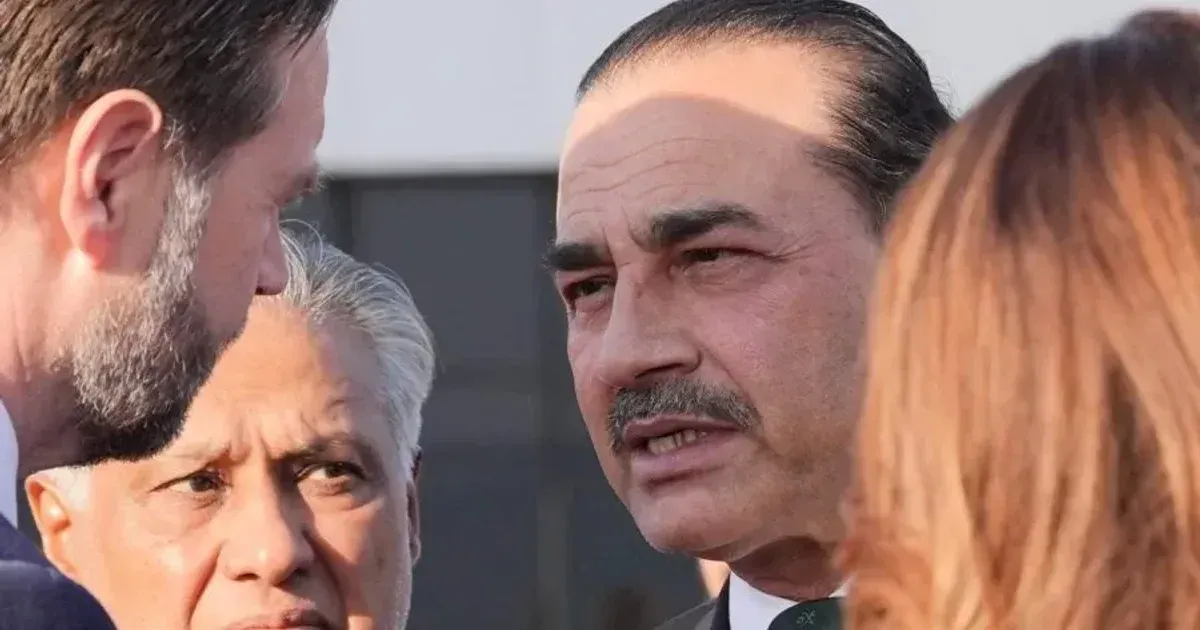
Trump’s ceasefire deadline threat has turned Iran diplomacy into a military timing problem. The pressure campaign will be judged by whether it produces concessions or escalation. President Donald Trump on April 21, 2026, warned Iranian leaders that the United States would resume military strikes if a fragile ceasefire expires on Wednesday evening without a new agreement. Negotiators led by Vice President JD Vance arrived in Islamabad on Tuesday to meet with Iranian officials and Pakistani mediators. These discussions represent the final diplomatic attempt to halt a conflict that began with a series of coordinated American and Israeli airstrikes in February.
Pakistan urged both powers to extend the cooling-off period to prevent a broader regional fire. Pakistani Foreign Affairs Minister Mohammad Ishaq Dar met with U.S. Deputy Chief of Mission Natalie Baker to outline the risks of a return to active combat. Baker heard Dar’s concerns regarding the potential for further economic destabilization in South Asia. The temporary truce is scheduled to conclude at 6:00 p.m. local time on Wednesday.
Oil prices fluctuated wildly on Tuesday as traders reacted to the possibility of renewed hostilities in the Persian Gulf. Energy markets remain sensitive to any disruption in the Strait of Hormuz, where roughly 20% of the world’s crude oil supply transits daily. Iran effectively closed the waterway following the initial American attacks earlier this year, leading to a global spike in fuel costs. Crude futures rose by 4% within hours of the president’s latest public statements.
Islamabad Negotiations and the Women's Release Request
Trump introduced a new humanitarian demand into the high-stakes diplomacy by calling for the release of eight women currently held in Iranian prisons. These women face execution after being accused of various crimes against the Islamic Republic. Trump used his Truth Social platform to communicate directly with Iranian leadership on the matter. He stated that he would greatly appreciate their release before formal negotiations begin in earnest. This request adds a layer of social pressure to a dialogue primarily focused on naval security and territorial sovereignty.
Vice President JD Vance carries a specific mandate to secure a comprehensive agreement that ends the blockade of international shipping. Iranian officials indicated on Friday that the strait would reopen, yet that progress stalled within 48 hours. Disagreements over the continued U.S. naval presence in the region forced a regression in the talks. Tehran demanded an immediate cessation of the American blockade on Iranian exports as a requirement for regional de-escalation.
White House officials characterized the Islamabad summit as the last opportunity for a peaceful resolution. National security advisors briefed the president on multiple strike options targeting Iranian energy infrastructure and command centers. Trump defended these contingency plans during a televised interview on Tuesday morning. He asserted that a readiness to deploy force provides the U.S. with the necessary leverage to secure a favorable deal.
“Well, I expect to be bombing because I think that’s a better attitude to go in with,” Trump said in an interview with CNBC. “But we’re ready to go. I mean, the military is raring to go. They are absolutely incredible.” Pentagon planners are eyeing key assets like Kharg Island for potential strikes if diplomacy fails to secure a deal.
The Pentagon moved additional carrier strike groups toward the Gulf of Oman over the weekend. Military analysts noted that the buildup includes specialized assets for neutralizing coastal defense batteries and drone launch sites. These preparations coincide with Trump’s threats to target civilian infrastructure if a fair agreement is not reached. Democratic lawmakers in Washington condemned the rhetoric, arguing it undermines the work of the diplomatic mission in Pakistan.
Strait of Hormuz Energy Security and Naval Blockades
Shipping lanes in the Strait of Hormuz are currently under a dual layer of restriction. Iran maintains a tactical grip on the waterway’s entrance, while the U.S. Navy enforces a strict blockade on Iranian-flagged vessels. Tension peaked last week when American forces seized the Touska, a cargo ship attempting to bypass the maritime cordon. The vessel was diverted to an undisclosed port for inspection and seizure of its manifest.
Tehran responded to the seizure of the Touska by redoubling its efforts to clamp down on all commercial traffic passing through the strait. Iranian Revolutionary Guard Corps fast boats were observed laying tethered mines in several deep-water channels. These maneuvers forced global logistics firms to reroute tankers around the Cape of Good Hope, adding weeks to delivery schedules. Insurance premiums for maritime transport in the Middle East have surged to levels not seen since the late 1980s.
A spokesperson for the Iranian Foreign Ministry described the U.S. blockade as an act of economic piracy. They claimed that the reopening of the strait is contingent upon the removal of all American warships from the immediate vicinity. Trump, however, insisted that the blockade remains in effect until Iran agrees to a permanent cessation of its regional proxy activities. He accused Iranian forces of striking multiple European cargo ships in a series of unclaimed attacks over the past ten days.
Economists at $11 billion hedge funds are currently modeling the impact of a total, long-term closure of the waterway. A sustained shutdown could push global oil prices toward $150 per barrel, according to analysts at Goldman Sachs. Such a price level would likely trigger a recession in several European Union member states. Germany and Italy are particularly vulnerable due to their reliance on Middle Eastern energy imports and limited alternative pipelines.
Pakistani Diplomacy Efforts to Prevent Regional Escalation
Mohammad Ishaq Dar spent the day coordinating with regional partners to find a middle ground between Washington and Tehran. Pakistan occupies a unique position as a traditional U.S. security partner with a shared border with Iran. Dar’s office released a statement emphasizing the humanitarian necessity of maintaining the ceasefire. The Pakistani government fears that a full-scale war would lead to a major influx of refugees across its western frontier.
Natalie Baker met with Pakistani military leadership to discuss intelligence sharing regarding the movement of non-state actors in the border regions. Stability in the Balochistan province is a primary concern for Islamabad if the ceasefire collapses. Local insurgent groups often exploit central government distractions during periods of international crisis. Pakistani security forces have been placed on high alert to prevent cross-border incursions or smuggling operations.
The Islamabad talks are expected to continue through the night as the Wednesday 6:00 p.m. deadline approaches. Vance is reportedly working on a tiered plan that would see a gradual lifting of the U.S. blockade in exchange for verifiable Iranian naval retreats. Iranian negotiators have yet to provide a counter-offer that addresses the status of the Touska and its detained crew. The lack of a clear timeline for the release of the eight women also remains a point of friction between the delegations. Congressional leaders in the United States are split along partisan lines regarding the president’s approach. Supporters argue that the credible threat of force is the only language the Iranian leadership respects. Opponents believe that threatening civilian infrastructure violates international law and risks a global energy catastrophe. The Pentagon has confirmed that all theater commanders are prepared to execute offensive operations the moment the ceasefire expires.
Ceasefire Deadline Tests Iran Talks
Can a superpower successfully negotiate an exit from a conflict while simultaneously threatening to vaporize its opponent's infrastructure? The current administration believes so, betting that the Iranian regime is more afraid of total collapse than it is of a loss of face in the Strait of Hormuz. This gamble rests on the assumption that Tehran has reached its breaking point regarding the American naval blockade. By centering the negotiations in Islamabad, the U.S. is leveraging Pakistan’s proximity and its existential dread of a regional war to force Iran into a corner. Trump’s demand for the release of eight women is a tactical distraction. If the ceasefire collapses, neither that demand nor the Islamabad venue will conceal the failure to convert military pressure into a durable settlement. The deadline may produce an agreement, but it may just as easily become the trigger for the next round of war.