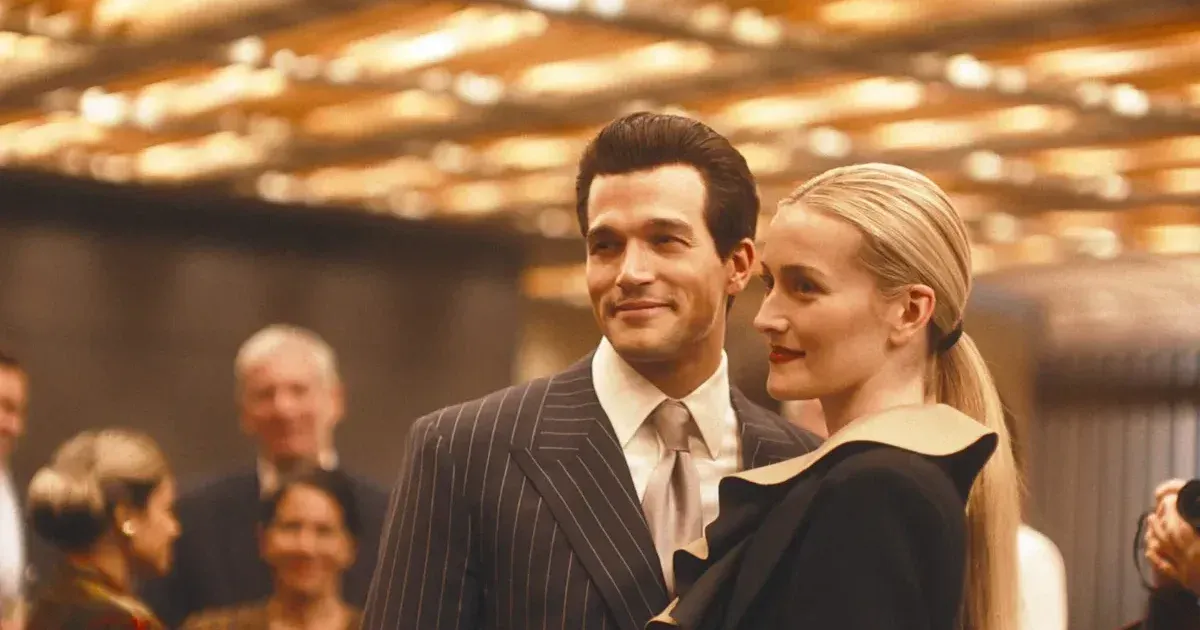
Ryan Murphy debuted the series finale of the limited series Love Story on March 27, 2026, closing the narrative loop on one of the most examined romances in American political history. Viewers witnessed a scripted departure from the historical record during the closing sequence. Instead of a direct recreation of the aviation tragedy that claimed three lives, the production chose an ethereal, speculative sequence set on a Massachusetts beach. This creative choice is a narrative bookend to a season that focused on the internal emotional states of its protagonists over the tabloid-driven scandals of the 1990s.

Critics had spent months speculating on how the production would handle the events of July 16, 1999, when the Piper Saratoga piloted by the son of the former president vanished into the Atlantic. Murphy avoided the mechanics of the crash entirely. In fact, the finale leaned into a dreamlike atmosphere where the couple exists in a state of perpetual youth, away from the flashbulbs that defined their public existence. Such a shift in tone aligns with the broader editorial strategy of the anthology, which has sought to humanize figures often flattened by the weight of their own surnames.

Ryan Murphy Reinterprets the Kennedy Dynasty

Production for the series reportedly exceeded $100 million, with much of that capital directed toward recreating the specific aesthetics of Tribeca and Hyannis Port. Love Story used high-definition archival restoration to match the grain of the show’s cinematography with real-world footage from the era. By contrast, the finale abandoned this hyper-realism for something more impressionistic. The ending does not offer a resolution to the many conspiracy theories or mechanical debates surrounding the flight. It presents a quiet, visual eulogy that focuses on the private bond between the two lead characters.

According to Variety, the final frames depict the couple walking toward a shoreline, a sequence designed to represent the life they might have led had they reached their destination. Writers worked closely with historians to ensure that the wardrobe and dialogue in these speculative moments remained grounded in the couple’s known preferences. Still, the artistic license taken in the final moments has already generated meaningful debate among Kennedy family biographers. Some argue that the avoidance of the crash details sanitizes a moment of deep national grief.

In a different arena, the showrunners defended the decision as a way to provide emotional closure for a generation of viewers who only remember the couple through the lens of tragedy. In turn, the finale focuses on the quiet domesticity that the couple allegedly craved. Carolyn Bessette Kennedy is portrayed not as a fashion icon or a reclusive socialite, but as a woman seeking a path out of a suffocating public spotlight. The script emphasizes the isolation she felt within the political machine of her husband’s family.

Carolyn Bessette Kennedy and the Media Test

Bessette Kennedy faced intense scrutiny from the New York paparazzi throughout her marriage, a dynamic the series explored through claustrophobic camera work. For one, the show detailed the physical and psychological toll of the constant surveillance outside their North Moore Street apartment. For instance, the eighth episode highlighted a specific confrontation with photographers that mirrors real-world accounts from the late nineties. These scenes built a sense of inevitable pressure that the finale attempted to release through its final, peaceful imagery.

The pair are shown on a Massachusetts beach, living the life they might have had if fate had not intervened in the dark skies over the Atlantic.

And yet, the series does not shy away from the volatility that reportedly marked the relationship. Internal documents from the production suggest that the actors were encouraged to lean into the friction caused by the unrelenting media attention. Still, the final episode retreats from this conflict. By contrast, the beach scene acts as a silent film within a larger drama, stripped of the dialogue that often fueled the couple’s arguments in previous episodes. The visuals carry the weight of the narrative conclusion.

Historical Weight of the July 1999 Plane Crash

History records that the plane went down in hazy conditions near Martha’s Vineyard, killing John F. Kennedy Jr., his wife, and her sister, Lauren Bessette. The series finale acknowledges this reality through its wistful tone rather than a forensic reconstruction. In particular, the use of color grading shifts from the vibrant, saturated tones of the couple’s early romance to a more muted, oceanic palette. This visual transition signals the approaching end without needing to show the wreckage or the search efforts that followed.

For that reason, the production team consulted with aviation experts to understand the atmospheric conditions of that night, even if they chose not to depict them. Meanwhile, the legal and social implications of the crash remain a point of discussion for the many documentaries that preceded this dramatization. Love Story distances itself from those procedural accounts by focusing on the psychological landscape of the final weekend. The script suggests a couple attempting to reconcile their differences just as the weather began to turn. This tension provides the engine for the final hour.

But the beach sequence remains the most talked-about element of the broadcast. In fact, social media engagement peaked during the final three minutes when the speculative reality took hold. For one, the absence of the third passenger, Lauren Bessette, in the final dream sequence has raised questions about the show’s priorities. Producers focused exclusively on the central romance for the closing shots. The decision highlights the series’ intent to function as a character study rather than a thorough historical record.

Technical Execution of the Martha’s Vineyard Scene

Filming for the beach sequence took place under strict security to prevent leaks regarding the alternate ending. $500,000 was reportedly spent on digital de-aging and environment mapping to ensure the coastal setting looked authentic to the era. That said, the sequence was not meant to look perfectly real. It carries a hazy, soft-focus quality that distinguishes it from the gritty realism of the show’s earlier New York scenes. The contrast emphasizes the distance between the couple’s actual life and the peace they are granted in this fictional farewell.

Yet, the emotional impact of the scene relies heavily on the audience’s pre-existing knowledge of the disaster. For instance, the sight of a clear, calm horizon on screen is a direct counterpoint to the thick haze that actually caused the pilot’s spatial disorientation. Audiences are forced to reconcile the tranquil image on screen with the violent reality of the Atlantic graveyard. The dissonance is the primary tool Murphy uses to elicit a response from the viewer. The silence of the final shot replaces the sound of a stalling engine.

The Elite Tribune Perspective

Ancient Greek tragedians understood that the audience’s knowledge of a character’s doom is what provides a play with its power. Ryan Murphy’s Love Story attempts to weaponize this historical foreknowledge by offering a sugary, speculative exit for a couple who died in a terrifying, avoidable accident. While the finale is technically skilled and emotionally manipulative, it is a growing trend in prestige television where historical trauma is repackaged as a comforting fable. There is something naturally cynical about providing a happy ending for a story that has no happy ending.

By stripping away the terror of the final moments and the loss of Lauren Bessette, the show transforms a complex human tragedy into a digestible piece of brand-managed nostalgia. The real John and Carolyn were not figures in a dream; they were people caught in a web of fame and technical error. Replacing their actual experience with a seaside fantasy does not only offer closure. It erases the harsh, necessary lessons of their deaths in favor of a wistful aesthetic. We should be wary of entertainment that seeks to heal wounds by pretending they were never inflicted.

The Kennedy legacy deserves more than a soft-focus sunset.