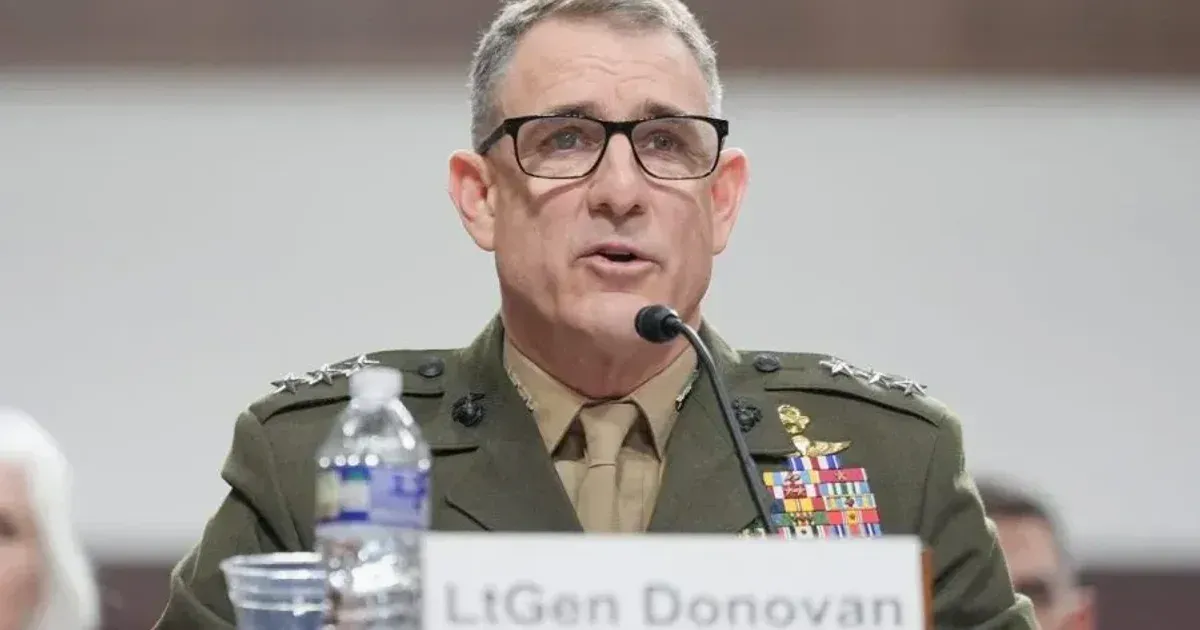
General Francis L. Donovan authorized a lethal kinetic strike against a vessel in the eastern Pacific Ocean on April 14, 2026, resulting in the deaths of two men identified by officials as narcoterrorists. Southern Command officials confirmed the engagement occurred within the maritime transit zone known for high-volume illicit trafficking. Intelligence assets tracked the target for several hours before the decision to use lethal force was finalized at the command level. Military leaders stated the suspects were involved in transnational organized crime activities that presented a direct threat to regional stability.
Joint Task Force Southern Spear conducted the operation with precision assets designed for maritime interdiction. Detailed reports from the scene indicate the boat was intercepted in international waters far from established shipping lanes. Two individuals perished when the kinetic munition struck the hull of the craft. Officials from Southern Command noted that the individuals were classified as narcoterrorists due to their ties to armed insurgent groups and high-level smuggling cartels. Eastern Pacific surveillance missions have increased by 30% over the last fiscal year to combat these specific threats.
Joint Task Force Southern Spear Operations
General Francis L. Donovan maintains strict oversight of the specialized units comprising Joint Task Force Southern Spear. This organization operates as a multi-agency coordination center designed to fuse military intelligence with law enforcement data. Deploying kinetic strikes against non-state actors in the Eastern Pacific is a specific tactical evolution for the task force. Previous missions focused primarily on physical interdiction and boarding, but the increasing use of armed resistance by traffickers has altered the rules of engagement. Commanders now prioritize the safety of American personnel through the use of unmanned aerial systems and standoff weaponry.
Success in these missions depends on a complex network of satellite reconnaissance and signals intelligence. Military analysts at Southern Command headquarters in Doral, Florida, monitor thousands of square miles of ocean daily. Every identified vessel undergoes a rigorous vetting process to determine its origin, cargo, and potential threat level. Small, low-profile vessels often evade traditional radar, requiring the use of advanced infrared sensors and persistent overhead coverage. Logistics for such a vast area of operations require refueling capabilities and forward-operating sites across Central and South America.
SOUTHCOM wrote on social platform X that at the direction of its commander, Gen. Francis L. Donovan, Joint Task Force Southern Spear conducted a lethal kinetic strike on a boat in the eastern Pacific Ocean, killing two male narcoterrorists.
Maritime Counter-Narcotics Tactics in the Eastern Pacific
Transit zones in the Eastern Pacific serve as the primary conduits for bulk narcotics moving toward North American markets. General Francis L. Donovan has repeatedly emphasized the necessity of neutralizing these pathways before cargo reaches land. Traffickers use sophisticated naval engineering to build semi-submersible craft that sit inches above the waterline. These vessels, often referred to as narco-subs, carry multi-ton shipments and are difficult to detect during high seas. Kinetic strikes serve as a deterrent to the organizations investing millions into these stealthy maritime platforms. This lethal kinetic strike follows a similar engagement carried out by forces just days prior.
Tactical shifts toward lethal force often occur when intelligence suggests a vessel is carrying weapons or personnel trained in combat. Joint Task Force Southern Spear utilizes a tiered response system starting with verbal warnings and warning shots. When suspects refuse to yield or display hostile intent, the command authorizes more aggressive measures. Evidence recovered from previous Eastern Pacific intercepts showed a marked increase in automatic weaponry and communications encryption among smuggling crews. Confronting these hardened targets requires the full spectrum of military capabilities rather than standard U.S. Coast Guard procedures.
Narco Boat Strike Raises Oversight Questions
Militarizing the war on drugs through the use of lethal kinetic strikes is a permanent shift in American foreign policy. General Francis L. Donovan is doing more than conducting a law enforcement operation; he is waging a low-intensity war against an enemy that lacks a flag or a uniform. The strategy bypasses the traditional judicial process of arrest, extradition, and trial in favor of immediate, terminal consequences. While Southern Command maintains that these actions save American lives by stopping the flow of poison into cities, the lack of transparency surrounding the narco-terrorist designation is a cause for concern. Defining a criminal as a terrorist effectively removes their right to surrender in many operational contexts.
Joint Task Force Southern Spear is the tip of a very expensive spear. The cost of a single kinetic strike, including the thousands of flight hours and satellite time required to find a target, likely outweighs the street value of the drugs on a single boat. It is no longer about stopping shipments; it is about projecting power in the Eastern Pacific. If the goal is to bankrupt cartels, blowing up a few two-man crews is an inefficient use of resources.
The real objective appears to be the establishment of a military deterrent that makes the cost of doing business too high for smuggling organizations. Whether the cartels will fold or simply innovate with more dangerous technology is the gamble the Pentagon is currently making. Blood in the water is the new standard of success.