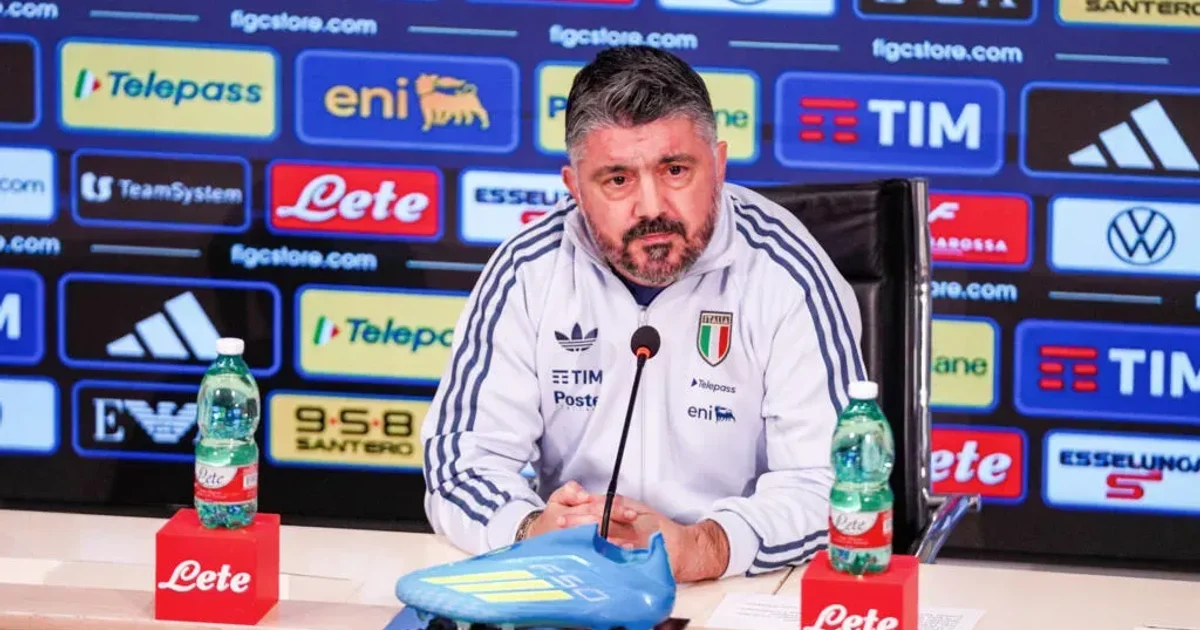
Gennaro Gattuso resigned as head coach of the Italian national football team, ending a period of intense public scrutiny following the country's failure to reach the FIFA World Cup for a third consecutive tournament. Official confirmation arrived through a brief statement describing the separation as a mutual termination, though internal reports suggest a rapid breakdown in confidence between the manager and the governing body. Italy will now spend another summer away from the global stage, a reality that has paralyzed the domestic sporting infrastructure since the final whistle of the qualification play-offs earlier this week. The April 3, 2026, resignation deepened the institutional crisis around Italian football.
National grief turned toward the administrative offices of the FIGC almost immediately after the team fell short of the 2026 World Cup. Initial reports described a professional, mutual departure, while later accounts said Gattuso submitted his formal resignation on Friday. Gattuso's exit occurred just twenty-four hours after Gabriele Gravina, the enduring president of the Italian Football Federation, also vacated his position. Gravina faced unrelenting pressure to accept responsibility for a systemic decline that has seen a four-time world champion miss twelve years of tournament football.
Gattuso failed to rejuvenate a squad that appeared tactically rigid during the final qualification stages. Critics point to his inability to integrate younger talent from the domestic league into the senior setup. The manager secured only three victories in his final nine competitive matches. Supporters had hoped his aggressive leadership style would translate into on-field discipline, yet the opposite occurred as the team struggled to find a consistent offensive rhythm. Rome now faces a total vacuum of leadership at both the coaching and administrative levels.
FIGC Leadership Collapses Under Qualification Pressure
Gabriele Gravina left his post on April 2, 2026, citing the need for a fresh start for the national program. His tenure, once lauded for the 2021 European Championship victory, became defined by the subsequent inability to secure World Cup passage in 2022 and 2026. Al Jazeera reported that the failure continues to send tremors through the Italian football community. Discontent has moved beyond the fans and into the boardrooms of major Italian clubs who see the national team's decline as a threat to their commercial interests.
Gennaro Gattuso and Italy agree to mutually terminate his contract after their failure to qualify for a third successive World Cup.
Administrative failures extend beyond the senior team's results on the pitch. Budgetary reports suggest that the FIGC mismanaged development funds intended for regional academies. Because these facilities lacked modernization, the pipeline of elite strikers and creative midfielders essentially dried up. Gravina oversaw a period where the gap between the Italian national team and its European rivals, such as France and England, widened sharply. The federation reported a 15 percent decrease in grassroots participation over the last four years.
Economic Damage From Global Tournament Absence
Commercial analysts estimate that Italy will lose approximately $100 million in potential revenue due to its absence from the 2026 World Cup. The result includes lost sponsorship bonuses, television rights distributions, and a sharp decline in licensed merchandise sales. Broadcasters in Milan and Rome are already bracing for a substantial drop in advertising rates during the tournament window. Historically, the Italian public's interest in the World Cup drops by nearly 60 percent when the national team is not participating.
Consumer behavior data indicates that the Italian hospitality sector suffers when the Azzurri are absent. Bars, restaurants, and fan zones lose millions in projected foot traffic during the summer months. Major sponsors like Adidas and various telecommunications firms have clauses in their contracts that reduce payments if the team fails to qualify for major events. Investors in the national team brand see this third consecutive absence as a catastrophic devaluation of the blue jersey. Italy's World Cup failure follows a pattern of systemic decline that has drawn sharp criticism across the nation.
Serie A clubs anticipate a secondary economic impact through the transfer market. Players within the Italian league lose international visibility, making it harder for clubs to command high transfer fees from wealthy overseas buyers. Domestic viewership for the league often spikes following a successful World Cup run, but those gains are now impossible. Corporate partners are reportedly seeking to renegotiate terms with the league office given the national team's diminished stature.
Structural Decay in Italian Youth Development
Internal reviews of the Italian scouting system reveal a deep reliance on aging veterans. Gennaro Gattuso faced criticism for continuing to call up players whose peak performance years had passed. Despite several young prospects emerging in the under-21 ranks, the transition to the senior squad remained blocked by a conservative tactical approach. The biggest European nations have lowered the average age of their starting lineups, but Italy stayed at an average of 28.4 years throughout the qualifiers.
Italy Searches for a Post-Gattuso Reset
Italian football is no longer suffering from a temporary slump; it is experiencing a total systemic collapse that no single coaching change can fix. Gattuso's departure removes a symptom, whereas deep cultural arrogance has prevented the FIGC from modernizing. For too long, the national program has rested on the laurels of its 2006 victory and the outlier success of Euro 2021, ignoring that its domestic league has become a developmental backyard for the rest of Europe. If the federation continues to prioritize aging veterans over a radical youth movement, the 2030 tournament will also be viewed from the sidelines.
Italy must dismantle the current power structure of the FIGC and implement a mandatory quota for domestic youth players in Serie A to survive this crisis. The financial loss of $100 million is the price of institutional laziness. No manager, regardless of their pedigree, can succeed in a system that refuses to invest in its own future. The national team is currently a hollow brand surviving on history rather than contemporary excellence. It is the end of the Italian era as a global footballing power unless the entire infrastructure is burned to the ground and rebuilt. The world has moved on, while Rome is still arguing about the past. Italian football is dead.