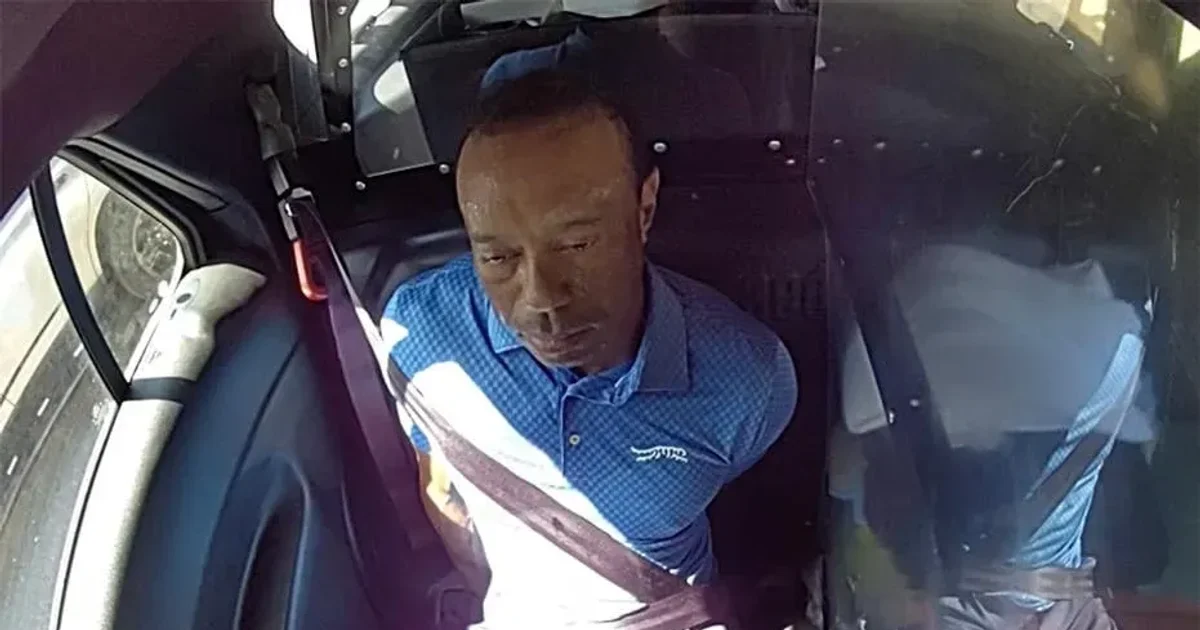
Police reports released on April 3, 2026, reveal that Tiger Woods overturned his vehicle and faced driving under the influence charges. Officers discovered the athlete inside a 2025 Range Rover that had flipped onto its driver side. The March 27, 2026, crash revived questions about pain treatment, public accountability and Woods' ability to return to tournament golf. Records show the golfer appeared lethargic and failed field sobriety tests despite recording a zero on a breathalyzer test. Woods struggled to maintain balance when exiting the vehicle through the passenger door with assistance from emergency responders. One officer noted that his eyes appeared glassy and his speech was slurred during the initial interaction.
Bodycam footage shows the fifteen-time major champion sitting in the rear of a patrol car in silence for several minutes before making a sarcastic three-word remark. The police record reopened scrutiny of Woods' post-crash public image.
The sarcastic remark came as officers processed the scene on the side of the road. Evidence suggests the golfer was drifting in and out of consciousness before the impact. Investigators found the vehicle on its side approximately two hours after the initial collision report. Documentation identifies the presence of two pills inside the car, later confirmed as hydrocodone, an opioid medication. Medical history provided by the athlete includes seven back surgeries and more than 20 operations on his right leg. Recovery from a high-speed collision in 2021 previously sidelined him for an entire season. Leg injuries from that incident continue to require intensive management through physical therapy and medication.
Range Rover Crash and Sobriety Test Failures
Initial reports from the scene indicate the vehicle crossed several lanes of traffic before striking an embankment. Witnesses described the SUV turning onto its side after hitting a secondary vehicle. Emergency crews arrived to find Woods disoriented but conscious enough to communicate. He told law enforcement he was talking to the President just before the crash occurred. Breathalyzer results returned a reading of 0.00, ruling out alcohol consumption as a factor in the immediate aftermath. Despite the breathalyzer results, the physical impairment observed by officers triggered a secondary investigation.
Woods refused to submit to a urine screening at the station, leading to an additional charge under state law. Florida statutes treat a refusal to provide a biological sample as a separate offense for drivers previously convicted of similar violations.
Law enforcement officials noted that the golfer appeared sweaty and struggled to keep his eyes open during questioning. Records indicate he was unable to stand on one leg or follow a moving light with his eyes. Physical pain from his extensive surgical history appeared to complicate his performance on the balance-related tests. Woods informed officers that he takes several prescription medications to manage his ongoing mobility issues. Toxicology reports remain pending to determine the exact concentration of substances in his system. The arrest marks the second time the golfer has faced DUI charges, following a 2017 incident involving sleep medication and pain relievers.
Chronic Pain and Prescription Opioid Recovery
Chronic injury has defined the latter half of the professional career of Tiger Woods. Major surgeries on his spine and lower extremities have forced him to adopt a rigorous pharmacological routine. Donald Trump discussed the situation on Tuesday, emphasizing the physical toll the sport has taken on the legendary athlete. The former president highlighted the constant pain associated with the various operations Woods has endured over the last decade. High-impact sports often leave veterans with long-term nerve damage and joint deterioration that requires heavy medication.
Critics of the professional golf circuit point to the lack of oversight regarding pain management for aging stars. Support from high-profile figures focuses on the mental and physical resilience required to compete at a championship level while suffering from debilitating injuries.
"He lives a life of pain. He has a lot of pain. He’s an amazing guy. He’s an amazing athlete. He does have pain. He doesn’t have an alcohol problem, but he does have pain," Donald Trump said.
Legal Consequences and Future Tournament Status
The prospect of jail time or a suspended license now hangs over the future of the most recognizable face in golf. Legal analysts note that Florida law is particularly harsh on repeat offenders in DUI cases. Refusing the urine test automatically triggers a one-year license suspension regardless of the final court verdict. Future participation in the Masters Tournament or other major championships is now in serious doubt. Augusta National has historically maintained strict standards for player conduct both on and off the course. Officials at the PGA Tour have not yet released a formal statement regarding his eligibility for upcoming events. Tournament organizers typically wait for the legal process to conclude before issuing disciplinary actions.
Looking ahead, the recovery path for Woods involves both legal hurdles and physical rehabilitation. Attorneys for the golfer are expected to argue that his behavior was a reaction to prescribed medication rather than recreational drug abuse. Previous cases suggest that a medical necessity defense can be difficult to prove in driving a motor vehicle. Fans of the sport are left wondering if they have seen the last of the legendary figure on a competitive fairway. Most analysts believe his primary focus must shift to health management to avoid a permanent exit from public life.
The court date for the initial hearing is set for late next month. Prosecutors will rely on the bodycam footage and the evidence found within the vehicle to build their case.
Bodycam Case Extends Woods Accountability
Obsession with professional longevity often masks a darker reality of pharmacological dependency in high-impact sports. This arrest is not a standalone failure of judgment but a symptom of a sporting culture that demands its legends perform through agony. Tiger Woods is no longer just a golfer; he is a walking billboard for the brutal physical costs of maintaining a global brand. When a man tells police he is talking to the President while slumped over a steering wheel, the conversation should shift from his swing mechanics to his neurological health.
Coddling aging icons creates a dangerous vacuum where personal safety is sacrificed for TV ratings and sponsorship renewals. Donald Trump’s defense of the golfer’s "life of pain" is a rare moment of honesty that exposes the industry’s complicity. By ignoring the obvious signs of impairment, the sports media ecosystem has helped enable a cycle of reckless behavior and surgical desperation. This is not a comeback story. It is a slow-motion collapse of a man whose body has been shattered by the very game that made him a billionaire.
Augusta National and the PGA Tour must stop looking for a way to get him on the leaderboard and start looking for a way to keep him off the road. The legend is broken.