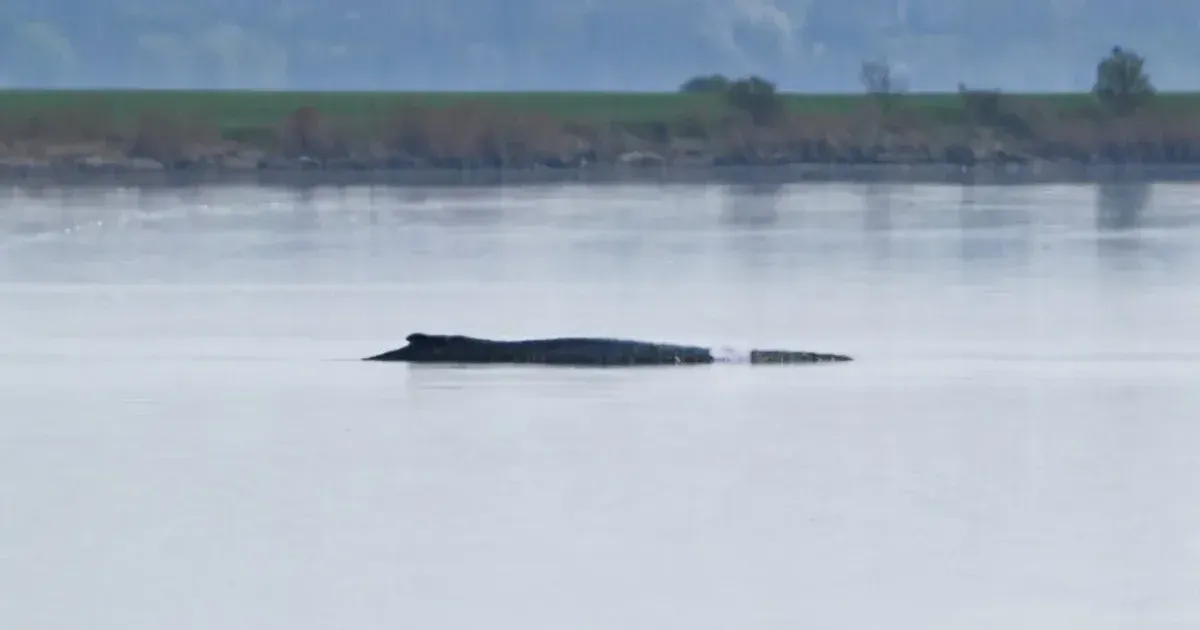
Marine biologists and rescue crews in Germany launched a specialized effort to refloat a humpback whale nicknamed Timmy after it became trapped in shallow Baltic Sea waters. The rescue drew attention because large marine mammals rarely survive long strandings. On April 16, 2026, the rescue entered a critical phase as teams prepared inflatable air cushions and waited for the right tide window. The young whale had wandered into an area where sandbanks, low water levels and limited salinity made survival increasingly difficult.
Veterinary teams warned that the animal's own weight could begin damaging internal organs if the stranding continued. That is the central medical problem in large-whale rescues: a body built to be supported by water can deteriorate quickly when it is stuck in the shallows. Crews had to keep Timmy wet, stable and calm while avoiding any move that could exhaust the animal before the lift began.
The rescue plan centered on inflatable air cushions placed carefully beneath the whale at low tide. Once positioned, the cushions can be inflated as the water rises, giving crews a safer way to lift the animal without relying on ropes or hard mechanical contact. Support vessels, divers and marine mammal specialists coordinated the timing because even a small shift in pressure could injure the whale during the lift.
Air Cushion Rescue Plan
Air cushions are used because they spread pressure more evenly than slings, which can cut into blubber or concentrate weight on fragile parts of the body. Divers must slide the equipment under the whale without forcing it into a position that blocks the blowhole or twists the spine. The process requires slow adjustments, repeated checks and constant communication between the team in the water and the support crew on nearby vessels.
ABC News International reported that rescuers planned to use air cushions as the main strategy, while earlier efforts focused on creating a path through the sandbank. A previous local operation to free a whale from a Lubeck Bay sandbank showed how difficult these cases become once a large marine mammal is pinned in shallow water. The current case depends less on speed than on keeping the lift controlled enough for the whale to survive it.
Weather and tide timing are central to the plan. Calm water gives divers better control, while the incoming tide provides the natural lift needed to move the whale without dragging it across the seabed. Crews also need to limit noise from boats and compressors because a stressed whale can exhaust itself or move suddenly at the worst possible moment.
The operation drew attention because humpback strandings of this kind are unusual on the German Baltic coast. Officials were not dealing with a routine beaching on an open shore, but with an animal caught in a confined coastal environment where rescue vessels, divers and medical teams had to work around sandbanks. That geography makes every intervention slower and increases the risk that a well-intended move could worsen the whale's condition.
Health Risks for Timmy
Veterinarians monitored Timmy for dehydration, skin damage and breathing stress. Stranded whales can deteriorate quickly because their bodies are built for buoyancy, not for bearing their full weight on land or in very shallow water. Wet coverings and pumps helped keep the skin from drying out while the team waited for a workable refloating window.
The Baltic Sea adds another problem. Humpbacks normally belong in deeper, saltier feeding grounds, not in confined coastal shallows where navigation options are limited. Low salinity, sandbanks and heavy vessel activity can turn a wrong turn into a medical emergency. The longer the animal remains trapped, the greater the risk that muscle damage, stress or infection will make release impossible.
Rescuers also had to plan for what happens after the lift. A whale that reaches open water may still need monitoring if it is exhausted or disoriented. Follow-up observation can show whether it swims strongly, surfaces normally and moves toward safer routes rather than returning to the same shallow zone.
Public communication also matters in a rescue like this. Crowds, boats and media attention can add pressure around the site, so officials need a controlled perimeter and clear updates that do not encourage spectators to move closer. The best outcome is not a dramatic final pull, but a quiet transition in which the animal is lifted, turned and guided out with as little additional stress as possible.
Why the Rescue Matters
The Timmy operation highlights the tension inside modern wildlife rescue. Saving one visible animal can mobilize public attention and technical skill very quickly, yet the same coastal systems also need quieter long-term work on shipping noise, navigation hazards and habitat pressure. The rescue is therefore both a humane intervention and a reminder that emergency responses cannot substitute for prevention.
There is still a practical reason to try. A successful refloating gives scientists data on equipment, tide timing and veterinary monitoring that can improve future responses. If more large whales enter the Baltic or other marginal waters, authorities will need tested procedures rather than improvised plans built under public pressure. Timmy's fate will be judged first by whether he reaches deeper water alive, but the larger test is whether the region learns from the stranding before the next one occurs.