Singapore harbor terminals handled a record influx of Russian fuel oil on April 24, 2026, marking a decisive pivot away from traditional Middle Eastern suppliers. Financial data from the world's largest refueling hub indicates a 40% rise in imports from Moscow compared to the previous fiscal quarter. Global commodity traders increasingly bypass disrupted corridors in the Persian Gulf in favor of more stable, if politically complex, northern alternatives. These shipments provide the essential bunker fuel required to power the large container ships that underpin international commerce.
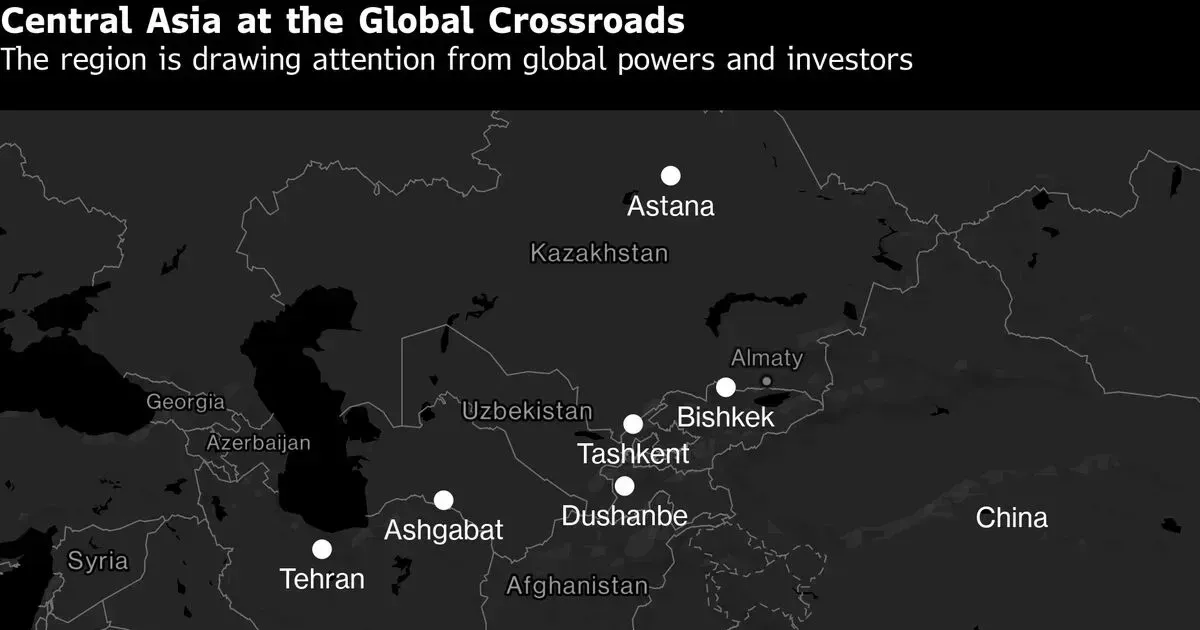
Central Asia simultaneously became a primary destination for international capital as Western and Eastern powers compete for mineral access. Investment flows into the region reached $45 billion in the first quarter of the year, driven by the demand for transition minerals like lithium and copper. Bloomberg Economics reports that the region once viewed as a geopolitical buffer is now a central node in the global supply chain. Local governments in Kazakhstan and Uzbekistan have capitalized on this interest by offering favorable terms to mining conglomerates from both Europe and East Asia.
Energy markets experienced a sharp realignment when Middle Eastern supply chains faced unmatched logistical bottlenecks. Shipping lanes through the Red Sea and the Strait of Hormuz became increasingly hazardous, prompting insurers to hike premiums to prohibitive levels. Consequently, maritime operators sought relief in the deep-water ports of Southeast Asia, where Russian fuel oil provided a necessary buffer against price volatility. The volume of trade passing through the Malacca Strait continues to break monthly records as vessels avoid the Suez Canal route entirely.
Singapore Bunker Hub Pivots to Russian Supply
Refined product flows into the Singaporean port system suggest a long-term shift in energy sourcing strategies. Market participants in the energy sector observe a migration of liquidity toward sanctioned or semi-sanctioned barrels that offer a substantial discount to Brent crude. FT Markets analysis confirms that the surge in Russian oil is not a temporary anomaly but a structural response to Middle Eastern instability. The influx includes high-sulfur fuel oil and vacuum gas oil, both critical for the production of low-sulfur marine fuels demanded by modern environmental regulations.
"Imports from Russia to world’s biggest ship refuelling port surge in March and April," according to reporting by FT Markets.
Port authorities in Singapore maintain that they are operating within the letter of international law despite the increased presence of Russian vessels. They argue that the global shipping industry cannot survive a total decoupling from Russian energy products without a catastrophic spike in freight rates. Evidence of this pragmatism is visible in the growing number of ship-to-ship transfers occurring just outside territorial waters. These maneuvers allow for the blending of different fuel grades, effectively obscuring the precise origin of the cargo before it enters the commercial market.
Competition for berthing space at Jurong Island has intensified as tankers from the Baltic and Black Seas arrive with increasing frequency.
Supply-chain managers now prioritize consistency of delivery over the political optics of the source material. The cost of a round-trip voyage from Shanghai to Rotterdam has risen by 15% due to the longer circumnavigation of Africa. Using discounted fuel from the Russian Far East allows carriers to offset these operational expenses. This single factor has kept global consumer prices from inflating further despite the collapse of traditional Mediterranean trade routes.
Central Asian Mineral Wealth Sparks Investment Race
Western capital flows toward the Central Asia region have accelerated as the race for battery metals intensifies. Kazakhstan, which already provides a significant part of the world's uranium, is now positioning itself as a leader in rare earth extraction. European manufacturers, eager to reduce their dependence on Chinese processing, have signed a flurry of memorandums of understanding with the Kazakh Ministry of Industry. The geographical location of these reserves allows for a land-based transport route that avoids the vulnerabilities of maritime chokepoints.
Uzbekistan has similarly opened its doors to foreign direct investment in the gold and copper sectors. Tax incentives and legal reforms have transformed the country into an attractive prospect for private equity firms specialized in frontier markets. Bloomberg Economics indicates that the speed of these reforms has caught many analysts by surprise. Mining projects that previously took a decade to approve are now receiving environmental permits in less than eighteen months. The resulting increase in production capacity has provided a critical safety valve for the global electronics industry.
Central Asian Infrastructure Expands Beyond Russian Routes
The Trans-Caspian International Transport Route, often called the Middle Corridor, provides a direct link between the manufacturing hubs of China and the markets of the European Union. This corridor bypasses both the sanctioned Russian rail network and the volatile maritime lanes of the Southern Hemisphere. Funding for these projects comes from a diverse mix of the Asian Infrastructure Investment Bank and European development funds. The cooperation between these various actors suggests a rare moment of geopolitical alignment centered on economic necessity.
Middle East Supply Constraints Reshape Global Trade
Middle Eastern producers find themselves in a defensive posture as their market share in Asia erodes. Riyadh and Abu Dhabi have attempted to maintain their influence through long-term supply contracts, but the pricing advantage of Russian barrels is difficult to beat. Moreover, the physical security of the Gulf region is a persistent concern for Japanese and Korean buyers. They have begun diversifying their portfolios to include more North American and Central Asian sources. The shift concerns more than price; it also concerns the reliability of the sea lanes.
Production cuts from OPEC+ have also created an opening for non-aligned producers to fill the gap. While Riyadh maintains strict discipline over output to support prices, smaller players in Central Asia are increasing their extraction rates to capture market share. This divergence in strategy has caused friction within the energy alliance. If the current trend persists, the traditional dominance of the Persian Gulf in Asian markets may never fully recover. The economic gravity of the energy world is moving steadily toward the Pacific and the Eurasian heartland. Global trade maps are being redrawn in real time as the logic of the Cold War era fades. Refining centers in India and Southeast Asia have become the new clearinghouses for the world's energy needs. These facilities process crude from a variety of sources and export the finished products to Europe and the Americas. It bypasses direct sanctions while ensuring that the global economy remains lubricated. The reliance on these intermediaries has added a layer of complexity and cost to the energy transition, yet it remains the only viable path for the foreseeable future.
Western Capital Flows Toward Kazakhstan and Uzbekistan
Sovereign wealth funds from the Gulf are now competing with Western venture capital for a stake in the Uzbek textile and technology sectors. Tashkent has used its newfound wealth to modernize its urban infrastructure and improve its digital connectivity. The internal development makes the country a more stable partner for long-term industrial projects. Investors who once viewed the region with skepticism now see it as a necessary hedge against volatility in more established markets. The legal framework for protecting foreign property rights has been strengthened to meet international standards. Turkmenistan is also tentatively exploring options to export its vast natural gas reserves to Europe. The proposed Trans-Caspian Pipeline would provide a direct alternative to Russian gas, though political hurdles in the Caspian Sea region persist. However, the sheer demand for energy in the European Union may eventually outweigh the diplomatic risks. European energy companies have already begun feasibility studies for offshore infrastructure near the Turkmen coast. The successful completion of such a project would permanently alter the energy balance of the continent. Resource nationalism is a lurking threat that investors must navigate with care. Governments in the region have shown a willingness to renegotiate contracts when commodity prices spike. This creates a high-stakes environment where political connections are as valuable as geological data. Despite these risks, the potential for profit in the untapped mineral belts of the Pamir and Tien Shan mountains is too valuable for major mining firms to ignore. The race for the 21st-century's most valuable resources is being won in the heart of Eurasia.
Energy and Mineral Trade Routes Defy Western Pressure
Western sanctions have become a sieve rather than a wall. Data from Singapore and the investment surges in Central Asia reveal a global economy that has effectively outgrown the ability of Washington or Brussels to dictate trade terms. While political leaders in the United States and Europe continue to preach the gospel of decoupling, the private sector is busy re-coupling with the very entities they are supposed to avoid. The world is not ending its dependence on Russian carbon; it is simply changing the paperwork. The rise of Central Asia as a mineral powerhouse is the most serious geopolitical development since the fall of the Berlin Wall. By treating the region as a mere buffer zone for decades, Western diplomats ignored the tectonic shift of capital toward the 'Stans' until it was nearly too late. Now, they find themselves in a desperate bidding war with China for the lithium and uranium necessary to keep their green energy dreams alive. It is not a partnership of equals; it is a scramble for survival in which the resource-rich nations hold all the leverage. Singapore’s behavior is the ultimate indicator for the coming decade. As a city-state that lives and dies by maritime trade, it cannot afford the luxury of ideological purity. Its embrace of Russian fuel is a cold, calculated move to ensure its status as the world's premier shipping hub remains unchallenged. If the West wants to win the struggle for global influence, it must offer more than moral lectures and sanctions. It must provide a superior economic reality. Adapt or starve.