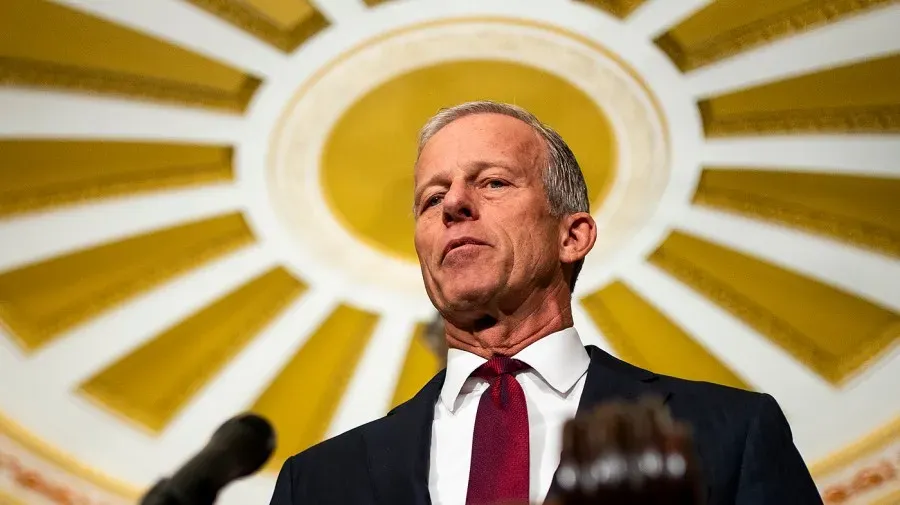
Washington is bracing for a collision between ideological ambition and harsh economic reality. Senator John Thune, the Republican Majority Leader, finds himself squeezed between a restless White House and a Senate map that looks increasingly hostile as the 2026 midterm elections approach. Thune has guaranteed a vote on the Safeguarding American Voter Eligibility Act, yet he has also admitted that the legislative math simply does not work. Donald Trump has signaled that the party’s success depends entirely on this single piece of legislation. If the bill dies, Trump warns, the party faces a total reckoning at the ballot box.

The Math of a Senate Defeat

Republican senators are currently wrestling with the grim physics of the upper chamber. Thune told reporters this week that he lacks the votes to proceed with a talking filibuster, a tactic demanded by the president and his most vocal supporters online. While Trump insists that passing the voter ID measure is the only way to secure the coming election, Thune remains grounded in the reality of his thin majority. He pointed out that even if Republicans launched into an exhaustive marathon of debate to lower the passage threshold to a simple majority, they could not block Democratic amendments. These changes would likely strip the bill of its core provisions, rendering it unrecognizable to the conservative base.

Voter identification has become the central pillar of the Trump legislative agenda for 2026. Senate Democrats, led by Chuck Schumer, remain nearly unified in their opposition to what they characterize as an attempt to purge voter rolls. Schumer has called the bill a destructive force, one that targets the integrity of the democratic process rather than protecting it. Only Senator John Fetterman of Pennsylvania has shown a flicker of independence on the issue, leaving Republicans far short of the sixty votes needed to break a standard filibuster.

Pressure from the executive branch continues to mount despite these obstacles. Trump told House Republicans at a recent policy retreat that failure to pass the measure would guarantee a loss in the midterms. Such rhetoric has put Senate leadership in an impossible position. They must satisfy a base that demands total victory while acknowledging they lack the raw power to deliver it.

Calculations on the Senate floor rarely align with the heat of a campaign rally.

Economic Headwinds and Tariff Anxiety

While the fight over voter ID dominates the headlines, a more quiet panic is spreading through the GOP caucus regarding the national economy. Republican senators are growing louder in their warnings to the president that his second-term economic policies are creating significant political liability. Soft jobs numbers for February have combined with stubborn inflation to create a sense of unease among the electorate. The administration's aggressive tariff regime, once a cornerstone of the 2024 campaign, is now being blamed for keeping prices high when voters are most sensitive to their pocketbooks.

Gas prices have emerged as a primary threat to the Republican hold on power. The ongoing conflict with Iran has strangled global oil supplies, pushing the cost of a gallon of regular unleaded to levels that evoke the worst memories of the previous decade. Republican lawmakers fear that voters will not distinguish between geopolitical instability and domestic policy when they enter the voting booth. They argue that the combination of high energy costs and tariff-driven price increases on consumer goods could set the party up for a rude awakening.

President Trump has largely dismissed these concerns, pointing to his long-term goal of restructuring American trade. Many of his allies in the Senate believe that the window for restructuring is closing. They see the soft labor market as a sign that the economy is cooling too quickly. If a recession hits before November, the voter ID debate will seem like a secondary concern to a public struggling to pay rent.

Inflation remains a persistent ghost in the halls of the Capitol.

Searching for a Final Win

Desperation has led Republican leadership to hunt for one final legislative victory that could change the narrative. They are mulling a push for a reconciliation package, a move that would allow them to bypass the filibuster on a specific set of fiscal issues. This strategy is viewed as a Hail Mary to provide some form of economic relief before the fall. At the same time, the Senate is expected to move forward with a bipartisan housing bill. While some Republicans see the housing measure as a necessary step to address the soaring cost of living, others worry it will be seen as too little, too late.

Internal friction is becoming harder to hide. Thune and Trump have clashed repeatedly over the path forward, with the president demanding a scorched-earth approach in the Senate. Thune has resisted, knowing that a failed talking filibuster would only highlight Republican weakness. The Senate leader is instead trying to manage expectations, focusing on the blame game. If the voter ID bill fails, Republicans plan to pin the entire collapse on Senate Democrats, hoping to use the defeat as a rallying cry for their base.

Whether this strategy will resonate with independent voters remains an open question. Those voters are typically more concerned with interest rates and the cost of groceries than the procedural nuances of the Senate. The administration's focus on tariffs has alienated some traditional pro-business Republicans who worry about the long-term impact on global supply chains. These fissures in the party coalition are appearing at the exact moment when unity is most required.

Victory in the midterms requires a delicate balance of base mobilization and broad economic appeal.

The Elite Tribune Perspective

Obsession with voter ID might satisfy the base, but it won't lower the price of eggs or gasoline. The Republican leadership is currently caught in a trap of its own making, having promised a populist revolution that is now being choked by the mundane realities of global oil markets and Senate procedure. Donald Trump's insistence that the SAVE Act is the only path to victory is a tactical error that ignores the historical truth of American midterms. Elections are almost always a referendum on the incumbent's management of the economy, and right now, the management looks shaky. High tariffs and a confrontational foreign policy have high costs, and those costs are being passed directly to the American consumer. By focusing on a voter ID bill that is destined for defeat, the GOP is wasting precious legislative time that could be spent addressing the inflationary pressures actually hurting their constituents. John Thune understands the math, but he is trapped in a party that has increasingly traded arithmetic for theater. If the GOP loses its majorities in 2026, the blame won't lie with voter eligibility. It will lie with an administration that forgot that the kitchen table always matters more than the campaign stage.