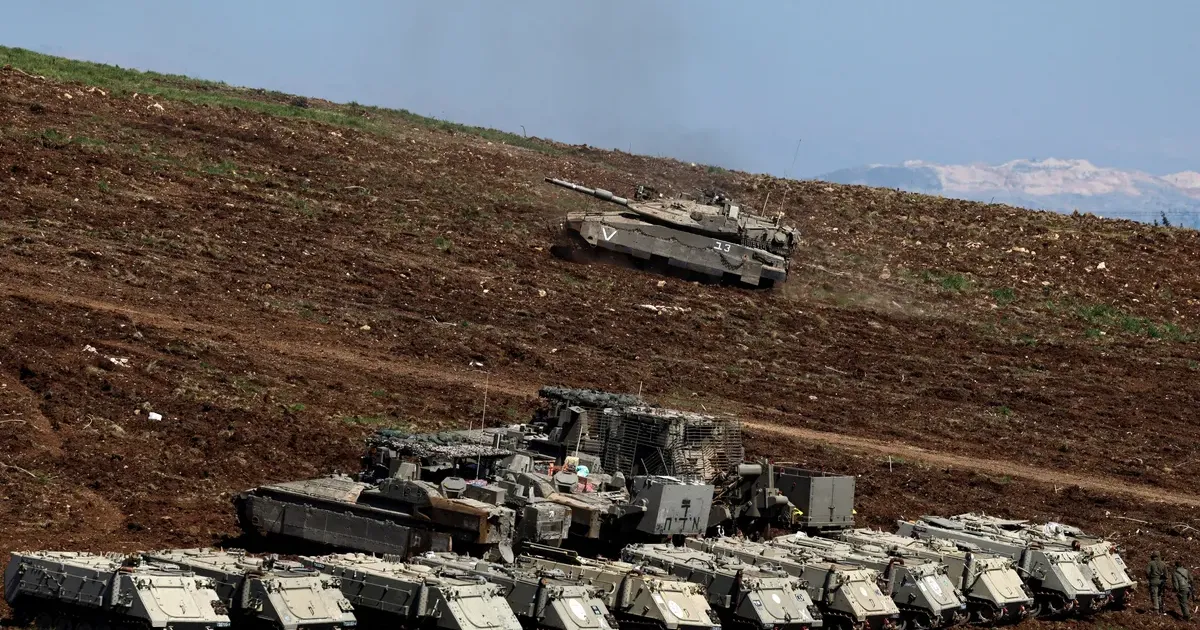
Israel's warning over Hezbollah has turned Lebanese sovereignty and border security into a sharper territorial-risk debate. The border had already been tense before the warning sharpened the language. Diplomats had spent weeks trying to keep incidents contained. Military planners were watching the same signals differently. The message drew concern on March 12, 2026, because it links militia activity, Lebanese sovereignty and possible Israeli military action in one ultimatum. For Beirut, the demand is difficult. The Lebanese state is expected to control a powerful armed group that operates partly outside ordinary government authority.
Israel's warning that Lebanon must control Hezbollah or risk territorial consequences has raised the stakes along an already volatile border.
Security Demand Meets Sovereignty
Israel frames the warning as a security necessity. If Hezbollah can threaten northern communities, Israeli officials argue that Lebanon must either stop the activity or accept consequences. Lebanon sees a different danger. A threat tied to territory can look like pressure on the state itself, not only on Hezbollah. That is why Lebanon sovereignty risk is central to the dispute. The more Israel links security to land, the more difficult the issue becomes for Lebanese leaders to manage domestically.
Hezbollah Complicates Enforcement
The Lebanese government has limited ability to compel Hezbollah without risking internal confrontation. That weakness frustrates Israel and worries foreign diplomats trying to prevent a broader war. A purely military answer could temporarily reduce threats while deepening the political conditions that allow Hezbollah to retain influence. A purely diplomatic answer may be too slow if border incidents continue. That gap between urgency and capacity is where escalation becomes most likely.
Regional Stakes
The warning also interacts with wider conflict dynamics involving Iran, the United States and Gulf security. Hezbollah is not viewed in isolation by Israeli planners. Any serious clash in Lebanon could quickly become part of a wider regional contest, especially if outside powers interpret the border as another front in a larger confrontation. That is why allies will push for monitoring, de-escalation channels and clearer rules around border incidents. Ambiguity can become dangerous when each side believes the other is testing limits.
Border Pressure
Lebanon will be pressed to show some form of enforcement, whether through the army, diplomatic guarantees or international monitoring. Israel will be pressed to define what action would satisfy its security concerns. The risk is that neither side can offer what the other needs. Beirut may not be able to fully restrain Hezbollah, and Israel may not accept symbolic measures. The warning also creates pressure on Lebanon's international partners. France, the United States and regional governments may be asked to help design monitoring arrangements that neither side fully trusts. Any monitoring plan would face a hard question: who has the authority to enforce it if Hezbollah refuses to comply? Observers can report violations, but they cannot easily substitute for state power. Israel may calculate that stronger threats are needed to change behavior. Lebanon may calculate that conceding under threat would weaken the state domestically. Those incentives point in opposite directions. The risk of miscalculation is high because border incidents can unfold quickly. A rocket launch, drone crossing or patrol clash could become the justification for a wider operation before diplomats have time to intervene. Humanitarian consequences would follow immediately. Southern Lebanon has already lived through cycles of displacement and reconstruction; another escalation would deepen that instability. The question is whether security can be improved without turning territory into the bargaining chip. Once land is in the equation, compromise becomes much harder. The warning also draws scrutiny about proportionality. Israel may argue that territorial pressure is necessary to deter Hezbollah, but any move that appears to punish Lebanon as a state could strengthen the claim that Beirut is being held responsible for power it does not fully possess. Diplomacy depends on that line being kept clear. Foreign governments may support Israel's right to security while still resisting language that suggests borders can be altered because a weak state failed to control an armed movement. Lebanese leaders face their own credibility problem. If they promise control they cannot deliver, they risk looking powerless. If they refuse the demand outright, they risk giving Israel more room to argue that military action is the only remaining option. A practical path would require limited, verifiable steps: clearer army deployments, monitoring arrangements, reduced border activity and channels for rapid communication after incidents. None would solve Hezbollah's role, but each could reduce the chance of immediate escalation. The danger is that both sides may prefer messages designed for domestic audiences. Strong threats and defiant replies can be politically useful, yet they narrow the space for quiet de-escalation. The United Nations and outside mediators may try to keep the issue inside existing border frameworks, but the rhetoric of territorial loss makes that harder. Once a state suggests land is at stake, even technical security measures can be interpreted as concessions.
Hezbollah's own incentives are complicated. The group may want to show deterrent strength without triggering a war that devastates its support base. Misreading Israel's threshold, however, could produce exactly the escalation both sides claim they want to avoid.
Israel faces a similar dilemma. A limited strike may be intended as deterrence, but Lebanon and Hezbollah may read it as the opening move in a larger campaign. In that environment, each side's "limited" action can look expansive to the other.
Civilians would absorb the first consequences. Border villages, farms, schools and roads can empty quickly when threats turn concrete, and displacement can become a political fact before diplomats agree on language.
The warning therefore changes the risk calculation for everyone around the border. It puts pressure on Beirut to act, pressure on Israel to define acceptable restraint and pressure on foreign governments to prevent a security dispute from becoming a territorial crisis.
The risk is not only a deliberate decision for war. It is escalation by accumulation: one incident, one retaliation, one misread signal and one domestic speech that makes compromise harder the next morning.
The warning has shifted the debate from border management to territorial consequence. That is a much more dangerous frame.