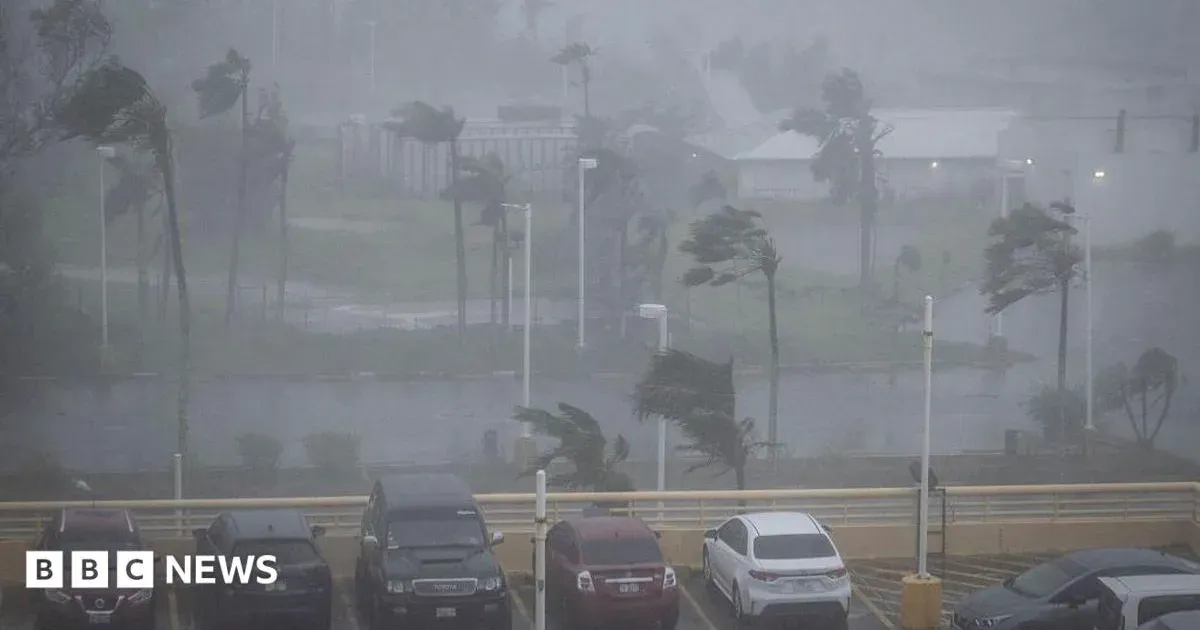
Super Typhoon Bavi has turned the small island of Rota into a high-stakes test of Pacific disaster readiness, with extreme winds threatening communities that have limited room to absorb a direct hit.
BBC News reported on July 6, 2026, that the storm was lashing Rota with winds near 290 km/h, or 180 mph, and gusts around 350 km/h.
The storm's track put Guam and the Northern Mariana Islands under severe pressure as emergency teams prepared for destructive winds, heavy rain, coastal flooding and days of power disruption. For islands with limited alternate routes, even a short closure at a port, airport or fuel depot can slow the entire recovery chain.
Rota Takes the Hardest Wind Field
Rota's vulnerability comes from both exposure and scale. A major storm can cross the island quickly, but the damage it leaves behind can affect almost every basic system at once: roads, ports, clinics, power lines, communications and drinking water.
Super Typhoon Bavi is therefore more than a weather headline. For small islands, wind speed translates into immediate questions about shelter strength, evacuation options and how quickly outside help can arrive after the worst conditions pass.
DW reported that the storm brought powerful winds and heavy rain to the Northern Mariana Islands after making landfall near the US Pacific territory of Guam. That regional framing matters because emergency response depends on neighboring hubs, aircraft access and port conditions.
Even if Guam avoids the most destructive core, the wider storm field can still disrupt air operations and supply staging. That complicates the first 48 hours, when responders need road clearance, medical transport and reliable damage reports. Early assessments also determine whether outside teams bring generators, water systems, medical evacuation support or debris equipment first, so weak communications can become a practical safety risk.
Why Pacific Islands Face a Different Recovery Clock
Large continental storms can trigger massive damage, but they often leave multiple land routes for outside crews. Rota and nearby islands do not have that advantage. If the port is damaged or the airport cannot reopen quickly, relief depends on weather windows and limited transport capacity.
Rota storm damage will likely be measured first through visible infrastructure: roofs, power poles, coastal roads and public buildings. The deeper risk is hidden disruption, including contaminated water, cut communications, damaged clinics and supply shortages that appear after the wind drops.
Those pressures are why typhoon preparation in the western Pacific is as much about continuity as evacuation. Families need shelter before landfall, but public agencies need fuel, generators, satellite communications and medical redundancy after landfall. Recovery planning also has to account for families who cannot quickly leave damaged homes, patients who need electricity-dependent care and schools that may become shelters before they can reopen as classrooms.
Bavi arrives in a region where powerful tropical systems are a familiar threat, but familiarity does not reduce the burden on small administrations. Each severe storm forces local governments to spend scarce money on recovery while also preparing for the next season, and that cycle makes basic resilience a recurring budget decision rather than an occasional emergency expense, much like the public-health strain seen during Europe heatwave emergency planning.
The policy question is whether reconstruction restores what existed or hardens it. Replacing roofs, poles and roads to the same standard can leave the next typhoon with the same target. Stronger building codes, buried lines, resilient shelters and redundant communications cost more up front, but repeated disasters make weak recovery expensive in another way.
The storm also tests federal attention to distant US territories. Residents in Guam and the Northern Mariana Islands are American communities, yet response visibility often lags behind mainland disasters. Bavi will show whether that gap narrows when the damage is severe and the geography is remote. That visibility matters for funding as well as morale, because resilient shelters, stronger lines and redundant communications are built before the next storm, not during the rescue phase. If those investments wait until after landfall, the next emergency begins with the same avoidable weaknesses, and small islands keep paying for the delay in longer outages and slower medical access.
Distance Cannot Be an Excuse
The most important lesson from Bavi is that remote islands cannot be treated as edge cases in disaster planning. They are front-line communities for the modern climate and infrastructure challenge. A storm this powerful damages more than buildings; it exposes every weak link in communication, transport and federal prioritization.
Washington's response will be judged by speed, not sympathy. If relief takes too long because Rota is small and far away, the message to other Pacific territories will be unmistakable. Strategic competition in the Pacific is often discussed through bases, ships and alliances, but civilian resilience is part of that same map. A territory that cannot recover quickly is not just a humanitarian concern. It is a strategic vulnerability, especially when storms repeatedly test the same ports, airfields, clinics and communication systems. The practical test is whether federal attention remains visible after the first damage images fade, when residents are still waiting for power, safe roads and reliable supply lines.