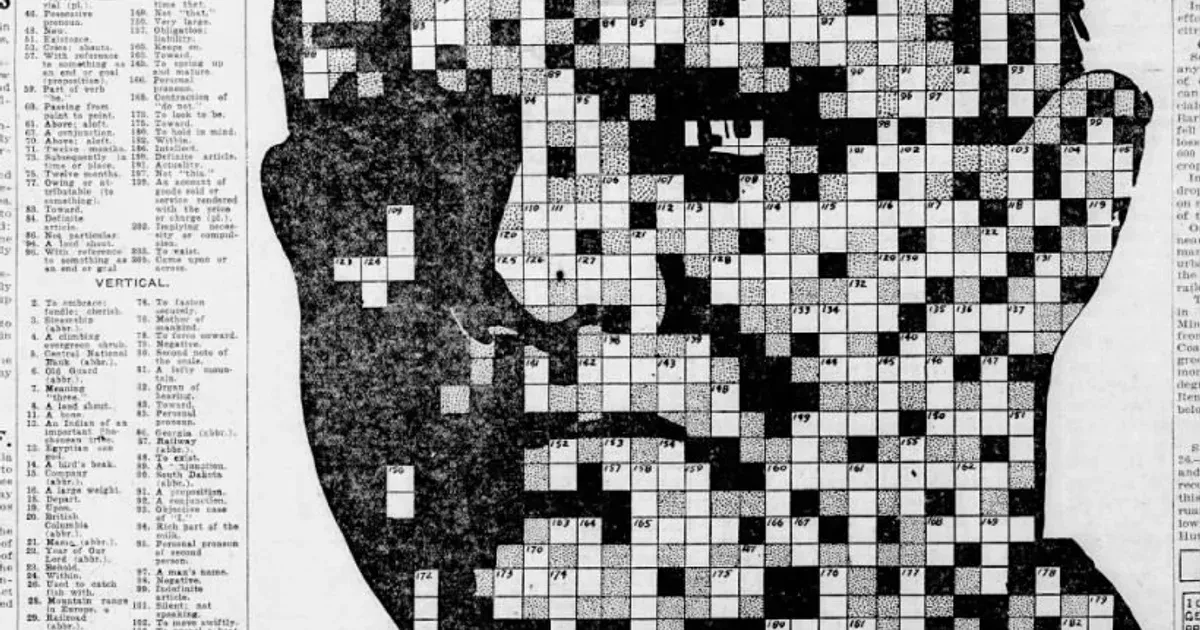
Guardian editors released Cryptic Crossword No 29,970 in London on April 2, 2026, extending a legacy of mental agility that has defined the publication for decades. These daily puzzles have occupied a unique position in British intellectual life since the mid twentieth century, drawing together a global community of solvers who decode complex wordplay. This specific entry marks a critical point in the approach to the series milestone of thirty thousand unique grids. Readers in both the United Kingdom and the United States engage with these puzzles to test linguistic limits and lateral thinking. Circulation figures for the digital edition show a steady increase in international participation.

Cryptic puzzles differ from their quick or American-style counterparts by using two parts for every clue: a definition and a wordplay element. Expertise in anagrams, double definitions, and hidden indicators defines the professional solver. Many participants spend years mastering the specific syntax favored by individual setters who operate under mysterious pseudonyms. The Guardian roster includes legendary names like Paul, Picaroon, and Boatman, each bringing a distinct flavor to the No 29,970 edition. Tradition dictates that the setter remains anonymous until the solution is published or the pseudonym is revealed in the metadata.

Historical Progression of the Guardian Series

British cryptic puzzles evolved from the early twentieth century crosswords, gaining complexity during the interwar period. Edward Powys Mathers, writing as Torquemada, introduced the first truly difficult cryptics to the British public in 1925. Hugh Stephenson, the long-serving crossword editor, managed the transition of these puzzles into the modern digital era. His tenure ensured that the No 29,970 release maintained the rigorous standards established by his predecessors. The archive now contains thousands of individual grids, documenting a century of linguistic evolution and slang.

Standardizing the rules of clue construction became the life work of D. S. Macnutt, who wrote under the name Ximenes. Ximenean principles demand that every clue be a grammatically sound sentence while providing a fair path to the answer. Some modern setters prefer a libertarian style, prioritizing wit and inventive surface readings over strict adherence to these mid-century rules. No 29,970 shows the modern blend of these two schools, offering both rigid technical clues and playful, creative definitions. Digital solvers accessed the grid at midnight Greenwich Mean Time.

Mechanics of Cryptic Crossword Construction

Construction begins with the grid itself, which must follow specific symmetry rules. Most cryptic grids in London publications feature rotational symmetry, meaning the black and white squares look identical when turned 180 degrees. Setters then populate the grid with interlocking words, ensuring that every letter is part of both an across and a down clue. This mathematical constraint limits the vocabulary available for any single puzzle. The process requires a deep knowledge of the English language and a library of synonyms.

The cryptic crossword is a duel between the setter and the solver, where the rules of engagement are linguistic and logic is the only weapon, according to Hugh Stephenson during an interview on the history of the craft.

Common clue types include the charade, where two short words combine to form a longer one, and the container, where one word sits inside another. Indicators like "broken," "agitated," or "mixed" signal that the solver must look for an anagram. No 29,970 utilizes these conventions to challenge even the most experienced members of the crossword community. Solvers often report that the most difficult clues are those where the definition is hidden in plain sight.

Setter Pseudonymity and the London Style

Identity remains a closely guarded secret for many who contribute to the daily rotation. This anonymity allows setters to build a persona that solvers come to recognize through recurring themes or specific styles of humor. John Graham, known as Araucaria, was perhaps the most famous practitioner of this art, often embedding complex themes across multiple puzzles. His death in 2013 led to a diversification of the setter pool, bringing in younger voices from diverse professional backgrounds. The Guardian editorial team continues to recruit new talent to reach the 30,000 puzzle milestone.

Internally, the editorial process involves rigorous testing to ensure fairness. A separate test solver attempts the puzzle without the answer key to identify ambiguous clues or technical errors. If a clue is deemed too obscure, the editor requests a rewrite before the puzzle goes to press. The quality controls maintain the reputation of the series as a premier destination for serious hobbyists. Accuracy in the No 29,970 grid was verified by multiple sets of eyes in the London office.

Global Digital Reach of British Puzzles

Digital migration has changed the demographics of the solving community. Previously, the puzzle was limited to those who purchased the physical newspaper in the United Kingdom. Online platforms now allow users in New York, Sydney, and Tokyo to download the No 29,970 grid instantly. These digital versions include features like check and reveal buttons, which help beginners learn the mechanics of cryptic clues. Subscription data indicates that approximately 40 percent of daily solvers now reside outside the British Isles.

Revenue from digital crossword subscriptions contributes sharply to the financial health of modern journalism. The intellectual property contained in an archive of nearly 30,000 puzzles is a large asset for the organization. App developers have integrated these crosswords into lifestyle suites that compete with other word games for user attention. Despite the competition, the traditional cryptic format persists due to its unique blend of art and logic.

Competitions and clubs further solidify the social aspect of the hobby. Annual championships in London attract hundreds of contestants who race to complete complex grids in under ten minutes. These events prove that while solving is often a solitary activity, it encourages a strong culture of shared achievement. No 29,970 served as practice material for many preparing for the next tournament season.

Linguistic shifts in the English language are reflected in the clues themselves. Newer puzzles include references to social media, modern technology, and contemporary politics, replacing older references to classical music or obscure flora. The modernization ensures that the cryptic crossword does not become a relic of the past. The Guardian style guide for crosswords evolves every few years to incorporate these changes.

Solvers often cite the health benefits of regular mental exercise. Research into cognitive aging suggests that complex problem-solving activities like crosswords may help maintain mental clarity in older adults. While the primary goal is entertainment, the educational value of a puzzle like No 29,970 is undeniable. It forces the brain to discard obvious meanings and search for deeper patterns.

The grid was completed by thousands of people within the first six hours of its release.

The Elite Tribune Strategic Analysis

Is the cryptic crossword a dying art or an ivory tower of intellectual exclusion? While the Guardian celebrates reaching its twenty-nine thousandth puzzle, the format continues to struggle with its reputation as a playground for the elite. The dependency on a specific, often British-centric, educational background creates a barrier to entry that digital migration has not fully dismantled. If these puzzles are to survive another century, they must stop relying on the cultural shorthand of a bygone era.

Setters face the unenviable task of balancing tradition with the demands of a diverse, modern audience. The rigid Ximenean rules that once governed the field are increasingly at odds with the rapid, slang-heavy nature of contemporary communication. No 29,970 manages this tension, yet one must ask if the complexity is intentionally obstructive. True innovation in the crossword space will require not only digital accessibility; it will require a fundamental rethink of what constitutes a fair clue in a globalized world.

Predicting the future of the series involves looking toward the 30,000 milestone and beyond. The survival of the cryptic crossword depends entirely on its ability to attract a younger demographic that values brevity over classical allusion. Without a conscious effort to broaden the linguistic and cultural scope of the clues, the series risks becoming an echo chamber for a shrinking group of enthusiasts. Adaptation is mandatory.