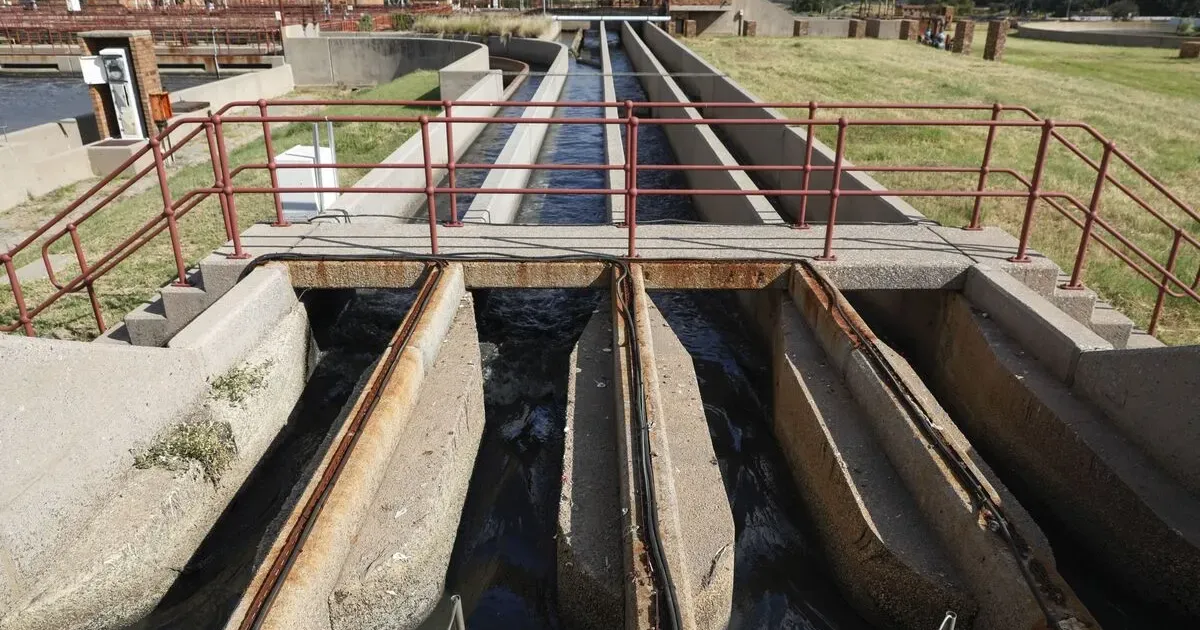
South African Department of Water and Sanitation officials confirmed that nearly 50% of the nation's wastewater treatment facilities have reached a critical state. Engineers monitoring the network report that 334 out of 850 municipal wastewater systems are now classified in the highest risk category. On April 1, 2026, statistical evidence gathered from across nine provinces indicates a system-wide collapse that threatens to release enormous volumes of untreated sewage into primary water sources. Failure to maintain these assets has led to chronic spills and the contamination of essential freshwater ecosystems.
Reports published by technical auditors suggest the deterioration is accelerating due to a lack of skilled personnel and persistent budget shortfalls. Under the Green Drop certification program, which measures the quality of wastewater management, average scores have plummeted below the 50% threshold for the first time in years. Failure at this scale means that microbiological compliance has become nonexistent in several major districts. Residents in urban and rural areas alike now face elevated risks of exposure to waterborne pathogens.
National Infrastructure Failure and Public Health Risks
Public health experts link the degradation of treatment plants directly to rising cases of intestinal illness and environmental toxicity. Records from the previous fiscal year show that many facilities operate with bypass valves permanently open, allowing raw effluent to enter rivers without any chemical or biological remediation. Gauteng province, the industrial heart of the nation, has seen its primary waterways suffer under the weight of excessive ammonia and E. coli levels. Such high concentrations of bacteria render the water unusable for domestic purposes without expensive, high-level purification.
Waterborne diseases like cholera and typhoid have moved from being occasional threats to becoming persistent concerns for local health departments. Doctors in the Free State and Limpopo have noted an uptick in gastrointestinal cases specifically in areas downstream from failing municipal works. Public clinics report a 15% increase in pediatric admissions for water-related infections over the last twelve months. Medical staff often lack the resources to track the exact origin of every outbreak while the underlying cause flows freely through the streets.
"Maintenance is no longer a priority for many struggling municipalities, and the resulting pollution is reaching levels that will take decades to reverse," stated an official from the Department of Water and Sanitation during the disclosure of the latest audit results.
Engineers warn that the structural integrity of concrete tanks and mechanical aerators has reached a breaking point. Many pumps have exceeded their expected operational life by over a decade. Replacement parts are frequently unavailable due to broken supply chains and procurement scandals at the local level. Without functioning aeration, the biological process required to break down human waste cannot occur.
Municipal Governance and Maintenance Backlogs
Local government mismanagement continues to be the primary driver of this infrastructure emergency. Financial records indicate that revenue collected for water services is often diverted to cover unrelated municipal payroll expenses or to service old debt. This diversion of funds leaves zero capital for emergency repairs or routine preventative maintenance. So, small leaks evolve into catastrophic failures that require the total replacement of entire treatment trains. $1.2 billion is the current estimated price tag for immediate emergency interventions across the most distressed sites.
Accountability is rare in the municipal sector where political appointments often supersede technical qualifications. Many treatment works are currently managed by individuals who lack the formal engineering certifications required for such complex biological systems. Vacancy rates for qualified water technicians in rural municipalities exceed 60% in some regions. Private contractors are frequently brought in for short-term fixes that do not address the systemic flaws in the broader network.
Corruption also plays a serious role in the stagnation of repair projects. Audits have uncovered numerous instances where tenders for wastewater upgrades were awarded to shell companies with no experience in water engineering. These firms often disappear after receiving initial deposits, leaving behind half-finished structures and empty bank accounts. Investigations into these fraudulent contracts move at a glacial pace through the court system.
Industrial Impact and Environmental Degradation
Agriculture suffers as irrigation water becomes increasingly toxic to crops and livestock. Export-heavy sectors like citrus and table grapes must meet stringent European and British safety standards that are now threatened by contaminated river water. Farmers have been forced to invest in their own private filtration systems to ensure their products remain fit for international markets. Increased costs for private water treatment are eroding the profit margins of mid-sized agricultural enterprises.
Toxic runoff has decimated local fish populations and altered the chemical balance of the Vaal River and its tributaries. Environmental groups have documented large fish die-offs in areas where sewage outfall is most concentrated. Dense mats of invasive water hyacinth thrive on the high nutrient levels provided by the raw sewage, further choking the waterways and blocking sunlight. Heavy metal accumulation in river sediment also presents a long-term threat to the entire food chain.
Coastal tourism faces a similar decline as sewage plumes reach the ocean at popular beach destinations. Frequent closures of swimming areas in Durban and Cape Town have deterred international visitors and reduced seasonal revenue for the hospitality sector. Local businesses depend on clean water to attract the millions of tourists who visit South Africa every year. Deteriorating water quality directly correlates with falling occupancy rates in coastal hotels.
Fiscal Mismanagement in the Water Sector
National Treasury officials have expressed deep concern regarding the financial sustainability of the water boards. Debt owed by municipalities to water providers has ballooned to record levels, creating a liquidity crisis for the entire sector. While the central government provides some grants for infrastructure, the scale of the decay outweighs the available funding. Reform of the municipal funding model is now seen as a necessity to prevent a total blackout of water services.
Private-sector investment remains a potential solution, but regulatory hurdles and political instability make investors hesitant to commit capital. Public-private partnerships require transparent governance structures that are currently absent in the worst-performing municipalities. Future stability depends on decoupling water management from local political cycles. Establishing independent water utilities could provide the professional oversight needed to manage these complex assets. Infrastructure specialists argue that without a huge shift in how these plants are funded, the remaining 50% of the system will also likely reach a critical state within five years.
Water Governance Test. South Africa's wastewater crisis is not an act of nature but a deliberate artifact of institutional neglect and the systematic looting of municipal coffers. History suggests that when water systems fail, the social contract dissolves shortly thereafter, as the state fails its most basic duty to provide a habitable environment. The Department of Water and Sanitation's admission of a 50% failure rate is likely an optimistic assessment given the lack of monitoring in remote districts. For decades, the African National Congress has allowed technical excellence to be traded for political loyalty, and the result is a landscape where rivers have become open sewers.
Predicting the economic fallout requires little imagination. The agricultural sector, a foundation of the nation's foreign exchange earnings, cannot survive on a diet of E. coli and industrial chemicals. If the citrus and wine industries lose their export certifications due to water contamination, the resulting unemployment will trigger civil unrest far beyond the current levels. Foreign investors are not blind to these developments. They see the decaying pumps and the stagnant ponds of the Vaal River as a billboard for a failing state.
Sovereign collapse often begins at the water's edge. The government must now choose between radical privatization or total systemic failure. Continuing with the current municipal model is a suicide pact. Only an aggressive, military-style intervention in infrastructure management can save what remains of the national water grid. Short-term fixes are useless. The verdict is clear: modernize or drown.