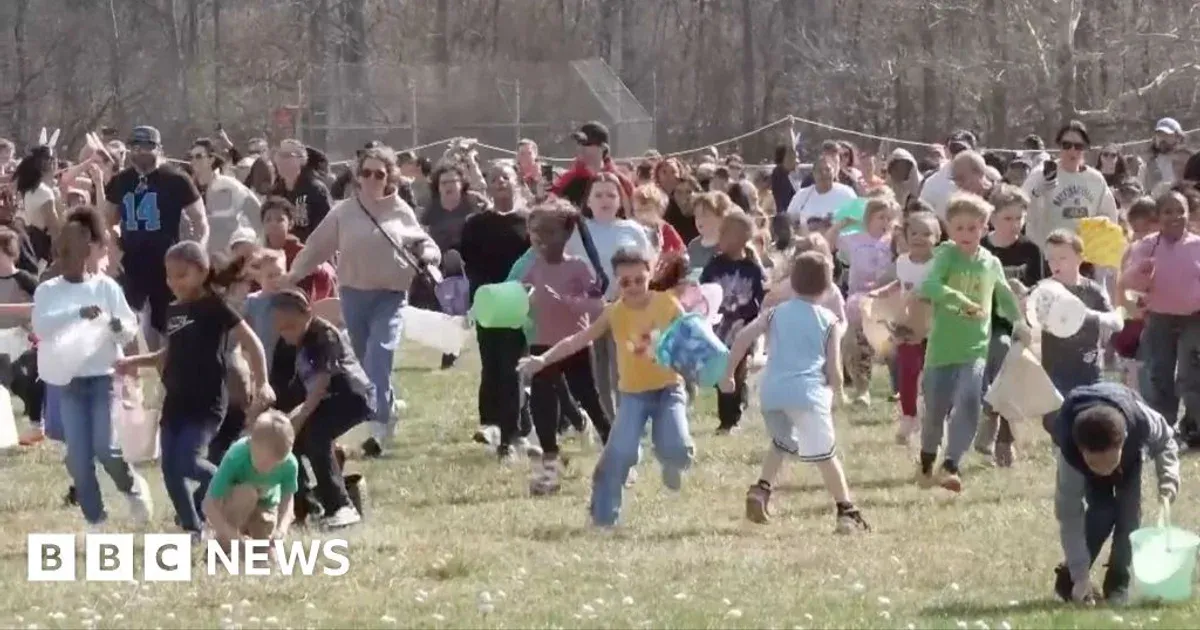
On April 4, 2026, a low-flying helicopter released 15,000 marshmallows over a Michigan park, continuing a regional Easter tradition. Spectators gathered at Elizabeth Park to witness the annual Great Marshmallow Drop, a spectacle that transforms the local sky into a flurry of white confections. Children split into different age groups and waited for the signal while the rotor wash from the aircraft swept across the grass. Participants scrambled across the field to secure the fallen treats once the helicopter cleared the airspace. Local authorities coordinated the event to ensure safety during the rapid descent of the sugar-based projectiles.
Each child only needed to collect one marshmallow to qualify for a themed prize bag. The event relied on precise timing and crowd management.
History of the Michigan Great Marshmallow Drop
Wayne County Parks has maintained this specific tradition for decades, establishing it as a staple of the regional holiday calendar. Originally conceived as a more engaging alternative to traditional ground-based egg hunts, the aerial drop has grown in scale since its inception. Records from the Michigan Department of Natural Resources indicate that the event has expanded to multiple locations over the years, including Nankin Mills in Westland. Families often travel from across the tri-state area to participate in what has become a hallmark of Detroit-area festivities. Organizers prioritize the use of marshmallows because they are lightweight and pose minimal risk when falling from substantial heights. Unlike plastic eggs, these soft treats do not break upon impact with the frozen or damp April ground.
For many local families, the event marks the start of spring in the American Midwest. Large crowds often number in the thousands, requiring a large police presence to manage traffic and parking. Staff members began preparations weeks in advance, sourcing the enormous quantity of marshmallows from local distributors. Marshmallows used in the drop are standard size rather than jumbo to maximize the spread across the landing zone. The logistics of the operation require a coordinated effort between the county executive's office and the aviation contractors. Administrative costs are typically offset by corporate sponsorships and community partners. Volunteers spend the morning of the event organizing prize distributions and marking off safety boundaries. Aviation safety remains the main concern for the pilots tasked with executing the release. Pilots must navigate the helicopter at altitudes ranging from 50 to 100 feet to ensure the wind does not carry the payload outside of the designated retrieval area. Mechanical release systems mounted on the underside of the aircraft allow for a sudden and wide dispersal of the cargo. These systems are tested prior to the flight to prevent jams that could result in uneven distribution. Weather conditions on April 4, 2026, provided clear visibility and minimal crosswinds, allowing for an optimal drop pattern. Flight paths are strictly regulated by the Federal Aviation Administration to prevent interference with commercial corridors.
At the Great Marshmallow Drop, more than 15,000 fluffy treats fell from a helicopter as children raced to collect them.
Weight and balance calculations are performed before the helicopter departs the airfield. While 15,000 marshmallows are relatively light, the volume requires specialized containers that fit within the airframe. The pilot must account for the sudden changes in weight as the payload is released. Ground crews communicate with the cockpit via radio to confirm the target area is clear of people during the initial approach. Wind speed and direction are monitored until the final seconds before the release lever is pulled. Ground temperature also plays a role in how the marshmallows react upon landing on the grass. Most drops occur within a ten-minute window to maintain the excitement of the crowd.
Safety marshals divided the participants into three distinct age categories to prevent older children from overrunning younger ones. The first group consisted of children ages four and younger, followed by those aged five to seven, and finally the eight to ten age bracket. Parents were prohibited from entering the field during the active collection phase for the older groups. This rule ensures that the scramble remains fair and minimizes the risk of collisions between adults and children. First aid stations were positioned at the perimeter of the field, though organizers reported no serious injuries during the event. Staff members used megaphones to direct the flow of the crowd and maintain order during the prize exchange process.
Prize bags contained a variety of items, ranging from toys to coupons for local businesses. Each participant was guaranteed a prize regardless of how many marshmallows they collected, provided they secured at least one. This policy discourages aggressive hoarding and encourages a more communal atmosphere. Once the marshmallows are gathered, the field is inspected by cleanup crews to remove any remaining debris. Ecological impact is considered minimal as birds and other wildlife often consume the overlooked sugar treats. Local vendors provided snacks and beverages to the spectators who arrived early to secure prime viewing locations. The event concluded by midday, leaving the park open for regular recreational activities. Staff members remained at the perimeter until the final prize bag was distributed.
Volunteers and first responders are part of the appeal because the drop has to feel playful without becoming disorderly once children rush the field.
Michigan Marshmallow Drop Keeps Local Tradition Alive
The marshmallow drop is a small local event, but its appeal comes from predictability and scale. Families return because the spectacle is simple, safe and recognizably tied to the community calendar.