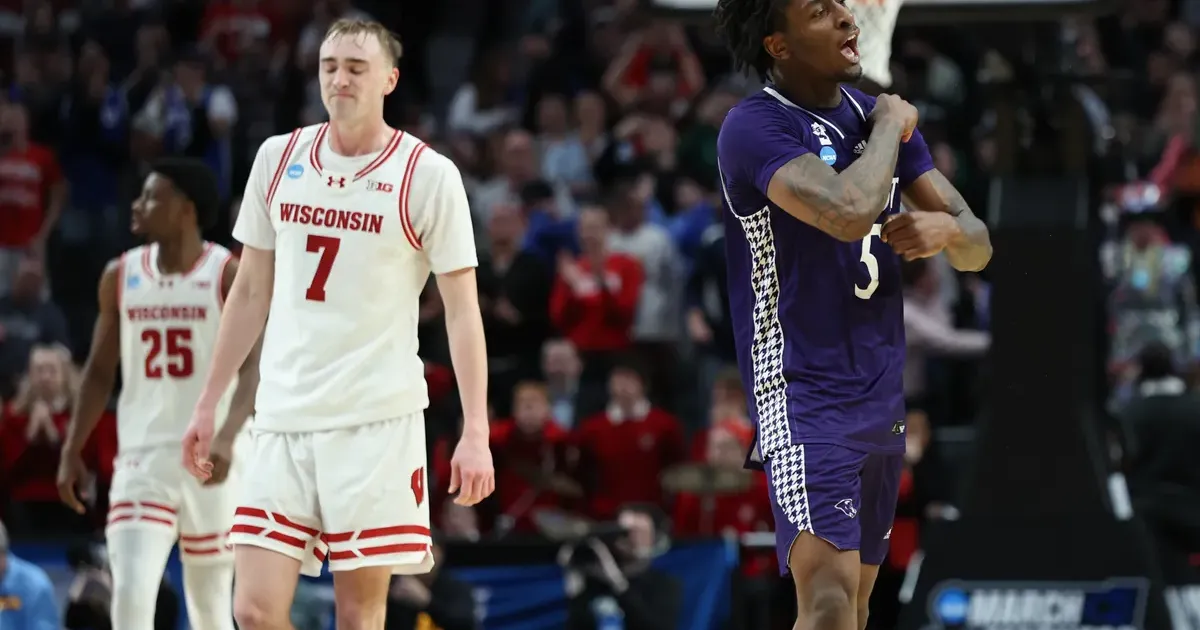
Chase Johnston sprinted toward the rim at the Spectrum Center on Thursday as the clock ticked toward a season-defining moment for a mid-major program. High Point trailing for much of the second half found an unlikely hero in a specialist who had spent the entire winter avoiding the area inside the three-point line. Standing at the top of the key with less than fifteen seconds remaining, the junior guard drove past a lunging defender to bank in a layup that secured an 83-82 victory over fifth-seeded Wisconsin. This single play effectively dismantled the defensive reputation of a Big Ten powerhouse and launched the first major narrative of the 2026 tournament.
Wisconsin entered the contest as heavy favorites with many analysts projecting a deep run into the second weekend based on their veteran frontcourt. For one, the Badgers appeared to have total control when they extended their lead to ten points during the first half. They utilized a slow-tempo offense that usually suffocates smaller teams, yet High Point refused to follow the script. The Panthers relied on transition speed and a high-volume perimeter attack to keep the game within reach during a frantic second half. Scoring bursts from the backcourt consistently nullified the physical advantages held by the Wisconsin interior players.
High Point Panthers Overcome Ten Point Deficit
Panther guards began a systematic dismantling of the Wisconsin zone midway through the second period. While the Badgers led 70-62 with just over seven minutes on the clock, the momentum shifted during a chaotic sequence of three-pointers. Rob Martin directed the offense with precision, finishing the night with 23 points and 10 assists to keep the Panther engine running. Martin found shooters in the corners and exploited gaps in the Wisconsin defense that had remained closed for most of the regular season. This tactical flexibility forced the Badgers to abandon their traditional defensive shell.
According to game logs, the Panthers hit four of their final six attempts from distance to bridge the eight-point gap. Chase Johnston sparked the late surge by pulling up from the logo with 4:43 remaining, a shot that caught the Wisconsin coaching staff completely off guard. For instance, Johnston had spent the majority of the season as a situational shooter whose primary role was to stretch the floor rather than initiate contact. His willingness to launch from nearly 30 feet out forced Wisconsin to extend their defense, leaving the lane vulnerable for the first time all afternoon.
High Point captured its first lead since early in the second half when the pressure finally broke the Badger resolve. By contrast, the Wisconsin offense stalled during the final four minutes, settling for contested mid-range jumpers instead of attacking the rim. The Panthers took advantage of every long rebound and pushed the pace to capitalize on tired legs. Even so, the outcome remained in doubt until the final sequence of the game.
Chase Johnston Scores First Layup to Sink Wisconsin
"March Madness has its first Cinderella entry," Yahoo Sports reported shortly after the buzzer sounded.
Johnston finished with 14 points on a night where his efficiency from the perimeter mirrored his season average of 48.5 percent. Still, his final two points defied every scouting report available to the Wisconsin bench. Before that decisive fast-break layup, Johnston was 0 for 4 from inside the arc for the entire season. He had in effect functioned as a three-point exclusive threat, taking 136 shots from deep while rarely venturing into the paint. The statistical anomaly of a specialist making his first two-pointer of the year to win a NCAA tournament game is a detail that will live in tournament lore.
Success for Chase Johnston usually comes from stationary catch-and-shoot opportunities provided by his teammates. Thursday was different. In turn, he became a playmaker when the Panthers needed a direct response to a late Wisconsin bucket. The breakaway layup with 11.2 seconds remaining showcased a level of athletic versatility that few expected from a player primarily known for his range. It was a gamble that paid off for a High Point program making just its second-ever appearance in the tournament.
History will record this as the moment the Panthers transitioned from a hopeful participant to a legitimate threat on the national stage. In fact, High Point had only made its tournament debut last season, suffering a first-round exit that provided the motivation for this year's veteran group. The win over Wisconsin represents the first-ever tournament victory for the university. It also validates the aggressive scheduling and recruitment strategies implemented by the coaching staff over the last three years.
Wisconsin Badgers Collapse Under Late Panther Pressure
Defensive lapses in the final three minutes haunted a Wisconsin team that prided itself on disciplined play. For one, the Badgers failed to secure two critical defensive rebounds that allowed High Point extra possessions during the 8-1 run that closed the game. At the same time, the veteran leadership of the Wisconsin roster seemed to buckle under the intensity of the Panther press. They turned the ball over twice in the final ninety seconds, giving High Point the windows they needed to claw back into contention.
Statistics from the final quarter of the game tell a story of total offensive stagnation for the fifth seed. The Badgers managed only one field goal in the final 3:15 of play. Meanwhile, the Panthers were playing with a sense of desperation that the higher seed could not match. Wisconsin coaching staff attempted to use their remaining timeouts to settle the team, but the momentum had already swung toward the underdog. The silence from the Wisconsin section of the arena as Johnston scored the final layup was absolute.
A missed jumper by Wisconsin as time expired sealed their fate and sent the Panthers into a mid-court celebration. Separately, the loss adds to a growing list of early exits for Big Ten programs that enter the tournament with high expectations. This trend suggests a potential disconnect between the physical style of play in the Midwest and the faster, guard-oriented basketball played in other conferences. High Point simply outran a team that was built to out-muscle them.
Big Ten Defensive Struggles Highlight Tournament Fragility
Tournament volatility frequently punishes teams that lack perimeter versatility, and Wisconsin became the latest victim of this reality. While the Badgers possessed the size to dominate the boards, they could not contain a four-guard lineup that kept the ball moving. High Point forced the Wisconsin big men to defend on the perimeter, a mismatch that the Panthers exploited repeatedly. The structural disadvantage became more apparent as the game progressed and the Wisconsin starters began to fatigue.
High Point joins a select group of No. 12 seeds to advance past the opening round in recent years. Analysts often point to the 12-vs-5 matchup as the most likely source of a major upset, yet seeing it unfold in such dramatic fashion is still a shock. The Panthers did not rely on luck, but rather on a sophisticated offensive scheme that produced high-quality looks against a top-tier defense. Their victory was a result of execution under extreme pressure.
High Point now prepares for a second-round matchup while Wisconsin returns to Madison to face an offseason of difficult questions about their tournament preparation.
The Elite Tribune Perspective
Can we finally stop pretending that regular-season consistency in a power conference guarantees anything in the month of March? The Wisconsin collapse against a No. 12 seed is not an anomaly; it is a recurring indictment of a Big Ten style that is increasingly obsolete in the modern era. We watch these heavyweights lumber through the winter, bullying smaller opponents with sheer mass, only to see them dismantled by the first mid-major team with a competent backcourt and a chip on its shoulder.
High Point did not just win a basketball game; they exposed the structural rot in programs that focus on tradition over tactical evolution. Watching Chase Johnston, a player who had not made a single two-point shot all year, drive through the heart of the Badger defense was a beautiful piece of irony. It was a violent correction to the arrogance of a fifth seed that assumed they could coast on their jersey name.
If the Badgers want to avoid becoming a permanent punchline for Cinderella stories, they must abandon the slow-death offensive philosophy that has failed them on the national stage for years. Innovation is no longer optional for the elite.