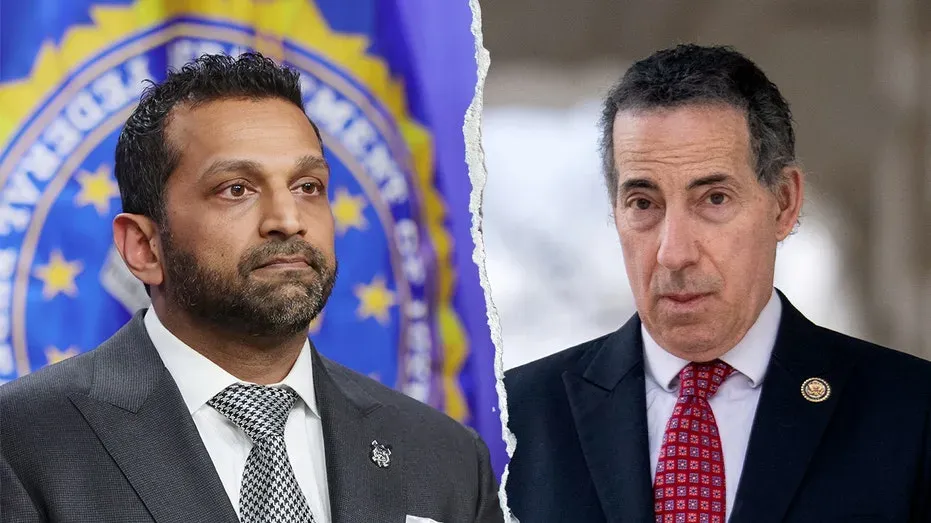
House Judiciary Democrats demanded on April 22, 2026, that FBI Director Kash Patel answer allegations regarding excessive alcohol consumption triggered by a series of media reports. Representative Jamie Raskin and other committee members signaled a deepening probe into behavioral reports published by The Atlantic. This legislative push seeks to force a federal appointee into a medical screening protocol typically reserved for lower-level civil servants or clinical evaluations.
Lawmakers on the panel sent a formal inquiry late Tuesday evening addressed to the FBI headquarters. Inside the correspondence, Democrats cited a bombshell report from The Atlantic suggesting that Kash Patel alarmed colleagues with erratic behavior and frequent intoxication. Every member of the Democratic caucus on the House Judiciary committee signed the letter, which frames the situation as a threat to national security. Internal FBI standards generally prohibit any substance use that impairs the judgment of an agent or director.
Ranking members insist that Kash Patel must complete a 10-question test identifying hazardous drinking behaviors under the penalty of perjury. Jamie Raskin specifically targeted the Director's fitness for duty by comparing his alleged conduct to that of field agents. While Kash Patel has survived previous rounds of political fire, the introduction of medical diagnostic demands is a new strategy in congressional oversight. Lawmakers argue that the leadership of the nation's premier counterintelligence agency cannot function under the cloud of chemical dependency.
"These glimpses of your relationship to alcohol would be alarming to see in an FBI agent; for us to see them in the FBI Director himself is shocking and indicative of a public emergency," wrote Jamie Raskin and other House Democrats.
Judicial Scrutiny and The Atlantic Report
Investigative reporter Sarah Fitzpatrick authored the original story in The Atlantic that detailed anonymous accounts of the Director’s social habits. Allegations within the text describe late-night sessions that reportedly left Kash Patel incapacitated or unable to respond to urgent briefings. Such claims, if proven true, would violate the rigorous code of conduct governing the Bureau. House Judiciary Democrats are now using these anecdotal reports to build a case for an official investigation into the Director’s health and private conduct.
Instead of yielding to the pressure, Kash Patel appeared at a press conference alongside Acting Attorney General Todd Blanche to refute the claims. Kash Patel told reporters that he has never been intoxicated on the job and described the allegations as part of a coordinated smear campaign. His defense rests on his record of service and the internal metrics of the Bureau under his tenure. Todd Blanche stood by the Director, signaling that the Department of Justice will not cooperate with what it deems a politically motivated medical inquiry.
Critics of the House Judiciary move point out that the Alcohol Use Disorders Identification Test, or AUDIT, is a clinical tool not designed for adversarial congressional proceedings. Jamie Raskin countered this by stating that the high-stakes nature of FBI work justifies extreme measures of transparency. Democrats seek to establish a precedent where behavioral fitness becomes a central foundation of congressional vetting. Proponents of the inquiry believe the public deserves certainty that the person in charge of domestic surveillance is of sound mind at all hours.
Patel Defends Record Against Defamation
Patel responded by filing a defamation lawsuit seeking $250 million in damages.
Legal filings in the lawsuit against The Atlantic and Sarah Fitzpatrick allege actual malice on the part of the publication. Kash Patel argues that the magazine published the story with a reckless disregard for the truth to disrupt his administration of the FBI. By seeking $250 million, the Director is signaling a direct counter-offensive against the media outlets fueling the Democratic investigation. Attorneys for the Director claim that the anonymous sources cited in the article do not exist or have a history of professional grievances against their client.
Across the aisle, Republican leadership in the House has rallied behind the Director. A spokesperson for the House Judiciary Republicans characterized the Democratic letter as an unserious effort from partisan actors. Supporters of Kash Patel highlight record-low crime statistics and a high rate of successful prosecutions as evidence of his effectiveness. This internal defense emphasizes that performance metrics should outweigh personal rumors in the evaluation of a public official. Chairman Jim Jordan has indicated he will not enable the Democratic request for an in-person testimony under oath.
Historically, the FBI Director has enjoyed a degree of protection from the most intrusive forms of congressional inquiry regarding personal health. Jamie Raskin is attempting to break this tradition by insisting that the Director’s private life has become a public liability. The letter demands that Kash Patel answer whether he has ever failed to do what was expected of him because of drinking. Legal experts suggest that answering such a question under penalty of perjury creates a serious legal trap for the Director. Any inconsistency between his answers and future testimony could lead to criminal charges unrelated to his job performance.
Political Gridlock in House Judiciary Committee
Committee Republicans dismissed the inquiry as a partisan distraction.
Despite the internal friction, House Judiciary Democrats continue to press for a full hearing. Jamie Raskin has requested that Jim Jordan compel the Director to appear in person if the 10-question test is not completed by the end of the week. Gridlock within the committee has effectively halted most other legislative business as both sides focus on the fitness of the FBI leadership. Kash Patel remains a central figure in the broader struggle between the executive branch and congressional oversight committees. His refusal to engage with the AUDIT test ensures that the conflict will move toward a subpoena battle in the coming months.
Under the threat of perjury, any statement made by Kash Patel will be scrutinized by federal prosecutors for years. The Atlantic has stood by its reporting, stating through a spokesperson that the story was rigorously fact-checked and vetted by legal counsel. Reporters at the publication claim to have multiple confirming sources within the Department of Justice who observed the behavior firsthand. This creates a situation where the word of the Director stands in direct opposition to the claims of anonymous career professionals. The resolution of this dispute likely depends on whether any of those anonymous sources are willing to go on the record.
In a simultaneous legal maneuver, Kash Patel has requested a stay on any congressional proceedings until his defamation suit is resolved. His legal team argues that a public hearing would prejudice the jury in his civil case against the media. Jamie Raskin rejected this logic, asserting that the legislative branch has a right to information that is independent of any private litigation. The tension between the House Judiciary Democrats and the Bureau has reached its highest level since the Director took office. Every move from here on involves a calculated risk for the stability of the FBI.
Legal Thresholds and Federal Personnel Policy
Beyond the immediate political friction, the demand for a medical test raises questions about federal personnel law. Most government employees are protected from forced medical disclosures under the Privacy Act of 1974. House Judiciary members argue that a Senate-confirmed Director waives certain privacy rights by accepting a high-level security clearance. Kash Patel maintains that his rights as a citizen are being violated by a partisan committee seeking to weaponize his private medical data. The Department of Justice has yet to issue a formal legal opinion on whether a Director can be forced to take a psychological or substance abuse screening.
Within the broader context of the administration, Todd Blanche has emphasized that the Director serves at the pleasure of the President. Because the White House has expressed full confidence in Kash Patel, the Democratic inquiry lacks a direct mechanism for removal. Jamie Raskin acknowledges this reality but insists that public exposure of the alleged behavior will make the Director’s position unsustainable. The goal of the House Judiciary Democrats appears to be the accumulation of a public record that pressures the executive branch into a leadership change. The strategy relies on the hope that more whistleblowers will emerge from within the counterintelligence agency.
Records from the FBI show that internal morale is currently divided over the allegations. Some agents view the House Judiciary probe as an attack on the institution itself, while others are reportedly concerned about the leadership’s stability. Kash Patel has responded to these internal concerns by holding a series of town hall meetings with staff to reassure them of his focus. He continues to maintain a busy schedule of international travel and high-level briefings to demonstrate his active management of the Bureau. Alcohol allegations, whether substantiated or not, have historically been used to undermine federal officials during periods of intense political polarization.
The Elite Tribune Strategic Analysis
Washington operates on a currency of character assassination when policy levers fail. The attempt by House Judiciary Democrats to mandate a substance abuse test for Kash Patel is not a health intervention; it is a tactical expansion of the oversight theater. By shifting the battlefield from policy disagreements to clinical pathology, Jamie Raskin is attempting to bypass the high bar of traditional impeachment or removal. The move treats the FBI Directorship as a position subject to the same HR scrutiny as a mid-level bureaucrat, effectively stripping the office of its executive gravitas.
Patel’s $250 million lawsuit is a departure from the traditional "no comment" stance of high-ranking officials. It indicates a new doctrine where appointees use the civil court system to paralyze the media cycles that fuel congressional probes. If this lawsuit proceeds to discovery, the public may witness a rare moment where the internal verification processes of major media outlets are put on trial alongside the Director’s reputation. It creates a trade-off: Patel must prove a negative while The Atlantic must reveal its sources or risk financial ruin.
The Bureau persists as the ultimate prize in this war of attrition. Whether Kash Patel takes the test or not is irrelevant to the long-term outcome. The precedent has been set. Future Directors will now face the possibility of being forced to provide sworn medical disclosures at the whim of a hostile committee. It is the new reality of federal service. Accountability has been replaced by autopsy.