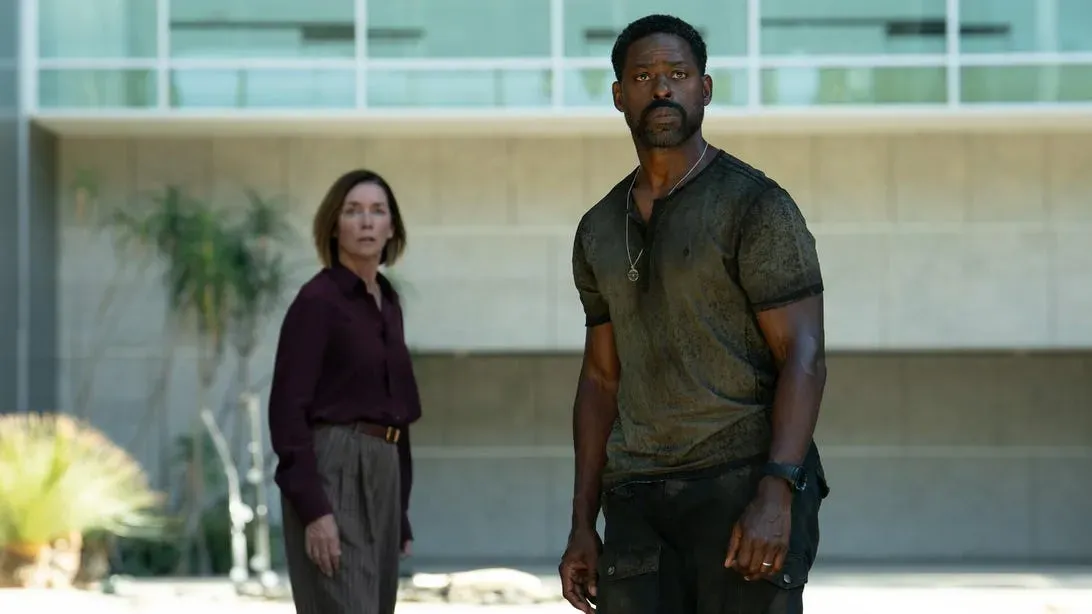
Hulu producers announced that the thriller series Paradise will pivot toward high-concept science fiction for its third season. Audiences viewed the season two finale with serious interest as the narrative shed its grounded dystopian trappings. By March 31, 2026, the creative team was positioning that shift as the next phase of the show rather than a one-episode surprise. Central to this transition is the character Alex, portrayed by Sterling K. Brown, whose motivations became the primary driver of the recent plot shift. Recent episodes transitioned from exploring political corruption within a gated community to revealing advanced technological secrets that redefine the setting. Producers had made that third-season direction part of the public plan.
The change also raises a practical question for Hulu: how much of the existing audience followed the show for character mystery, and how much will stay for a bigger mythology. A season-three pivot can work only if the writers make the new science-fiction rules feel earned by earlier emotional conflicts.
Writer Dan Fogelman, known for complex character dramas, has steered the project into territory usually reserved for speculative fiction. Critics observed that the finale of the second season upended expectations by introducing elements of artificial intelligence and alternate realities. While earlier episodes focused on the friction between residents, the latest developments suggest a broader conflict involving global security. Executives at Hulu have authorized an expanded budget to accommodate the increased demands for visual effects in upcoming installments.
John Hoberg Confirms Season 3 Story Arc
Executive producer John Hoberg co-wrote the second season finale and maintains that the creative team possesses a long-term plan. Scripts for the third season are currently in development with a focus on resolving the cliffhangers introduced in the recent broadcast. Hoberg asserted that the writers already established the specific ending for the next season. Writers began drafting the new episodes immediately after production wrapped on the previous cycle to ensure narrative continuity.
The creative team already knows how the next season will end and we are building toward that specific conclusion with every scene we film, said executive producer John Hoberg regarding the show's future direction.
Production schedules indicate that filming will start in late 2026. Narrative stakes have increased sharply since Alex discovered the true nature of his surroundings. Sources at the studio suggest that the writers intentionally withheld certain sci-fi elements during the first season to build a sense of realism. This approach allowed the sudden shift in the second season to carry more weight with the audience. That restraint helped the genre turn feel like a reveal rather than a reboot.
Sterling K. Brown Character Motivations Analyzed
Alex operates with a level of secrecy that has kept both characters and viewers off-balance. His endgame remains the most debated aspect of the series among online communities and television critics. Analysts suggest his actions indicate a desire to dismantle the very system he was hired to protect. Sterling K. Brown delivers a performance that emphasizes the internal conflict of a man caught between duty and a newly discovered truth about his reality. His character's evolution from a security expert to a potential revolutionary forms the backbone of the series.
Performance metrics from the streaming platform indicate that viewership spiked during the final twenty minutes of the season two finale. These numbers reflect a growing appetite for genre-bending narratives that defy simple categorization. Instead of following a standard police procedural format, the show now mirrors the complexity of high-concept cinema. Every decision Alex makes carries implications for the survival of the residents within the walled city. Internal documents from the production office describe the character as a catalyst for systemic change.
Genre Pivot Test remains the practical lens for the next stage of this story.
Will the audience follow a political thriller as it morphs into a hard science fiction odyssey? Television history is littered with the remains of series that lost their way by abandoning their original premise in search of higher stakes. Producers at Hulu are betting heavily that the presence of Sterling K. Brown can anchor a narrative that is rapidly losing its tether to reality. The move is a calculated risk designed to transform a standard drama into a lasting franchise. Success is not guaranteed.
Creative shifts of this magnitude usually signal a lack of confidence in the original concept. However, the involvement of John Hoberg suggests that this pivot was planned from the inception of the series. If the writers can maintain the tension between the characters while expanding the scope of the world, they may create a new standard for streaming dramas. The alternative is a fragmented audience that feels betrayed by the sudden changes in tone. A sharp focus on the internal logic of the sci-fi elements is now the only way to save the show from becoming a parody of itself. High-stakes require high precision. Failure is imminent without it.