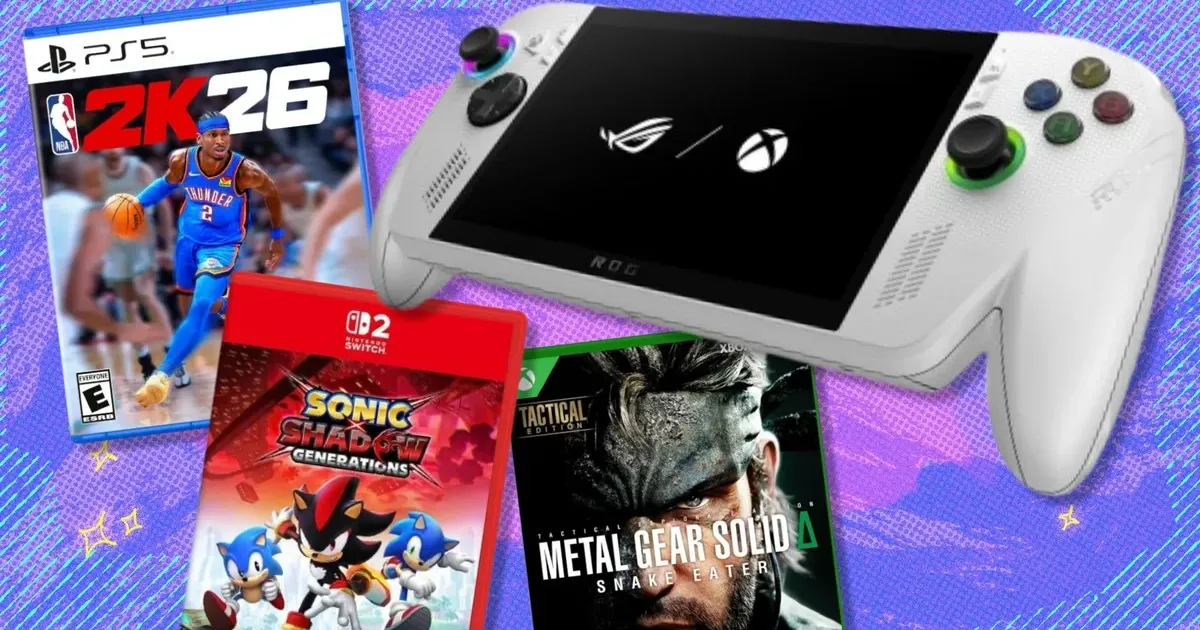
Amazon opened its digital storefront doors to initiate a large seasonal liquidation event targeting the gaming sector. Initial price listings show aggressive discounts across the Sony PlayStation 5, Microsoft Xbox, and Nintendo Switch platforms. Retail analysts believe these maneuvers aim to capture discretionary spending before the industry enters its traditional summer lull. Consumer electronics often see these price corrections as manufacturers prepare for new hardware announcements during the second half of the year.
By March 31, 2026, the sale had become a broad test of gaming hardware demand.
Hardware enthusiasts noted immediate price drops for the ASUS ROG Ally, an influential competitor in the growing handheld PC market. Retail data suggests that portable gaming devices are currently the most volatile segment for pricing. Amazon has listed the device at $539.99, reflecting a direct $60 reduction from its standard retail price. Handheld systems continue to gain market share among users who prefer localized hardware over cloud-based streaming solutions.
Handheld Market Evolution and ASUS ROG Pricing
Market competition in the handheld space has intensified sharply since the release of the Steam Deck and subsequent Windows-based alternatives. The ASUS ROG Ally utilizes the AMD Ryzen Z1 Extreme processor, which provides a performance profile capable of running modern AAA titles at respectable frame rates. Pricing this device at $539.99 places it in direct competition with high-end console bundles. This specific discount represents one of the lowest price points recorded for the Z1 Extreme model since its launch. Inventory management systems show that Amazon is prioritizing rapid turnover for high-margin electronics during this window.
Component costs for these portable systems have stabilized over the last twelve months. Manufacturing efficiency in the ASUS supply-chain has allowed for more flexible retail pricing strategies. Industry insiders suggest that the portable PC gaming market will reach a valuation of several billion dollars by the end of the current fiscal year. Portable consoles rely on high-resolution displays and efficient cooling systems to maintain performance. ASUS integrated a dual-fan thermal design to prevent throttling during intensive gaming sessions.
Sony Software Strategy and Silent Hill Valuations
Software deals during the spring event have also drawn attention, particularly regarding high-profile releases on the Sony PlayStation 5. Silent Hill f, the latest entry in the long-running psychological horror franchise, has seen its price cut to $39.99. This $30 discount is a clear move for a title that maintains a strong attachment rate among core enthusiasts. Sony often coordinates with publishers like Konami to align digital and physical retail prices during major sales events. Horror titles typically experience a sales surge when price points drop below the $40 threshold.
Developing a niche within the survival horror genre requires notable investment in visual fidelity and narrative depth. NeoBards Entertainment, the developer behind Silent Hill f, used the Unreal Engine 5 to create detailed atmospheric environments. Sales figures from previous quarters indicate that software discounts are essential for maintaining active user counts on the PlayStation Network. Sony Interactive Entertainment continues to monitor these pricing trends to adjust its own first-party software plans. Game developers rely on these sales spikes to fund post-launch content updates and server maintenance.
"Discounting hardware early in the fiscal year allows for faster inventory turnover ahead of summer product announcements," a spokesperson for Amazon stated.
Software distribution has shifted toward a digital-first model, yet physical inventory still dominates seasonal sale headlines. Retailers must clear warehouse space for upcoming holiday shipments. Sony maintains a rigid pricing structure for its hardware, making software bundles and third-party discounts the primary driver for console sales. The digital version of the PlayStation 5 currently holds a large part of the total console market share.
Microsoft Hardware Integration with Third-Party Devices
Microsoft has taken a different approach by focusing on ecosystem integration rather than exclusive hardware sales. The Xbox ecosystem now covers many devices, including the ASUS ROG Ally, which functions as a portable Xbox Game Pass machine. Microsoft provides software support for these handhelds to ensure compatibility with its subscription services. Integration between Windows 11 and the Xbox app has streamlined the user experience for handheld gamers. Data indicates that Xbox Game Pass subscribers are more likely to purchase discounted third-party hardware during Amazon sales events.
Cloud gaming services have also seen an uptick in usage as internet infrastructure improves across the United States and the United Kingdom. Microsoft continues to invest in Azure server blades that mirror Xbox Series X hardware. This infrastructure allows users to play high-end titles on lower-powered devices without the need for local processing power. However, many gamers still prefer the reduced latency of local hardware like the ROG Ally. Local processing eliminates the input lag often associated with streaming over wireless networks.
Gaming Discount Test remains the practical lens for the next stage of this story.
Does the retail sector truly benefit from these recurring cycles of price erosion? Amazon is not merely selling gaming consoles; it is executing a surgical strike on the inventory bloat of its competitors. By slashing prices on the ASUS ROG Ally and high-profile Sony titles, the e-commerce giant forces traditional retailers like GameStop and Best Buy into a defensive posture. These companies cannot always match the loss-leader margins that Amazon is willing to tolerate to maintain its dominant market position. The reality is that these sales are a data-harvesting exercise designed to map consumer intent months before the critical holiday season. Hardware is the bait, and the consumer's purchasing habit is the catch.
Retailers are caught in a trap of their own making. Constant discounting has trained the average consumer to ignore MSRP and wait for the inevitable seasonal crash. This behavior destroys the perceived value of software, turning billion-dollar creative projects into $39.99 commodities within months of release. If the industry continues this trajectory, the only sustainable business model will be the subscription service. Microsoft already understands this, which is why it cares more about Game Pass on an ASUS device than selling an actual Xbox console. The hardware wars are effectively over, replaced by a desperate scramble for recurring monthly revenue. A calculated gamble.