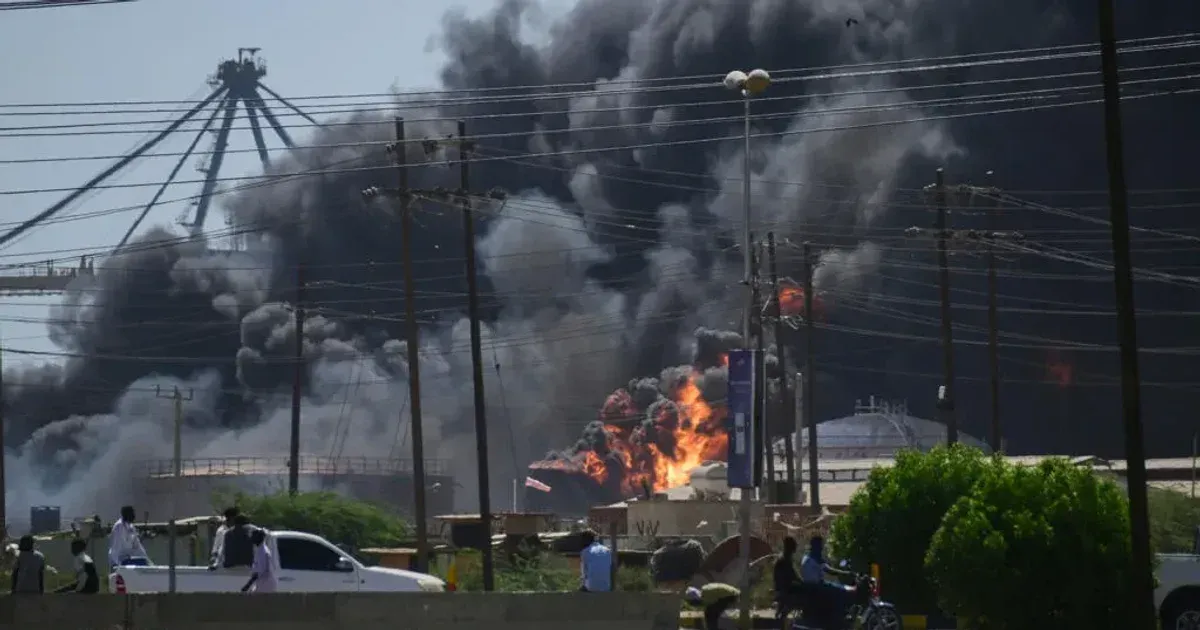
Berlin became the center of the Sudan aid debate as relief agencies warned that pledges alone would not feed civilians. The funding push was designed to bridge a chronic humanitarian gap. On April 15, 2026, global powers committed over $1.5 billion to address the deteriorating humanitarian catastrophe in Sudan. Financial commitments made during this summit exceeded the initial targets set by organizers. This total includes over £1 billion pledged specifically to bridge a chronic funding gap that has hampered relief efforts for years.
Sudan currently faces the largest humanitarian crisis on the planet.
Two-thirds of the population, roughly 34 million people, require immediate assistance to survive. Conflict entered its fourth year this month, leaving the capital city of Khartoum and surrounding regions in a state of perpetual instability. Aid agencies report that basic services like health care and water access have largely collapsed in active combat zones. International donors, however, face serious logistical hurdles in delivering these promised resources to the civilians who need them most.
Berlin Funding Pledges Target Sudan Relief Efforts
Commitments reached in Germany aim to provide a lifeline for displaced populations and those facing imminent starvation. While Bloomberg suggests that the actual disbursement of these funds might take months, Reuters sources claim that emergency liquidity could reach border regions within weeks. Donors focused on food security and medical supplies as the primary foundations of the new aid package. Statistics from the United Nations indicate that 18 million people in the country suffer from acute hunger.
German officials acted as the primary hosts for the gathering, stressing that the global community cannot look away from the Horn of Africa. Many European nations increased their contributions compared to previous years. These governments expressed concern that the regional instability might trigger a new wave of mass migration toward the Mediterranean. Funding will support non-governmental organizations working on the ground in Darfur and Kordofan.
Success for this initiative depends on the cooperation of warring factions to allow safe passage for supply convoys. Previous attempts to establish humanitarian corridors failed due to repeated ceasefire violations. Military commanders on both sides often use food access as a tactical weapon to control territory. Reliable reports from 2025 showed that hundreds of aid trucks were stalled at checkpoints for months at a time.
Khartoum Rejects Aid Conference as Colonial Interference
Government officials in Khartoum responded to the Berlin gathering with open hostility. They characterized the international effort as a colonial tutelage approach that undermines Sudanese sovereignty. This rhetorical stance creates an enormous barrier for aid organizations seeking official permits to operate in government-controlled areas. Authorities in the capital maintain that any aid must be channeled through state institutions rather than independent international bodies.
A United Nations spokesperson told the conference that the nightmare in Sudan must end.
Accusations of political bias have frequently targeted the United Nations and Western donors. Military leaders in Sudan argue that international conferences serve to legitimize opposition groups. This tension led to the expulsion of several high-ranking aid officials from the country last year. Persistent diplomatic friction ensures that even with $1.5 billion in the bank, the actual delivery of bread and medicine stays a tense process.
Local grassroots organizations, often called Emergency Response Rooms, continue to provide the bulk of direct aid despite the lack of official support. These volunteer-led groups operate in high-risk zones where international staff cannot go. They rely on small-scale donations and community networks to keep communal kitchens running. Organizers in Berlin discussed ways to fund these local actors without triggering further government crackdowns.
Displacement and Death Toll Mount in Four-Year War
Estimates regarding the total displacement now reach 11 million people, making it the largest internal displacement crisis in modern history. Families have fled to neighboring Chad, Egypt, and South Sudan, stretching the resources of some of the poorest countries in the world. Refugee camps across the border are currently operating at triple their intended capacity. Disease outbreaks, including cholera and malaria, have become common in these overcrowded settlements.
Violence against civilians has reached levels that human rights observers describe as systemic. Tens of thousands of people have died since the outbreak of hostilities in April 2023. Mass graves discovered in West Darfur provide evidence of ethnic cleansing campaigns targeting specific tribal groups. International donors have earmarked a portion of the new funds for documentation and forensic investigations of these potential war crimes.
Peace stays an elusive prospect for the region.
Diplomatic efforts led by the United States and Saudi Arabia have yet to produce a lasting truce. Both the Sudanese Armed Forces and the Rapid Support Forces believe they can achieve a total military victory. The conviction fuels continued recruitment of child soldiers and the acquisition of new drone technology from foreign suppliers. Arms proliferation in the region has actually increased since the start of the current calendar year.
Aid Delivery Bottleneck
A billion-dollar pledge cannot by itself solve a crisis sustained by a lack of political will. The Berlin conference is a perfect example of the West's preference for throwing money at symptoms while the underlying pathology of the Sudanese state rots. Pledging $1.5 billion offers a convenient moral out for global powers that have failed to implement a meaningful arms embargo or pressure the regional sponsors of this war. Money does not stop bullets, and it certainly does not move through territory controlled by men who see starvation as a strategic advantage.
Khartoum's rejection of the conference as colonial tutelage is not just paranoid rhetoric; it is a calculated defensive move designed to maintain control over the distribution of resources. By painting aid as an imperialist threat, the regime ensures it can keep international eyes off the battlefield while blaming the West for the resulting misery. It is a classic authoritarian strategy where the suffering of 34 million people is leveraged as a diplomatic bargaining chip. International donors are effectively paying for the privilege of being insulted by the very people creating the crisis.
The central constraint remains access. Unless the international community is willing to enforce humanitarian corridors with more than sternly worded press releases, much of the pledged aid may fail to reach the civilians it is intended to support. Sudan is not suffering from a lack of cash; it is suffering from a lack of consequence for those who have burned the country to the ground. Failure to address that reality could bring donors back to Berlin next year to confront an even larger humanitarian emergency.