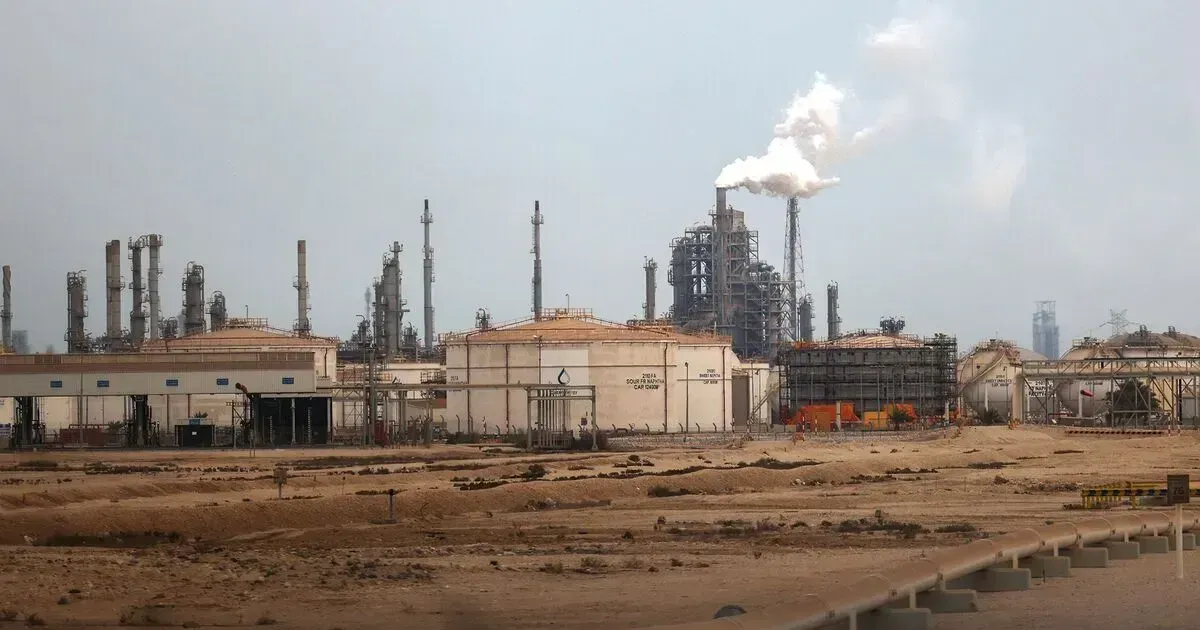
Iranian control of Hormuz traffic turns a military crisis into an economic bottleneck. Oil, gas and shipping costs all move through that channel. The next step matters. Tehran deployed fast-attack naval vessels to choke commercial shipping lanes in the Strait of Hormuz. Iranian authorities allowed their own crude oil tankers to pass through the waterway while blocking international competitors. Intelligence reports confirm that domestic vessels are managing the channel at rates broadly comparable to pre-war levels. These movements allow the Islamic Republic to maintain export revenues while its neighbors suffer total maritime paralysis. Satellite data shows a queue of nearly 40 tankers sitting idle in the Gulf of Oman.
Meanwhile, the global energy market reacted with immediate volatility as the blockade entered its third week. Traders watched the price of Brent crude surge past $100 per barrel during early morning trading in London. Unlike previous oil shocks, this crisis involves a targeted exclusion of Western-aligned vessels. Iran is effectively using its geographic position to cherry-pick which nations receive energy supplies. Port data suggests that only vessels with clear non-alignment or direct ties to regional allies are receiving clearance to pass the Larak Island checkpoints.
In fact, the operational efficiency of the Iranian "ghost fleet" has surprised Western analysts who expected a total shutdown of the strait. Bloomberg Economics reported that Iran is using sophisticated transponder manipulation to mask the origin of its cargoes. By maintaining its own export volume, the regime is buffering its domestic economy against the inflationary pressures hitting the rest of the world. This strategy creates a dual-track global economy where energy-importing nations in the West face a crushing supply deficit while sanctioned oil continues to flow into specific Asian markets.
For one, the inability of major exporters to bypass the strait has created a glut of oil inside the Persian Gulf that cannot reach the global market. Storage tanks in Kuwait and Iraq are reaching full capacity. If the blockade persists, these nations will be forced to shut in production, which could lead to long-term reservoir damage. Iranian officials remain indifferent to these regional concerns. Their focus remains on maximizing their own market share while the global supply chain fractures. The calculated move has turned the Strait of Hormuz into a one-way valve for Iranian interests.
Global Natural Gas Disruptions and Traffic Shifts
Natural gas markets are facing an even more severe reorganization as the war in Iran continues to disrupt LNG transit. Qatar, one of the world's largest exporters of liquefied natural gas, is almost entirely dependent on the Strait of Hormuz for its sea-borne trade. European nations that pivoted away from Russian pipeline gas are now finding their primary alternative blocked by Iranian naval dominance. In turn, the price of European gas futures has tripled in the last month alone. Industrial hubs in Germany are reporting a 20 percent reduction in output due to soaring energy costs and supply uncertainty.
Separately, the redrawing of the gas map is forcing a permanent shift in infrastructure investment. Countries that once relied on Middle Eastern gas are now desperate for American LNG, but the capacity to export more from the US Gulf Coast is limited. According to industry analysts, the current bottleneck is not just about the availability of gas but the lack of regasification terminals in the ports that need it most. Shipping companies are now scrambling to secure long-term charters for the few vessels capable of the long-haul journey from the Atlantic to the Pacific. The scramble has pushed daily charter rates for LNG carriers to record highs.
Still, the impact on Asian manufacturing cannot be overstated. Japan and South Korea, both heavily reliant on Gulf energy, have begun drawing down their strategic reserves at an unsustainable pace. For instance, the Japanese Ministry of Economy, Trade and Industry warned that current stockpiles will only last another 45 days if shipping is not restored. The lack of a clear timeline for the reopening of the strait has led to a speculative frenzy in the commodity markets. Investors are no longer pricing in a temporary disruption but a long-term shift in the global energy hierarchy.
Coalition Struggles to Restore Hormuz Traffic
President Donald Trump has found it difficult to assemble a meaningful international coalition to challenge the Iranian blockade. While the United States has deployed two carrier strike groups to the region, traditional allies in Europe and Asia have been hesitant to commit their own naval assets. The reluctance stems from a fear of direct escalation and the potential for Iranian retaliatory strikes against regional energy infrastructure. By contrast, previous maritime security operations like Operation Prosperity Guardian saw much broader initial support. The current hesitation reveals a deep fissure in the Western security architecture.
US shale producers are not cheering for $100 oil because the cost of labor and equipment is rising faster than the price of a barrel.
The diplomatic stalemate is a result of differing economic priorities among the major powers. France and Italy have expressed concerns that a military attempt to force open the strait would result in the destruction of remaining oil terminals. They prefer a negotiated settlement that would allow for the resumption of trade, even if it requires significant concessions to Tehran. Washington views such a move as a surrender of the principle of freedom of navigation. Without a unified front, the Iranian navy continues to operate with relative impunity within its territorial waters.
Economic Costs of Choked Global Trade
US shale producers are surprisingly quiet despite the price of crude holding steady above the century mark. Increased revenues are being offset by massive spikes in the cost of steel, chemicals, and specialized labor. In particular, the inflation that has gripped the broader economy is making it difficult for oilfield service companies to maintain their margins. Many producers are sticking to disciplined capital return programs rather than reinvesting in new drilling. The lack of a supply response from the US means that there is no immediate relief in sight for global consumers.
Yet, the long-term consequences of the Hormuz closure extend far beyond the energy sector. Global food prices are rising as the cost of fertilizer, which is energy-intensive to produce, climbs alongside gas prices. Supply chains for electronics and automotive parts are also seeing delays as shipping companies avoid the region entirely. The redirection of trade flows is permanent. What was once a globalized market for commodities is now a fragmented system of regional blocks and bilateral agreements. The fragmentation is likely to persist even after the immediate military conflict in Iran reaches its conclusion.
Hormuz Trade Pressure
The economic pressure comes from selectivity. If domestic cargoes move while rivals wait, Iran gains leverage without fully closing the strait.
Markets will watch whether outside navies restore confidence or simply add another layer of military risk to the route.
Hormuz Is Becoming a Selective Weapon
The danger is not only that Iran can close the strait. The more sophisticated threat is that it can make the strait selective. If Iranian cargo keeps moving while rivals wait, Tehran turns geography into economic coercion without accepting the full cost of a total blockade. That is harder to answer militarily and more corrosive commercially.
Washington keeps talking about freedom of navigation, but freedom of navigation means little if allies are too divided to enforce it and markets no longer believe the route is neutral. Iran is testing whether the world’s energy system can be held hostage one clearance decision at a time. So far, the answer is uglier than Western capitals want to admit.