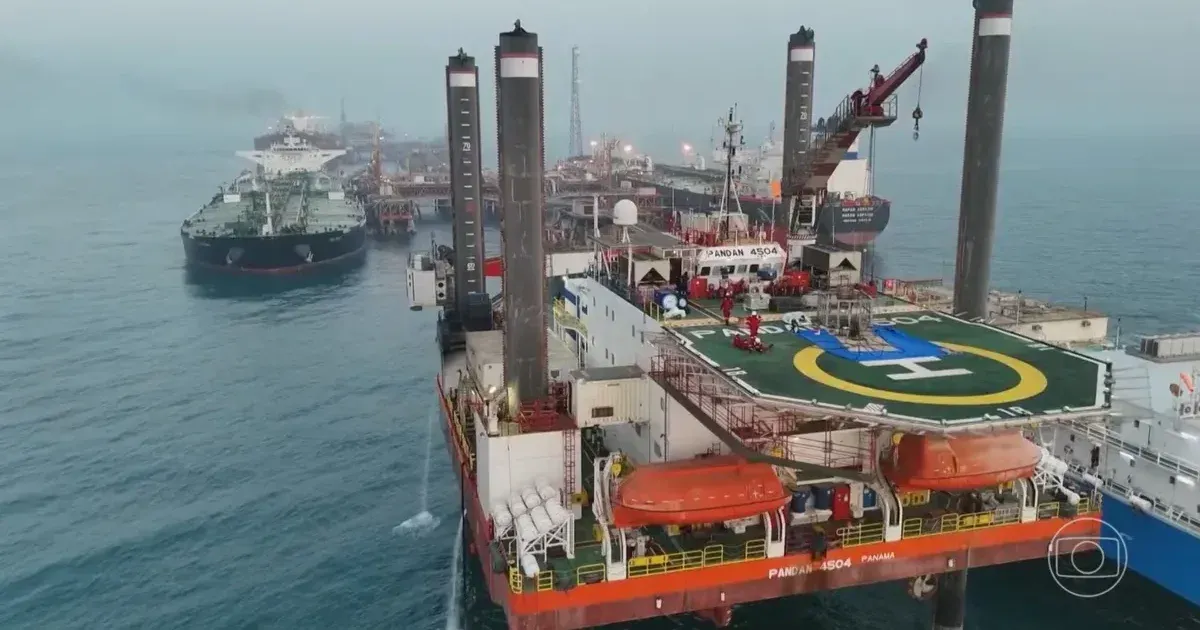
The Iran war is now being measured at gas pumps, shipping desks and campaign offices. Energy markets are turning a policy crisis into a domestic economic test. Donald Trump and global financial leaders confronted a deepening fiscal crisis on April 26, 2026, because of the sustained disruption of Middle Eastern oil exports. Iranian military actions in the Persian Gulf have triggered a rapid escalation in energy costs that now threatens to derail the post-pandemic recovery. Global supply chains, already fragile from previous trade disputes, are buckling under the weight of maritime insurance hikes and rerouted cargo ships. Consumers in the United States are seeing the immediate impact at the fuel station, where the national average for gasoline has surged past $5.50 per gallon.
Estimates suggest that every ten-dollar increase in the price of a barrel of crude oil shaves 0.2 percent off global economic growth. High prices go beyond a market inconvenience but a structural threat to the administration in Washington. Voters do not care about geopolitical details when their daily commute costs double.
Fuel Prices and the US Political Landscape
American motorists are beginning to skimp at the pump as the conflict with Iran keeps petrol prices at levels unseen for decades. Data from retail analysts indicate a sharp drop in discretionary spending at convenience stores, suggesting that higher fuel costs are cannibalizing other sectors of the economy. Donald Trump faces a mounting political problem as he attempts to maintain control of Congress in the upcoming November midterm elections. Sentiment surveys in swing states like Pennsylvania and Michigan show a direct correlation between rising oil prices and falling approval ratings for the incumbent party.
Republicans are scrambling to release more reserves from the Strategic Petroleum Reserve, but domestic production cannot instantly replace the lost Iranian barrels. Energy independence remains a rhetorical goal rather than a logistical reality despite a closed Strait of Hormuz.
Inflationary pressures are spreading from the pump to the grocery store aisle. Logistics firms have started applying fuel surcharges to every delivery, driving up the retail price of consumer electronics and household staples. While the White House points to foreign aggression as the cause, the domestic electorate typically blames the sitting president for high living costs. Markets in Chicago and New York have reacted with extreme volatility to every headline regarding naval skirmishes. Institutional investors are moving capital into gold and defensive utilities, signaling a lack of confidence in a short-term resolution. Crude oil futures for June delivery spiked another 4 percent in early trading on Monday.
"The soaring cost of driving presents a political problem for Trump ahead of midterm elections in November," according to market analysts monitoring the impact of the ongoing conflict.
Food Security Threats in Emerging Markets
Developing nations are currently facing what the World Bank describes as a triple whammy of fuel, food, and remittance crises. Many poorer countries in North Africa and the Middle East rely heavily on grain imports that are priced in US dollars. Because oil is also priced in dollars, the simultaneous rise in both commodities creates a devastating liquidity squeeze for central banks in Cairo and Islamabad. Fertilizer production, which is heavily dependent on natural gas, has seen costs triple since the onset of the Iran conflict.
Farmers in sub-Saharan Africa are reporting that they cannot afford the inputs necessary for the spring planting season. Smaller yields in the coming harvest will likely trigger a wave of food insecurity that could last for years. Projections show an additional 25 million people falling below the poverty line by the end of 2026. Hunger is the quickest path to civil unrest.
International observers note that the price of wheat has reached a ten-year high in several regional markets. Governments that subsidize bread to maintain social order are finding their budgets exhausted by the unexpected price surges. If these subsidies fail, the resulting protests could destabilize an already volatile region. The International Monetary Fund has warned that the window for preventive intervention is closing rapidly. Debt restructuring talks for distressed nations have stalled because of the global focus on the Iranian theater. Financial assistance is being diverted to military expenditures and energy security initiatives. This shock to the system has left the most vulnerable populations without a safety net.
Remittance Collapses and Sovereign Debt Risks
Labor migration patterns are shifting as the Iranian conflict disrupts the economies of the Gulf Cooperation Council states. Millions of workers from India, Pakistan, and the Philippines send billions of dollars home each year from jobs in construction and service industries in the Middle East. As regional instability grows, these remittance flows are drying up or being diverted to emergency savings. For countries like Nepal or Kyrgyzstan, remittances can account for more than 25 percent of their total GDP. A sudden halt in these payments leaves families unable to pay for education or healthcare.
It also deprives national governments of the foreign exchange reserves needed to service their external debts. Several emerging economies are now at the highest risk of sovereign default since the 1990s. Private creditors are becoming increasingly hesitant to lend to any nation with high exposure to the Persian Gulf trade routes. Risk premiums on bonds issued by developing nations have widened sharply since the start of April. Analysts at major London banks have downgraded the credit ratings of multiple countries in the Global South. Without a steady stream of remittances, the internal demand in these economies is expected to crater. This dependency on foreign labor income has become a liability in a time of regional war.
While some nations have tried to pivot to other markets, the sheer scale of the Middle Eastern labor market makes a quick transition impossible. Economic contraction in the developing world will eventually dampen demand for Western exports. Global trade remains interconnected in ways that make isolationism a fiscal impossibility.
Iran’s Energy Shock Could Kill Trump’s Midterm Agenda
Does the Washington consensus on energy security look like a relic of the past now that the internal combustion engine determines the fate of the 2026 midterms? Policy makers have spent decades pretending they can decouple from Middle Eastern instability while their voters remain shackled to the price of a gallon of regular unleaded. This dependency is not a policy failure but a structural reality that neither populist rhetoric nor green subsidies have managed to erase.
Globalists at the World Bank and IMF offer their standard warnings about developing nations, yet they possess no mechanisms to stop the bleeding in Lagos or Cairo when the Strait of Hormuz closes. We are looking at a system that rewards the most aggressive disruptors while punishing the most vulnerable populations who rely on thin margins of remittance and grain.
If Donald Trump cannot stabilize the energy market, his legislative agenda will die at the gas pump before November. The era of cheap energy provided a cushion for social stability that is now being shredded by a single geopolitical miscalculation. Hegemony requires energy dominance, not just financial sanctions. Washington is a hostage to the very geography it claims to dominate by force.