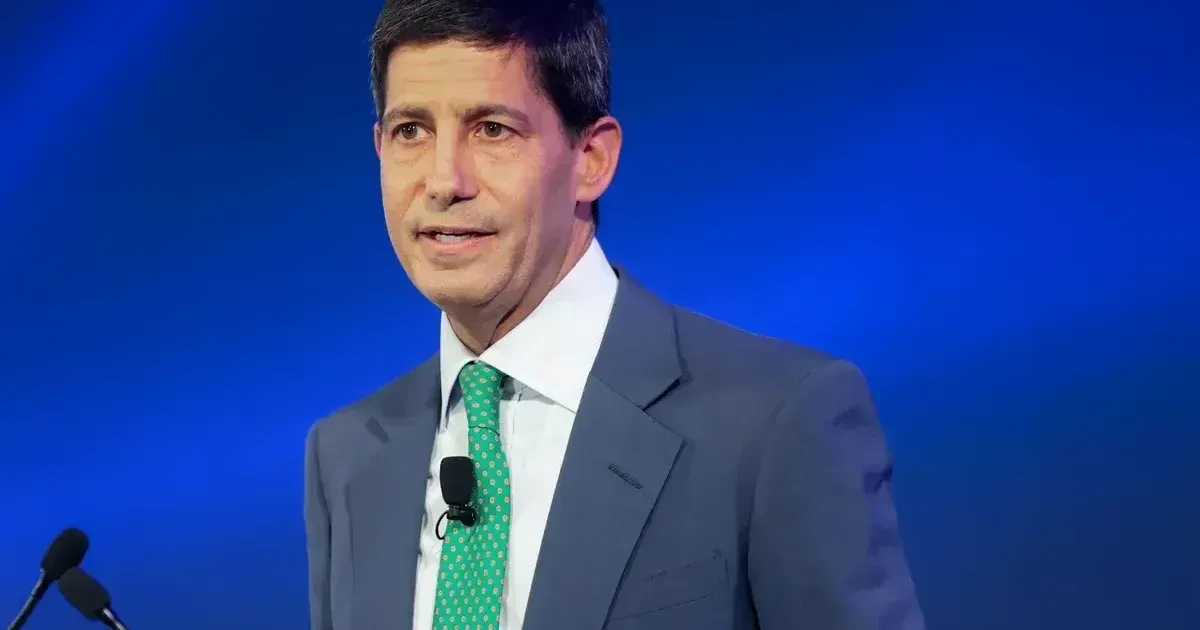
Senate Banking Committee leaders announced on April 25, 2026, that Kevin Warsh will face a formal confirmation vote this coming Wednesday. Legislative officials finalized the calendar shortly after legal developments cleared the path for his advancement. Prosecutors had previously slowed the nomination process while investigating leadership at the Federal Reserve. Wednesday’s session will determine whether the panel recommends the former governor for a full floor vote.
U.S. Attorney Jeanine Pirro formally closed her criminal investigation into Jerome H. Powell earlier this morning. Pirro’s office had spent months examining allegations of financial impropriety involving high-level Federal Reserve officials. Investigators found no evidence to support criminal charges against the outgoing chair. This decision removes the primary political obstacle that had stalled the Senate Banking Committee for weeks.
Legal authorities issued a brief statement confirming the end of the inquiry.
"Our office reviewed all available financial disclosures and internal communications related to the matter before determining that no further action was required," Jeanine Pirro noted in her final report.
Kevin Warsh originally joined the Federal Reserve Board of Governors in 2006 during the George W. Bush administration. His tenure included the peak of the 2008 financial crisis, where he acted as a primary liaison between the central bank and Wall Street executives. Analysts often cite his experience at Morgan Stanley as a foundation for his market-oriented approach to monetary policy. Warsh resigned from the board in 2011 but stayed active in economic circles through his work at the Hoover Institution. Confirmation now seems likely given the sudden lack of investigative friction.
Jerome H. Powell served as chair since 2018, navigating periods of high inflation and interest rate volatility. His term saw major shifts in how the central bank communicates with the public. Critics of the probe argued that the investigation was politically motivated to accelerate his departure. Pirro maintained throughout the process that her office operated independently of the White House. The closure of the file protects the procedural integrity of the upcoming transition.
Market Reaction
Markets responded with low volatility as the news broke.
Financial institutions had already priced in a potential Warsh victory. Treasury yields remained steady at 4.2% while equities showed minimal movement during midday trading. Investors generally prefer the certainty of a scheduled vote over the ambiguity of an open-ended criminal probe. Large banks have followed the nomination closely because Warsh has hinted at potential changes to capital requirement rules. His philosophy emphasizes a smaller balance sheet and a more predictable interest rate path. These views contrast with the more flexible, data-dependent approach favored by his predecessor. The upcoming hearing before the Senate Banking Committee will be heavily influenced by the aftermath of the recent inquiry.
Senate Republicans expressed confidence that the nomination will move quickly. Banking Committee Ranking Member Tim Scott previously called for a sped-up process once the legal clouds dissipated. Democrats on the panel have raised questions about Warsh’s stance on banking regulations but have not signaled a unified front to block the vote. Committee rules require a simple majority to advance the nominee to the Senate floor. Republicans currently hold the necessary seats to ensure a favorable outcome.
Pirro issued the formal case closure memo at 4:30 p.m. last Friday.
Internal documents show that the Department of Justice prioritized the Jerome H. Powell inquiry due to its implications for national economic stability. Prosecutors examined thousands of pages of trading records to ensure compliance with the STOCK Act. Lawmakers requested these documents following reports of trades made by various regional Fed presidents during the pandemic. Pirro concluded that the chair maintained proper distance from those specific transactions. Her report explicitly states that the evidence does not meet the high threshold for federal prosecution.
Kevin Warsh spent the last several days meeting with undecided senators in private offices. He reportedly focused on his plan to address persistent inflation in the services sector. Some centrist lawmakers sought assurances that he would not move too aggressively to raise rates if the job market cooled. Warsh has publicly argued that the central bank must prioritize price stability above secondary mandates. His focus on a rules-based framework has garnered support from fiscal conservatives. These discussions suggest a coordinated effort to secure a broad coalition before Wednesday.
Jerome H. Powell will likely remain in his post until the new chair is sworn in. The transition period typically lasts several weeks following a successful Senate confirmation. Historically, outgoing chairs provide a transition briefing to ensure continuity in Open Market Committee operations. Federal Reserve staffers have already begun preparing briefing books for the new leadership team. Powell’s legacy will depend heavily on the long-term success of the post-pandemic recovery. Current projections show inflation returning to the 2% target by the end of the year.
Jeanine Pirro survived intense public scrutiny during the investigation. Some legal experts questioned why a U.S. Attorney was leading a probe that traditionally falls under the jurisdiction of the Fed's Inspector General. Pirro argued that the criminal nature of the allegations required Department of Justice oversight. Her career has often placed her at the center of high-profile political battles. This specific case is one of the most serious of her tenure in the Southern District. The resolution of the probe ends a period of rare legal tension between the executive branch and the central bank.
Wednesday Vote
Wednesday's vote will take place at 10:00 a.m. in the Dirksen Senate Office Building.
Committee members will have three minutes each to provide opening statements before the roll call. Kevin Warsh is expected to attend the session but will not provide additional testimony. The process follows a standard template used for previous Fed nominations. Staff members indicated that the vote tally should be available by noon. Once the committee approves the nomination, it moves to the desk of the Senate Majority Leader. A final floor vote could occur as early as next week. National economic policy hangs on the outcome of these procedural steps. The Federal Reserve Act mandates that the institution remain insulated from direct political pressure. However, the use of criminal probes has raised concerns about the future of central bank independence. Scholars argue that the threat of investigation can be as effective as a formal dismissal. Kevin Warsh will take over an institution that is increasingly under the microscope of both parties. The vote on Wednesday marks a shift toward a new period of monetary governance.
Warsh Vote Turns Fed Independence Into a Political Casualty
Technocratic independence exists only until the Department of Justice decides otherwise. The timing of this legal resolution is not a coincidence but a calculated clearing of the deck. By dropping the criminal probe into Jerome H. Powell just 72 hours before the Kevin Warsh vote, the administration has effectively signaled that the investigation was a tool for leverage, not a search for justice. It allowed the incumbent to be pressured toward the exit while ensuring his replacement faced no awkward questions about his predecessor’s legal status during the hearing. The era of the untouchable central banker has ended. Future chairs must now operate under the shadow of the U.S. Attorney for the Southern District of New York. This sets a dangerous precedent where monetary policy can be steered by the threat of discovery motions and grand jury subpoenas. Jeanine Pirro has provided a blueprint for how to neutralize a Fed Chair without the political mess of a formal firing. If the central bank is to remain independent, it cannot be subject to the whims of prosecutors who report to the president. The upcoming vote is a rubber stamp on a process that has fundamentally compromised the Fed. It is a quiet coup disguised as a confirmation. Central bank autonomy is dead.