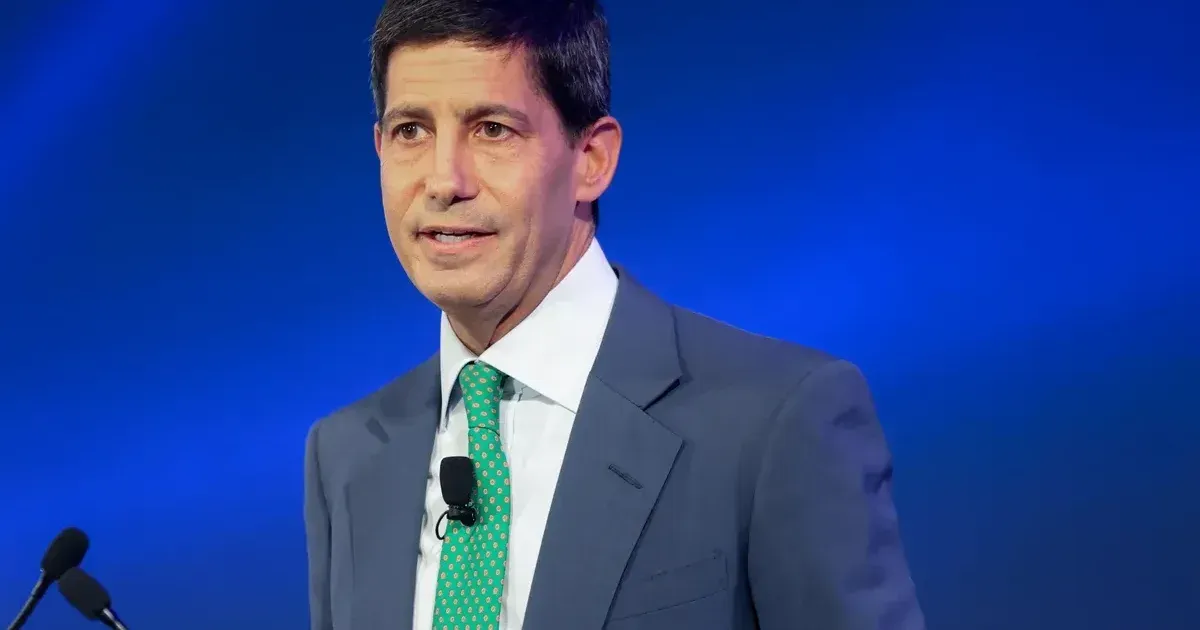
Kevin Warsh’s hearing is turning Federal Reserve politics into a test of institutional pressure. Powell remains the reference point even when the questions are about Warsh. Kevin Warsh arrived at the Senate Hart Office Building on April 21, 2026, to provide testimony for his nomination as the next chair of the Federal Reserve. Supporters and detractors alike gathered early in the wood-paneled hearing room, as the candidate faces a complex path to confirmation. President Donald Trump tapped Warsh to lead the central bank, but an ongoing criminal investigation into current leadership threatens to delay the transition. Legal scrutiny surrounding a building renovation project has transformed a standard political appointment into a battle over institutional integrity. Senate Banking Committee members must now weigh the qualifications of a former governor against the fallout of a growing federal inquiry.
Nominees for the Federal Reserve typically navigate questions regarding inflation targets and labor market statistics. Warsh, however, confronts a legislative body preoccupied by a Justice Department probe into the Eccles Building renovations. This investigation targets Jerome Powell and other senior officials, casting doubt on the timeline for a smooth handover of power. Witnesses suggest that construction costs and contract awards have drawn the interest of federal prosecutors. Jerome Powell, whose term concludes on May 15, 2026, has not yet commented on the specific allegations. Records indicate that the renovation budget exceeded original projections by several hundred million dollars.
Kevin Warsh Testimony and Institutional Conflict
Warsh brings a pedigree that includes a stint at Morgan Stanley and five years on the Fed board during the 2008 financial crisis. Conservative economists favor his stance on regulatory reform and his skepticism toward expansive monetary stimulus. During his previous tenure, he often served as a liaison to Wall Street, providing a bridge between the central bank and private markets. Critics point to his early warnings about inflation that never materialized as evidence of a flawed economic outlook.
Senate Democrats plan to query Warsh on his independence from the executive branch, especially given the current administration's frequent public commentary on interest rates. Political alignment with the White House remains a focal point for those worried about the erosion of the Fed's non-partisan mandate.
Confirmation proceedings are currently stalled by a procedural blockade from within the Republican Party itself. Thom Tillis, a Republican senator from North Carolina, has signaled his intent to hold the nomination until the Justice Department concludes its investigation into the current Fed leadership. Tillis argues that the Senate cannot confirm a successor while the institution is under a cloud of potential criminal misconduct. This stance has created a friction point between the White House and its allies on Capitol Hill. Democrats have seized on the internal GOP division to characterize the administration as chaotic. Minority Leader Chuck Schumer described the situation as a sign of an imploding executive branch.
Federal Reserve Building Probe and Political Obstacles
Building renovations at the central bank have become an unlikely trigger point for national politics. Prosecutors are examining whether officials bypassed federal procurement rules during the multi-year overhaul of the Fed headquarters. Investigators have requested thousands of pages of internal emails and financial ledgers related to the project. While Warsh was not involved in these decisions, the investigation provides a pretext for lawmakers to delay his ascent. Some analysts believe the probe is being used as leverage to force concessions on unrelated policy matters. The Justice Department has assigned a specialized task force to review the construction contracts.
"I would effectively block Warsh until the probe is dropped," Senator Thom Tillis stated according to a report from the Associated Press.
Obstruction from Tillis effectively prevents the Banking Committee from holding a vote, regardless of how the testimony proceeds. Senate rules allow a single member to place a hold on nominees, a tactic that can paralyze the confirmation process for weeks. White House officials have urged Tillis to reconsider, citing the need for continuity in global financial markets. Market volatility has increased as the May 15, 2026 deadline approaches without a clear successor in place. Investors generally prefer a predictable transition to avoid sudden shifts in monetary policy. Treasury yields fluctuated by twelve basis points during the morning session of the hearing.
Jerome Powell Investigation Dynamics
Jerome Powell has led the Federal Reserve through a period of historic inflation and post-pandemic recovery. His relationship with the current administration has soured as he resisted calls for aggressive rate cuts. News of the Justice Department probe broke shortly after Powell signaled that the Fed would maintain its current restrictive stance. Some congressional observers suggest the investigation is politically motivated, intended to push Powell out before his term officially ends. No formal charges have been filed, but the mere existence of the inquiry provides enough political cover for a confirmation freeze. Internal Fed auditors had previously flagged the renovation project for its lack of competitive bidding.
Instability within the Trump administration extends beyond the central bank. Lori Chavez-DeRemer recently resigned as Labor Secretary, citing a desire to return to the private sector. Her departure followed a series of controversies that had distracted from the administration's labor agenda. Simultaneously, FBI Director Kash Patel faces intense scrutiny following reports of professional misconduct and excessive absences. Patel has filed a defamation lawsuit against The Atlantic for its coverage of his tenure at the bureau. These overlapping scandals create a sense of volatility that complicates the confirmation of high-profile nominees like Kevin Warsh. The Senate remains divided on how to proceed with the backlog of executive appointments.
Economic Policy and Defense Production Act Influence
Donald Trump has increasingly turned to executive orders to drive his economic agenda. On Monday, the president signed memorandums invoking the Defense Production Act to secure coal supply chains and natural gas infrastructure. Trump argued that domestic energy production is essential to national defense and requires immediate federal intervention. These moves signal a shift toward a more interventionist economic policy that could clash with the Fed's traditional focus on price stability. Warsh must navigate these conflicting priorities during his testimony. Central bank independence is tested when a president uses emergency powers to manage specific sectors of the economy. Energy prices have dropped by 4% since the signing of the memos.
Defense Production Act mandates could complicate the Fed's efforts to control inflation if federal spending on infrastructure surges. Economists at Goldman Sachs noted that the memos might lead to localized price spikes in construction materials. Warsh has historically advocated for a limited role for the central bank, focusing strictly on the dual mandate of price stability and maximum employment. Whether he can maintain this narrow focus under a president who favors direct market intervention is a primary concern for the committee. Senate members are looking for assurances that Warsh will not use the Fed's balance sheet to support the administration's industrial policy. The hearing is expected to continue late into the evening.
Warsh Hearing Tests Fed Pressure
Weaponizing a building code investigation to paralyze the world's most powerful central bank reveals a new phase of legislative extortion. While the Justice Department may have legitimate concerns regarding the Eccles Building renovation, the timing of Senator Thom Tillis's blockade is too convenient to be purely coincidental. Republican leadership is effectively holding its own nominee hostage to purge the ghost of Jerome Powell before his term expires. It creates a dangerous precedent where any minor administrative irregularity can be leveraged to dismantle institutional independence. If the Fed becomes just another wing of the political apparatus, the credibility of the U.S. dollar on the global stage will evaporate.
Kevin Warsh is a capable technocrat, but he is being forced to audition for a role that is being structurally weakened by the very people appointing him. Markets are currently ignoring the noise, yet they should be terrified by the prospect of a central bank that is perpetually under the thumb of a Senate hold or a targeted DOJ probe. The era of the truly independent Fed Chair appears to be ending, replaced by a system of political patronage and legal threats. Continuity in monetary policy is being sacrificed for a short-term victory in a bureaucratic turf war. Expect a volatile transition as May 15 approaches without a resolution. The institution is breaking.