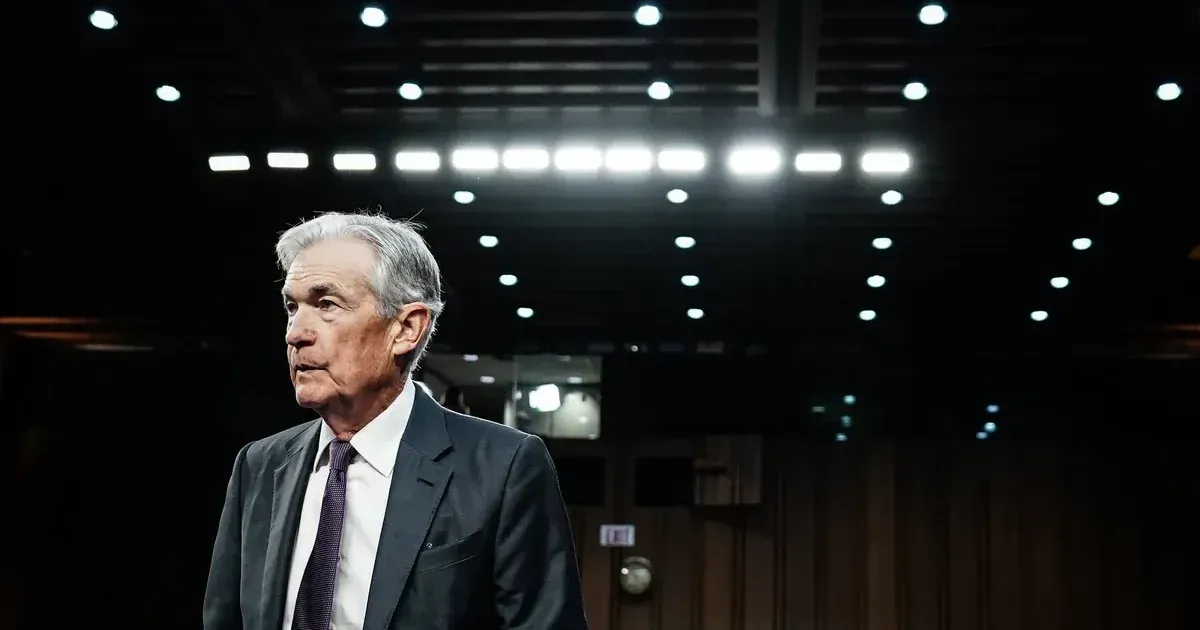
Donald Trump turned his long fight with Jerome Powell into a direct threat to the central bank leader's future. The White House wants a clean break before the next phase of monetary policy. The threat immediately raised questions about central-bank independence. The April 15, 2026, announcement said Powell could be removed if he does not voluntarily resign in the coming weeks. While the official term for the Federal Reserve chair concludes on May 15, legal ambiguities regarding the transition have sparked a public confrontation between the White House and the Eccles Building. Powell previously indicated he might stay on the Board of Governors until his separate term as a governor expires in 2028.
This stance has drawn sharp criticism from the administration, which seeks a clean break from current monetary leadership. White House officials indicated that the president expects a prompt departure to allow for a new appointee to take control of interest rate policy immediately.
Powell stated in recent private communications that he does not intend to vacate his seat until a specific Justice Department investigation into the central bank is fully resolved. Bloomberg reported that the president is prepared to initiate a formal firing process if the chair stays beyond the expiration of his leadership title. Such a move would be nearly without precedent in the modern history of the American central bank system. Legal experts note that the Federal Reserve Act protects governors from being removed without cause, creating a high threshold for any executive action.
The administration appears to be building a case that refusal to step down constitutes a dereliction of duty. Financial markets reacted to the friction with a 2% drop in the S&P 500 during morning trading.
Legal Framework of Federal Reserve Removal Power
Presidential authority over the Federal Reserve is strictly limited by the 1913 legislation that established the institution as an independent body. A president may only remove a Fed official for cause, which usually requires proof of inefficiency, neglect of duty, or malfeasance in office. Lawyers for the administration have suggested that the ongoing criminal investigation into the bank's operations could provide the necessary legal footing for a termination. Jerome H. Powell has demurred on his specific plans, but his insistence on staying until 2028 remains the primary point of contention. Most former chairs have historically left the board entirely once their leadership term ended to avoid overshadowing their successors. This precedent is a tradition, however, not a statutory requirement.
Trump said he would fire Jerome Powell as Federal Reserve chair if he did not leave the post in time.
Powell told colleagues that maintaining stability during an active investigation is his top priority. The New York Times reported that the chair views an early exit as a potential admission of institutional weakness. His allies argue that leaving now would leave the Federal Reserve vulnerable to political interference at a critical moment for inflation management. Supporters of the president argue that the voters provided a mandate for a new economic direction that Powell is actively obstructing. Treasury officials have already begun vetting potential replacements who align more closely with the president's low-interest-rate preferences.
Powell remains one of the few high-ranking officials from the previous administrative cycle still holding a position of serious influence. The standoff could reach the Supreme Court if a firing order is actually issued.
Justice Department Probes Central Bank Renovations
The Justice Department investigation cited by the president focuses on the multimillion-dollar renovation projects recently completed at the Federal Reserve's headquarters. Investigators are reportedly looking into procurement processes and whether contracts were awarded under federal guidelines. Washington Post reporters found that the probe includes a review of internal emails between Powell and construction consultants. While the Fed maintains that all spending followed established protocols, the White House has used the investigation to cast doubt on the chair's administrative oversight.
Powell maintains that he will not be intimidated into a premature resignation by what he characterizes as politically motivated legal inquiries. Federal investigators have not yet filed any charges against specific individuals within the bank. The probe continues to cast a shadow over the daily operations of the Federal Open Market Committee.
Monetary policy decisions have become increasingly tense as the political pressure on the board intensifies. Some economists worry that the threat of termination will influence how the committee votes on interest rates in its next meeting. Powell has spent years cultivating an image of a technocrat who is insulated from the whims of the Oval Office. Critics of the administration point out that threatening the chair undermines global confidence in the U.S. dollar. If the independence of the Fed is perceived as compromised, foreign investors might demand higher yields on Treasury bonds to compensate for the added risk.
Governor Tenure and the May 15 Deadline
A distinction exists between the four-year term of the chair and the fourteen-year term of a Federal Reserve governor. Jerome H. Powell was confirmed to a governor's seat that does not expire for another two years. This dual-role structure allows a chair to remain on the board even after they are no longer the presiding officer. If Powell chooses to stay as a governor, he would still have a vote on interest rate changes and regulatory matters. The scenario would create an awkward dynamic where a former leader sits alongside a new chair appointed by the president.
Previous chairs like Janet Yellen and Ben Bernanke chose to resign their governor seats early to allow the new administration a fresh start. Powell appears willing to break with that custom to protect what he describes as the integrity of the institution. The May 15 deadline is the likely trigger point for this constitutional confrontation.
Attorneys at the Justice Department are reportedly drafting a memo that outlines how a refusal to resign as governor could be interpreted as a conflict of interest. They argue that Powell's presence would hinder the executive branch's ability to implement its chosen economic policy. The legal theory has few supporters among constitutional scholars who view the Fed's staggered terms as a deliberate shield against such arguments. The stalemate persists as neither side seems willing to blink before the calendar turns to May.
Fed Independence Faces Open Pressure
Political theater often masks a deeper erosion of institutional norms that have sustained the global financial order since the end of the Second World War. The current standoff between the executive branch and the Federal Reserve extends beyond a personnel dispute to become a frontal assault on the concept of technocratic independence. For over a century, the Federal Reserve has operated under the fiction that monetary policy can be divorced from the populist impulses of the ballot box. The illusion is now being shattered by a president who views any independent power center as an illegitimate rival.
Jerome Powell is attempting to use his governor's tenure as a fortress, but a fortress is only as strong as the legal system that defends its walls. If the Justice Department chooses to weaponize a renovation probe to manufacture cause for dismissal, the very idea of a protected term becomes meaningless.
Critics who argue that the Fed needs more democratic accountability are playing a dangerous game with the nation's credit rating. The market does not care about the president's desire for low rates; it cares about the stability of the dollar as a store of value. By threatening to fire a chair for refusing to leave a seat he is legally entitled to hold until 2028, the administration is signaling that the law is secondary to political convenience.
Powell is right to dig in his heels, but he must realize that he is fighting a war of attrition against an opponent who does not share his respect for tradition. Institutional survival now depends on whether the courts are willing to enforce the letter of the 1913 Act. The alternative is a central bank that functions as a department of the Treasury, subject to the whims of every election cycle. It is a recipe for hyperinflation and the eventual collapse of the American economic hegemony.