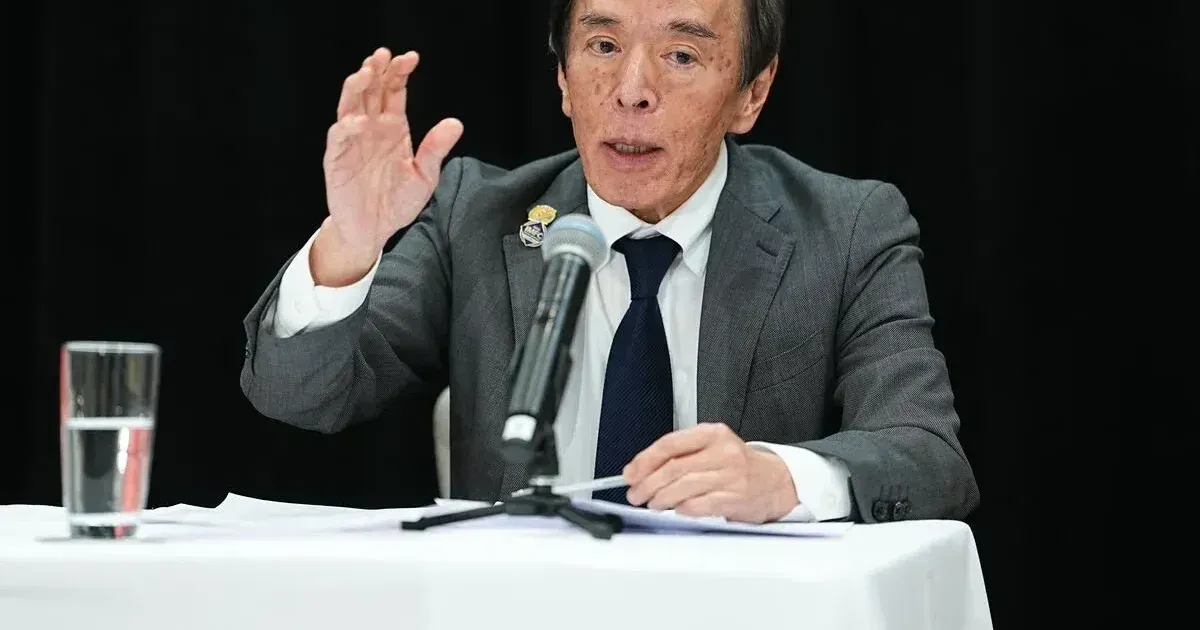
Bank of Japan communication has become a market event because inflation signals remain mixed. Kazuo Ueda’s caution left investors searching for the next policy clue. Kazuo Ueda, the Bank of Japan governor, declared on April 17, 2026, that his administration must navigate conflicting economic signals to maintain price stability. Speaking in Tokyo, the central bank head emphasized that external pressures now dictate much of the domestic policy trajectory. Investors who expected a definitive timeline for normalization found themselves parsing cryptic phrases about external volatility instead.
Ueda pointed to a landscape where rising energy costs and fragile consumer demand pull the economy in opposite directions. He refrained from providing a specific plan for the upcoming policy meeting, citing the extreme volatility of international events. Persistent tensions in the Middle East have pushed crude prices higher, creating a cost-push inflation scenario that the central bank cannot easily ignore. Japan imports the vast majority of its energy, making its domestic price index highly sensitive to disruptions in the Strait of Hormuz or Mediterranean shipping lanes.
Inflationary pressures currently coexist with fears of a broader global slowdown. While high prices usually suggest a need for tighter credit, the risk of a recessionary dip makes rate hikes dangerous for a nation still recovering from decades of stagnation. Kazuo Ueda noted that the balance of risks has become increasingly difficult to weigh since the start of the fiscal year.
Kazuo Ueda Identifies Price Stability Obstacles
Policymakers in Tokyo face a trade-off that complicates the traditional mechanics of monetary policy. High import costs driven by the Middle East conflict threaten to keep inflation above the 2% target for longer than initially projected. By contrast, those same geopolitical tensions dampen global trade and could hurt Japanese exports to major markets in Europe and North America. Ueda explained that the central bank must see more evidence of sustainable wage growth before committing to further tightening.
Market participants had been looking for clues regarding the April 28 policy decision. Many analysts anticipated a signal that the bank would raise its short-term interest rate from its current range. Instead, the governor focused his remarks on the unpredictability of the global environment. He suggested that making a move without sufficient data could destabilize the yen, which has already seen meaningful fluctuations against the dollar in recent weeks.
"We must scrutinize the impact of these geopolitical developments on both domestic demand and international cost-push factors," Kazuo Ueda said during his remarks.
Recent data from the cabinet office indicates that consumer spending remains soft despite modest wage increases in the spring labor negotiations. Households are feeling the squeeze of higher utility bills and grocery prices, leading to a reduction in discretionary purchases. This lack of strong domestic demand gives the Bank of Japan pause. If it raises rates too quickly, it might kill the very inflation they spent twenty years trying to generate. The governor is waiting for signs of sustainable wage growth, similar to the trends observed in our recent report on real wages.
Middle East Conflict Disrupts Global Supply Chains
Energy markets have entered a period of heightened sensitivity as the conflict in the Middle East shows no signs of resolution. Crude oil futures have climbed steadily, forcing Japanese manufacturers to raise prices for end consumers. Logistics companies also report higher operational costs due to rerouted shipping and increased insurance premiums. These factors contribute to a type of inflation that does not necessarily reflect a healthy, growing economy.
Supply-chain managers at major Japanese conglomerates like Toyota and Sony are reportedly monitoring the situation with concern. Any further escalation could lead to component shortages or a sudden drop in consumer confidence across the globe. Ueda acknowledged these possibilities, stating that the bank remains ready to adjust its stance if the economic situation shifts abruptly. His comments suggest that the path toward higher interest rates is far from linear.
Bank of Japan Policy Options and Deadlines
Interest rate decisions at the Bank of Japan are no longer the predictable affairs they once were under the previous leadership. The shift away from negative interest rates earlier in the decade marked a new era for Japanese finance, but the pace of subsequent moves stays disputed. Some board members advocate for a proactive approach to prevent the yen from weakening further. Others fear that the economy is too brittle to handle the increased cost of debt.
Historical data shows that Japan has often struggled to maintain growth after tightening its monetary belt. Memories of the 1990s and the subsequent lost decades weigh heavily on the minds of current officials. Kazuo Ueda appears determined not to repeat those errors by moving too early. He emphasized that the bank will maintain an accommodative stance for the time being, even as it prepares for an eventual return to more conventional policy levels.
Inflation Metrics and Consumer Spending Trends
Corporate Japan has seen a mix of results in the most recent earnings season. While some exporters benefit from a weaker yen, others are struggling with the soaring price of raw materials. Smaller firms are particularly vulnerable, as they often lack the pricing power to pass costs on to customers. This divergence in corporate health makes it difficult for the central bank to set a single interest rate that serves all sectors equally.
Consumer behavior provides the ultimate test for the BOJ policy. If the public perceives inflation as purely a result of external shocks rather than internal growth, they will likely reduce spending. Japan needs a virtuous cycle of higher wages leading to higher demand, which then supports stable 2% inflation. Without that cycle, any rate hike is only a reaction to external chaos. Ueda concluded his speech by reiterating that the bank will watch the data with extreme diligence.
Bank of Japan Keeps Markets Waiting
Central banking is frequently described as an art, but Kazuo Ueda is currently treating it like a defensive crouch. By refusing to offer any clear signal for the April meeting, he is effectively acknowledging that the Bank of Japan has lost its ability to lead the market. Instead, it is being led by events in the Middle East and the whims of global energy traders. This reactive posture is a symptom of a deeper malaise in Japanese economic thought, where the fear of making a mistake outweighs the necessity of decisive action.
Ueda is trapped in a logical paradox of his own making. He claims to want sustainable inflation, yet he hesitates to act when prices rise because the source of that inflation is "external." If the BOJ waits for the perfect, domestically-sourced inflation that arrives in a vacuum of global stability, it will be waiting for eternity. The reality is that the era of zero-cost capital must end, regardless of whether the geopolitical stars align perfectly. His current hesitation only invites more yen volatility and allows inflationary expectations to become unanchored among the Japanese public.
The upcoming April decision will likely be a non-event, but the cost of this inaction is mounting. Every month that the BOJ remains paralyzed by "two-sided risks" is a month where the Japanese economy loses more of its competitive edge in a high-rate global environment. Markets do not need more caution; they need a clear exit strategy that is not contingent on the absence of global conflict. Ueda’s silence is not a strategy. It is an admission of powerlessness.