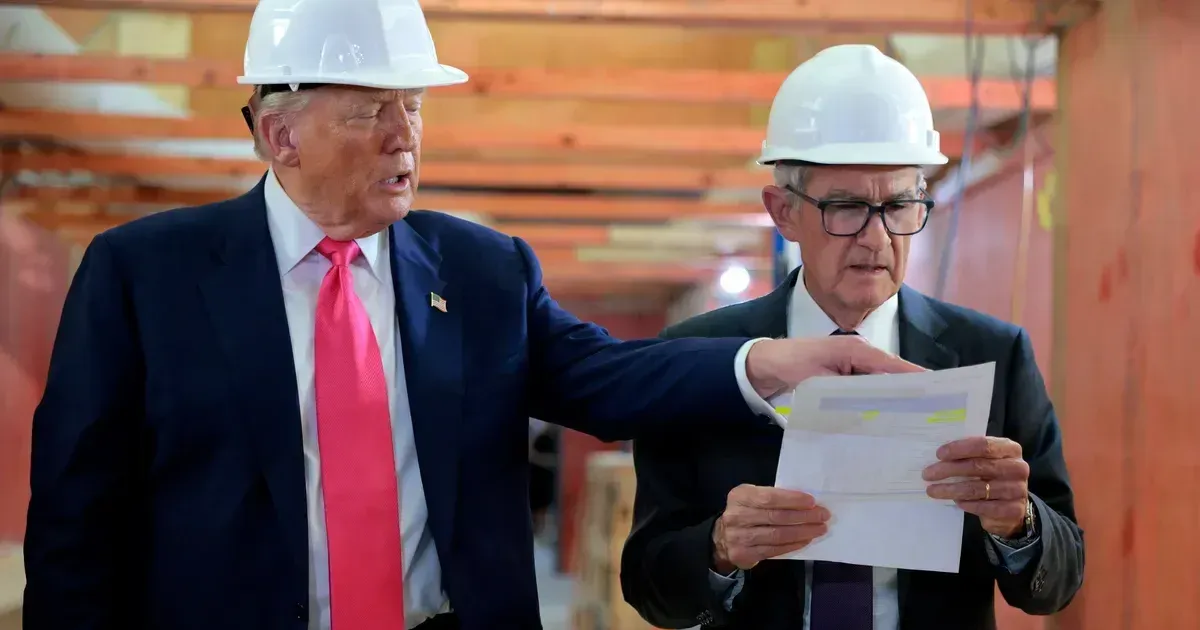
Jerome Powell received official notification on April 24, 2026, that the Justice Department shuttered its criminal investigation into his management of Federal Reserve facility upgrades. Legal closure arrived via a formal memorandum delivered to the central bank headquarters in Washington. News of the dismissal ended months of speculation regarding whether a sitting chair would face prosecution. Prosecutors focused their initial efforts on procurement irregularities. Documents submitted to the court indicated no criminal intent existed. Evidence failed to support allegations of financial misconduct. The decision also leaves the confirmation fight more politically exposed.
Federal Reserve Building Renovation Investigation Details
Renovation work at the Marriner S. Eccles Building triggered the initial federal inquiry. Costs for the multiyear project at the Federal Reserve headquarters grew substantially during the planning phases. Investigators reviewed thousands of internal emails and contractor agreements. Focus remained on whether Jerome Powell authorized excessive spending to bypass federal budget caps. Public records showed the project included extensive security upgrades and technological modernization. Federal law requires strict adherence to government construction guidelines. Auditors identified several accounting discrepancies in early 2025. Justice Department lawyers spent nearly a year interviewing board members. Every financial transaction underwent forensic review. No direct link to personal enrichment surfaced during the probe. Discrepancies turned out to be administrative errors.
Construction at the historic site involved large structural changes to ensure seismic stability. Architects encountered unforeseen soil conditions that drove costs higher. Such delays often lead to budget adjustments in large federal projects. Internal memos suggested the board followed standard protocols for emergency funding. Oversight committees in Congress questioned the transparency of these decisions. Procurement officers testified that Jerome Powell did not influence individual contractor selections. Building committees handled the majority of the day-to-day oversight. Experts noted that high-end materials used in the lobby complied with existing architectural preservation laws. Project managers defended the expenses as necessary for long-term durability. Federal building standards are notoriously complex and expensive. Oversight was consistent with previous decades.
Kevin Warsh Confirmation Path and Senate Dynamics
Removal of the legal cloud immediately impacted the transition of power at the central bank. Kevin Warsh is currently the presidential nominee to succeed the outgoing chair. Senate leaders paused confirmation proceedings while the criminal investigation was active. Republicans in the Senate Banking Committee indicated they would schedule a vote within days of the announcement. Democrats raised questions about the timing of the dismissal. They argued the Justice Department acted to enable a political appointment. Independent analysts noted that a pending criminal case would have made the confirmation of Kevin Warsh nearly impossible.
Policy stability remains a primary concern for international investors. Markets responded to the news with a brief rally in Treasury notes. Uncertainty regarding leadership transitions typically leads to volatility.
White House officials praised the decision to close the file. Presidential aides confirmed that Kevin Warsh has already begun preparing his testimony for the upcoming hearings. His previous tenure on the Federal Reserve board provides a foundation for his return. Policy experts expect a shift toward more aggressive inflation targets under his leadership. Senators from both parties requested a full briefing on the closed investigation before the final vote. Transparency requirements dictate that certain portions of the DOJ reports must be shared with the committee. Briefings will likely occur behind closed doors due to sensitive security details regarding the Eccles building. National security concerns often limit public disclosure of central bank infrastructure. The transition schedule is now set.
Jeanine Pirro Issues Warning on Future Evidence
Jeanine Pirro, acting as the US Attorney, issued a public statement clarifying the conditional nature of the dismissal. Her office retains the right to reopen the case if new information emerges. Legal observers characterized the warning as a standard procedural safeguard. Critics, however, viewed it as a sign of continued tension between the executive branch and the central bank. US Attorney Jeanine Pirro emphasized that the current evidence did not meet the threshold for a criminal indictment. Specific allegations regarding contractor kickbacks remained unsubstantiated. Federal prosecutors rarely issue such public caveats when closing a case. This suggests the investigation was thorough but not necessarily exhaustive. Institutional reputation stayed intact for now.
US Attorney Jeanine Pirro warned she would not hesitate to restart a criminal investigation should the facts warrant doing so.
Legal professionals noted that Jeanine Pirro holds substantial influence over the timeline of such investigations. Her statement served to remind officials that oversight is ongoing. Federal Reserve employees expressed relief at the news during internal meetings. Many staff members had been subpoenaed for testimony. Defense attorneys for Jerome Powell maintained that the investigation was politically motivated from its inception. They pointed to the lack of specific charges despite months of intense scrutiny. Grand jury activity ceased earlier this month. No further subpoenas are expected. Files will be archived at the Justice Department for future reference. Prosecutors formally notified the court of their intent to drop all inquiries.
Economic Policy Shifts and Central Bank Independence
Global markets anticipate a smoother transition as the legal hurdles dissipate. Investors shifted focus back to interest rate projections and employment data. Jerome Powell intends to serve out the remainder of his term until the Senate confirms his successor. Historical precedent suggests that central bank independence is essential for market confidence. Monetary policy decisions must remain insulated from political pressure to be effective. Kevin Warsh has frequently written about the need for clear communication from the Fed. His upcoming confirmation will likely focus on his views regarding quantitative easing. Financial institutions expressed a preference for a predictable transition. Stable leadership prevents sudden shifts in liquidity. Traders adjusted their positions based on the new timeline. Confidence in the institution persists.
Internal operations at the Federal Reserve will continue without the distraction of a criminal probe. Board members scheduled a regular meeting for next week to discuss global economic trends. Staff reports indicate that the renovation project will continue as planned despite the earlier controversy. Budgetary oversight has been strengthened to avoid future inquiries. Federal agencies often reorganize after major investigations to prevent systemic failures. Jerome Powell remains focused on the dual mandate of price stability and maximum employment. His legacy will likely be defined by his response to previous crises rather than building renovations.
Public perception of the central bank often fluctuates during periods of political change. Accountability measures are now part of the standard operating procedure. The case is closed.
Powell Inquiry Leaves Federal Reserve Independence in Doubt
Observers of the Washington power cycle often mistake institutional inertia for ethics. The dismissal of the investigation into Jerome Powell on the exact timeline required to seat Kevin Warsh is a surgical application of legal leverage. By keeping a criminal probe active during the height of the nomination process, the administration ensured Powell’s silence and eventual compliance. Jeanine Pirro played her role with precision, maintaining the threat of prosecution just long enough to neutralize any potential resistance from the central bank’s old guard. This is not the victory for the rule of law that the mainstream press suggests. It is the consolidation of executive control over the world’s most powerful financial engine.
Institutional independence is a convenient fiction maintained for the benefit of bondholders. History shows that when the central bank clashes with the White House, the executive branch eventually finds a legal or procedural bludgeon to force alignment. The renovation probe was that bludgeon. Dropping the charges now that the target is leaving office proves the investigation was a tool of transition. Kevin Warsh will inherit a Fed that has been effectively disciplined. He enters the role knowing exactly what happens to a chair who deviates from the desired political trajectory. Power stays centralized.