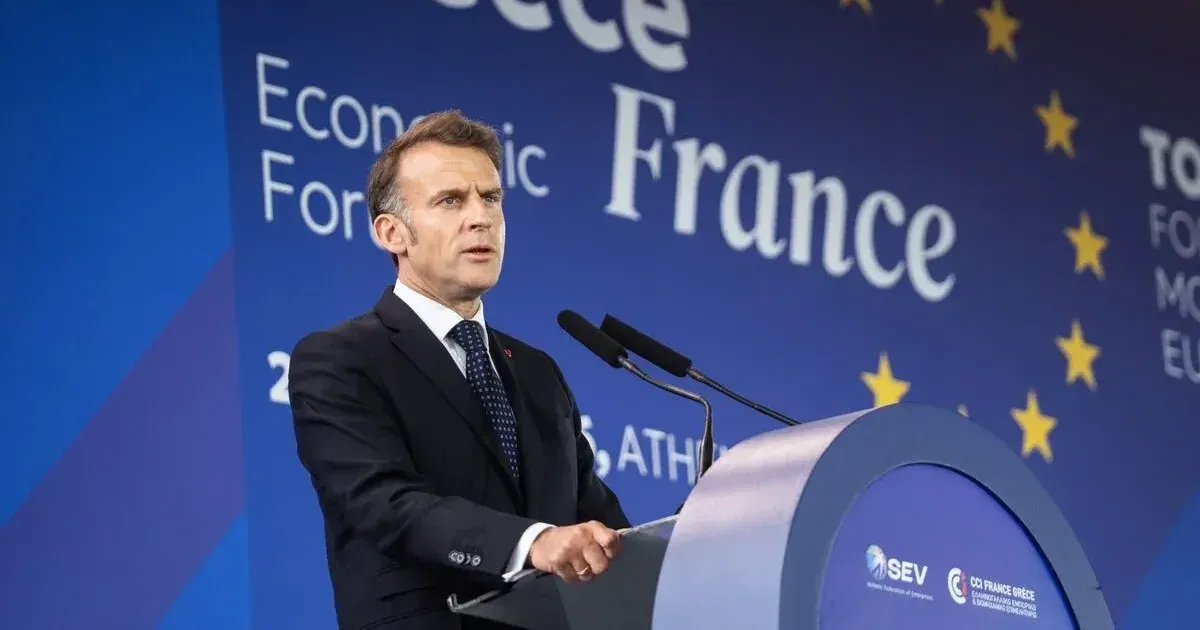
Emmanuel Macron declared on April 25, 2026, that the European Union must roll over its pandemic-era debt rather than adhering to rigid repayment schedules. He characterized the refusal to extend these financial obligations as silly during a press briefing where he advocated for the issuance of new bonds. France currently faces heavy budgetary pressure as interest costs on sovereign obligations rise across the euro area. Borrowing costs for the French government have widened the spread against German Bunds in recent trading sessions. Bond desks will watch the next Brussels timetable closely.
Bond yields shifted the calculus for many member states since the initial borrowing began in 2020. Paris leads a group of nations seeking to pivot the bloc away from austerity-focused repayment models. Emmanuel Macron argued that the current economic climate requires a permanent tool for joint debt. He suggested that extraordinary times require extraordinary flexibility to prevent a stifling of growth through premature fiscal contraction. France recorded a budget deficit of 5.5 percent of GDP in late 2023.
Critics in northern European capitals maintain that such a move violates the spirit of the original agreement. Berlin has historically opposed the transformation of temporary crisis measures into permanent fiscal mechanisms. While Bloomberg suggests the proposal faces stiff resistance from the German finance ministry, French officials believe a compromise is achievable. This maneuver would allow the bloc to manage the 750 billion euros in collective debt without forcing immediate tax hikes in member states. Debt servicing costs for the NextGenerationEU program are already projected to exceed initial estimates due to higher rates.
European Union Debt Management Strategies
Member states find themselves trapped between rising defense spending requirements and the looming maturity dates of pandemic bonds. The maturity profile of the European recovery fund shows a heavy concentration of repayments starting in 2028. Macron insists that refinancing these obligations through new bond issuances would stabilize the internal market. Investors have expressed concerns about the lack of a permanent safe asset in the Eurozone. Yields on EU-issued bonds currently trade at a premium compared to national German securities.
"It would be silly not to roll over this debt," Macron said.
Financial stability within the euro area depends on the perception of unity among its largest economies. If Brussels fails to provide a clear plan for the rollover, market volatility could increase for peripheral nations. Projections from the European Commission indicate that several countries will struggle to meet the 3 percent deficit target by 2027. Success for the French proposal would require a unanimous decision from all 27 member states. Several eastern European nations have expressed cautious support for the idea to fund green energy transitions.
Macron Bond Proposal and Economic Impacts
New bond issuances could provide the liquidity necessary to fund large-scale industrial projects across the continent. Macron views joint debt as a requirement for European strategic autonomy despite global competition. Private investment levels in the bloc continue to lag behind those of the United States. Policy experts in Paris argue that a sudden withdrawal of fiscal support would trigger a recessionary cycle. Spending on the digital transition alone requires billions in annual capital expenditure that national budgets cannot accommodate.
Debt levels in Italy and Greece stay high, making the prospect of new common borrowing attractive to Rome and Athens. Any new issuance would likely follow the green bond framework established during the pandemic. Still, the European Central Bank has reduced its bond-buying activities, removing a critical backstop for sovereign debt. Market participants are closely watching the spread between French and German ten-year yields. This financial divergence indicates a growing skepticism about the long-term sustainability of French fiscal policy.
Fiscal Flexibility During Extraordinary Times
Proponents of the rollover argue that the debt was incurred under historic circumstances that justify non-traditional responses. The 2020 agreement was the first time the bloc borrowed large sums collectively on the international markets. Therefore, no precedent exists for the management of such a large shared liability. Many analysts believe the current rules are too restrictive for a post-pandemic economy. National governments are under pressure to increase social spending to combat the effects of inflation on households.
Opposition from the Frugal Four, the Netherlands, Austria, Sweden, and Denmark, persists despite the French diplomatic offensive. These nations argue that rolling over debt encourages fiscal irresponsibility in the south. They prefer a strict adherence to the repayment timeline agreed upon at the program's inception. Yet, the cost of repayment is expected to consume a substantial share of the EU's annual budget. Funds earmarked for research and infrastructure could be diverted to cover interest payments.
Brussels Budgetary Rules and New Issuance
Changes to the fiscal rules would require a complex series of negotiations in the European Council. The current legal framework for the recovery fund was designed as a one-off measure. Reopening the treaties to allow for permanent debt issuance is a political minefield. Nevertheless, the reality of high-interest rates has forced a re-evaluation of the bloc's financial architecture. Many MEPs argue that the EU cannot fulfill its mandates without a larger, more flexible budget. Total interest payments on EU debt could reach 4 billion euros annually by 2026.
Negotiations in Brussels remain stalled on the technical details of how a rollover would be executed. Some proposals suggest extending the maturities of existing bonds by 20 years. Others advocate for the creation of a permanent 'redemption fund' to manage the liabilities. Macron believes that a failure to act would be a strategic error for the entire union. High-level talks are scheduled for the upcoming European Summit in June. Early drafts of the summit conclusions omit any specific mention of new common debt.
Permanent Common Debt Risks Becoming Europe’s New Addiction
Ignoring the structural fragility of the Eurozone allows politicians like Macron to treat shared debt as a recurring credit line. The French president is essentially attempting to socialize his nation's budgetary failures by wrapping them in the flag of European solidarity. By labeling the opposition "silly," he dismisses the legitimate concerns of more fiscally disciplined nations that do not wish to be tethered to a cycle of perpetual borrowing. This is not about pandemic recovery; it is about finding a way to fund an expansive industrial policy that the French treasury can no longer afford on its own.
Germany will likely block this proposal until the very last moment, but history shows that Berlin often yields when the alternative is a systemic crisis. The danger lies in the precedent. If the EU rolls over the Covid debt now, there will never be a "normal" time to pay it back. Every subsequent crisis, be it energy, security, or climate, will become another excuse for a new round of bond issuances. What is unfolding is the slow-motion transformation of the EU from a trade bloc into a debt union. The transition is being driven by political desperation in Paris instead of economic necessity in Brussels. The consequence is unavoidable: common debt is the new addiction of the European elite.