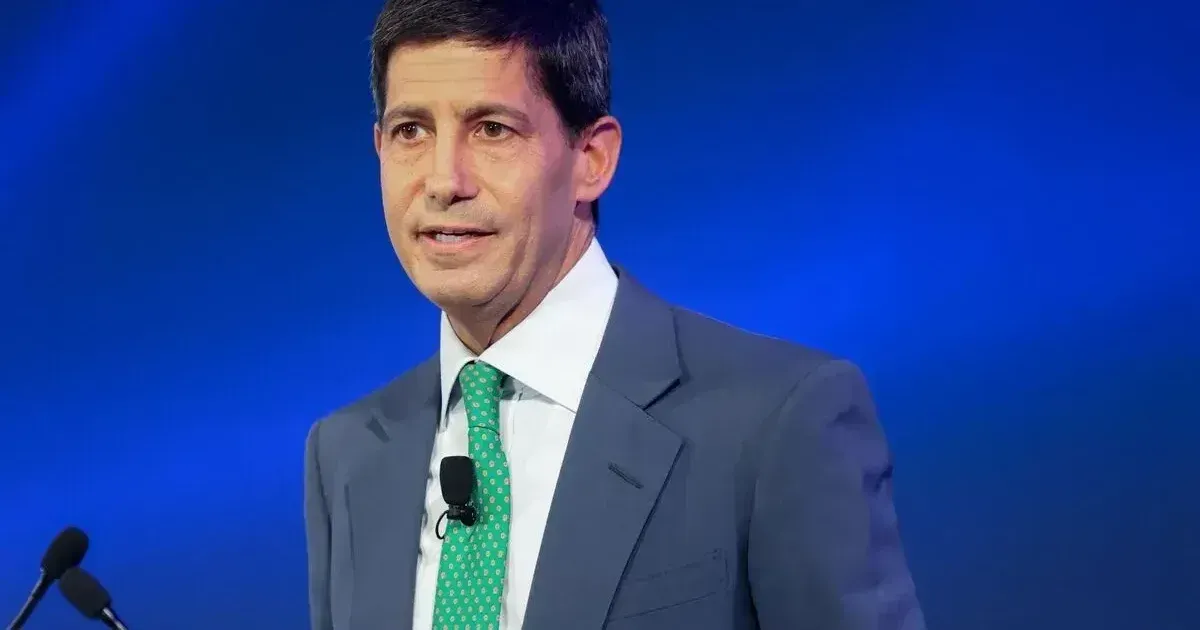
That argument will matter most if price pressure and employment data diverge. Kevin Warsh’s inflation warning sharpened the debate over the Federal Reserve mandate. Kevin Warsh articulated a restricted vision for the central bank on April 20, 2026, during his confirmation process for the role of Chair. His testimony to the Senate Banking Committee emphasized a sharp departure from the expansive policy goals pursued by his predecessors. Monetary policy should center on price stability to prevent the erosion of institutional credibility, according to his prepared remarks. Nominees for this position rarely express such explicit intentions to narrow the scope of the institution. Warsh argued that the broadening of the central bank's focus into social and environmental areas invites political interference. Protecting the Federal Reserve from partisan pressure requires a return to its strengths.
Inflation controls took precedence over almost every other metric during the two-hour hearing. Analysts noted that the nominee mentioned the labor market only once, a striking omission given the traditional dual mandate of the institution. Stable prices provide the necessary foundation for long-term employment growth, Warsh contended. Maintaining a strict 2% inflation target is the primary anchor for his proposed strategy. Price stability is more than a technical goal; it is a requirement for a functioning market economy. Financial markets reacted to these statements by adjusting expectations for future interest rate paths.
Kevin Warsh Outlines Inflation Control Priorities
Price stability must become the singular obsession of the central bank to avoid the stagflationary traps seen in previous decades. Warsh drew frequent parallels to the late 1970s, when runaway costs crippled consumer spending and investment. Central bankers often succumb to the temptation of addressing short-term economic pains at the expense of long-term stability. His testimony suggested that the current inflationary environment requires a more disciplined approach than the one used over the last five years. Excessive liquidity in the financial system continues to distort price signals across various sectors. Curbing this excess will involve difficult choices regarding the size of the balance sheet.
"The Federal Reserve must stay in its lane to maintain its independence and ensure that price stability remains the primary objective of our monetary policy framework," Kevin Warsh stated.
Direct intervention in credit markets should be limited to extreme periods of systemic distress. Warsh criticized the recent tendency of the board to use its tools for objectives beyond the immediate management of the money supply. This expansion of power creates a democratic deficit where unelected officials make decisions that should belong to the legislature. Legislators must define the boundaries of the bank to prevent mission creep. A narrow focus ensures that the public can hold the institution accountable for specific outcomes. Success should be measured by the purchasing power of the dollar rather than a wide array of social indicators.
Federal Reserve Independence and Policy Boundaries
Political independence is the most valuable asset of any central bank. Warsh warned that when the bank ventures into fiscal policy territory, it loses the protection afforded by its technocratic status. Elected officials find it easier to blame the central bank for economic woes when its activities are sprawling and ill-defined. Restoring the clear divide between monetary and fiscal policy is essential for the next decade of American economic management. Fiscal authorities are responsible for spending and taxation, while the bank should focus exclusively on the value of the currency. Clear boundaries reduce the risk of the bank being used as a tool for political expediency. As competition for the Fed chair seat intensifies, candidates are increasingly forced to address stubborn inflation trends.
Transparency into the decision-making process will increase under this proposed regime. Warsh promised a more predictable policy framework that relies on established rules instead of discretionary shifts. Wall Street has long complained about the lack of clarity in recent forward guidance. Providing a steady hand requires the bank to resist the urge to react to every minor fluctuation in the equity markets. Stability is achieved through consistency and a refusal to bail out speculative investors during routine market corrections. Institutional integrity is built over years but can be destroyed by a single period of perceived bias toward specific industries.
Labor Market Implications of a Single-Mandate Focus
Maximum employment is best achieved through a stable price environment. Warsh pushed back against the idea that prioritizing inflation hurts workers. Low-income households suffer the most when the cost of living outpaces wage growth. Real wages have stagnated in several sectors despite nominal increases, a trend that he attributes to loose monetary policy. Labor market dynamics are often driven by structural factors like education and technology instead of interest rates. Forcing the central bank to manage employment levels often leads to overheating and subsequent crashes. A focused approach prevents the boom-bust cycles that disproportionately harm the vulnerable.
Employment data will still be monitored, but it will not dictate the direction of interest rates as it has in the past. Critics of this approach suggest it could lead to unnecessary spikes in the unemployment rate during downturns. Warsh counters that the alternative is a persistent inflationary bias that undermines the entire economy. Monetary policy is a blunt instrument that cannot solve specific labor shortages or skills gaps. Efforts to use the balance sheet to stimulate specific job sectors are usually counterproductive. Directing capital toward the most efficient uses requires a stable currency, not central planning.
Market Response to Monetary Restraint Proposals
Bond yields rose as the hearing progressed, reflecting expectations of a more hawkish stance. Investors are beginning to price in a higher-for-longer interest rate environment under a potential Warsh chairmanship. The yield on the 10-year Treasury notes climbed six basis points within an hour of his opening remarks. Market participants recognize that a move toward a single-mandate focus would reduce the likelihood of rate cuts during periods of moderate economic slowing. This shift is a fundamental change in the relationship between the central bank and the private sector. Risk premiums are adjusting as the era of easy money appears to be ending.
Equity markets showed signs of volatility as tech stocks led a broader decline. Companies that rely on cheap debt to fund expansion face a more challenging environment if Warsh implements his vision. Capital allocation will likely become more discerning when the cost of borrowing reflects true market risks. Still, the long-term benefit of a stable dollar might outweigh the short-term pain of higher rates. Corporate leaders must prepare for a world where the central bank is no longer the primary driver of asset prices. Reliance on the Fed put has created moral hazard that Warsh seems determined to eliminate.
The policy fight will sharpen if inflation slows while hiring weakens. Markets will read that stance against future hiring data, wage pressure and household inflation expectations.
Warsh Warning Tests Fed Independence
Kevin Warsh is signaling a retreat to the fortress of monetary orthodoxy, and the financial establishment should be terrified. For two decades, the central bank has functioned as a surrogate for a paralyzed Congress, printing money to paper over structural deficits and social inequities. Warsh is essentially telling the political class that the printing press is closing for repairs. His rhetoric about staying in its lane is a polite way of informing legislators that they must finally do their own jobs regarding fiscal responsibility. By narrowing the Fed's focus to inflation, he is removing the safety net that has encouraged reckless government spending and speculative corporate behavior.
This approach risks a deep recession, but it may be necessary to save the dollar. The current path of mission creep has turned the Fed into a political lightning rod that threatens the very stability it is supposed to guard. Warsh is choosing a path of austerity that will likely result in a brutal confrontation with populist elements in both parties. He is betting that the pain of high-interest rates is a price worth paying for the restoration of institutional integrity. This is not a strategy for the faint of heart or those seeking short-term market gains.
Expect a volatile era of adjustment as the market relearns how to function without a central bank backstop. The era of the Fed as the economy’s therapist is over.