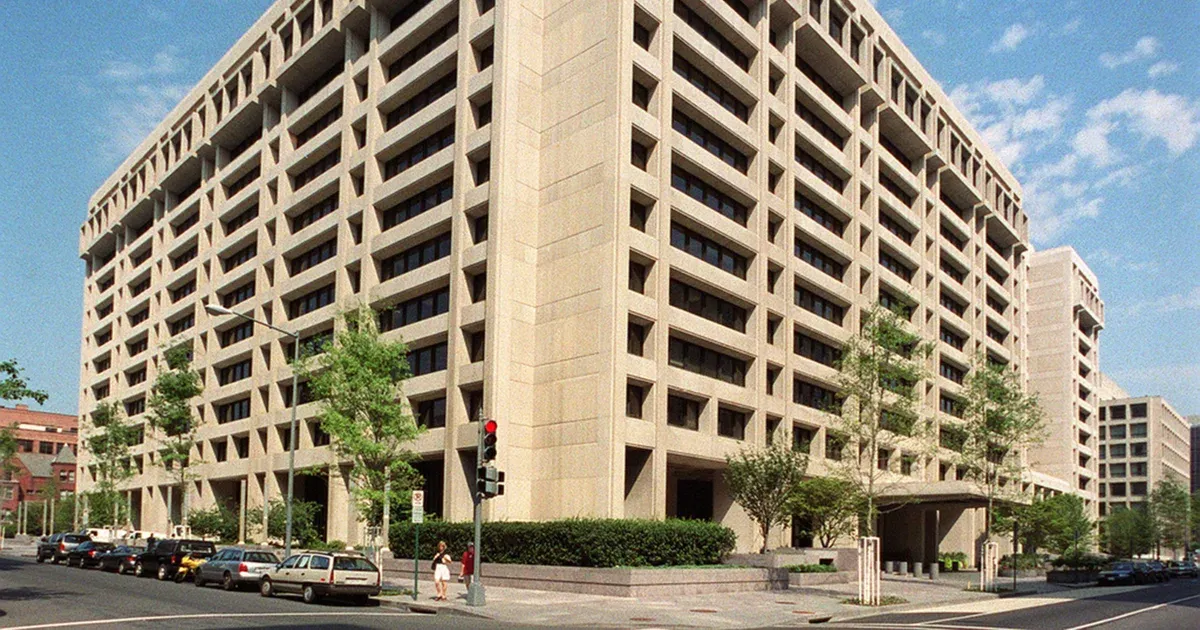
Finance ministers from the International Monetary Fund met in Washington to address a global oil shock triggered by the widening war in Iran. Delegates arrived for the spring meetings of the Bretton Woods institutions under the shadow of energy prices that have reached their highest levels since the previous decade. Conflict between regional powers in the Middle East has disrupted primary shipping lanes, forcing a radical reassessment of global growth projections for the fiscal year. Crude futures spiked in overnight trading as news of further infrastructure damage reached the trading floors in London and New York. Brent crude reached $114 per barrel during the early hours of the morning.
Economic turbulence now rivals the most volatile periods of the 1970s. While the Covid pandemic and the invasion of Ukraine strained supply chains, the current military engagement in the Persian Gulf introduces a more direct threat to energy security. World Bank officials warned that the compounding effects of these crises could lead to a sustained period of stagflation in emerging markets. Energy-importing nations in Europe and Asia are already reporting sharp increases in industrial input costs. Consumer sentiment has plummeted to levels not seen since the 2008 financial crisis. This volatility stems from the sudden removal of Iranian crude exports from the global balance sheet.
Wholesale prices in the United States reflect the immediate pressure of these geopolitical events. Industrial producers face surging costs for fuel and petrochemical feedstocks, which eventually pass through to consumer retail prices. Markets are currently questioning if the Federal Reserve can maintain its current interest rate trajectory given the inflationary impulse of expensive oil. Data from the Bureau of Labor Statistics suggests that energy components are now the primary driver of headline inflation metrics. Manufacturing centers in the Midwest reported a 14 percent increase in transportation costs over the last thirty days. Fuel surcharges are appearing on freight invoices across the country.
Global Military Conflict Drives Energy Market Chaos
Military operations near the Strait of Hormuz have effectively shuttered the most important transit point for global petroleum. Insurance premiums for tankers operating in the region have increased tenfold since the start of the month. Several major shipping conglomerates have diverted vessels around the Cape of Good Hope, adding weeks to delivery schedules and burning thousands of additional tons of marine fuel. These delays create a cascading effect throughout the global supply chain. Refineries in the Mediterranean are reporting shortages of specific crude grades necessary for diesel production. Shortages are no longer a theoretical risk; they are a logistical reality.
Petroleum remains the lifeblood of the global industrial complex. Alternatives to Middle Eastern supply are limited in the short term by infrastructure constraints and production caps in other regions. Production from the Permian Basin in Texas has hit a plateau, while OPEC+ members show little inclination to increase output to offset Iranian losses. Energy analysts at major investment banks have revised their year-end oil price targets to $140 per barrel. Political pressure is mounting on Western governments to release more supplies from strategic reserves. The Strategic Petroleum Reserve in the United States is currently at its lowest level in forty years.
Historical Lessons From Bretton Woods and 1973
Economic observers noted that the current era of instability challenges the very foundations of the international financial order. Comparisons to the 1973 oil embargo are becoming increasingly common among economic historians. During that era, a sudden supply shock led to a decade of sluggish growth and high prices that required aggressive central bank intervention to resolve. The current situation involves more complex financial instruments and a more interconnected global trade network. Current leaders must decide if the tools created in 1944 are still effective in a multipolar world. Multilateral cooperation is failing as nations prioritize domestic energy security over global price stability.
Not since the foundation of the Bretton Woods institutions late in the Second World War have global conflicts triggered this much economic turbulence. Washington is struggling to find a diplomatic solution that satisfies both its security commitments and its economic needs. Israel continues to conduct operations that market participants view as escalatory, while Iran maintains its blockade of key maritime routes. Diplomacy has yet to produce a ceasefire or a safe-passage agreement for commercial shipping. Previous attempts at mediation by regional partners have stalled. National governments are instead turning toward protectionist measures to shield their citizens from the price shock. Subsidies for home heating and gasoline are being implemented across the European Union. These fiscal measures threaten to widen budget deficits and complicate debt sustainability.
U.S. Wholesale Price Indices Reach Critical Thresholds
Producer prices for finished goods are rising at an annualized rate of 9.2 percent, according to recent reports. Small businesses are struggling to absorb these costs without losing their customer base. Energy costs are embedded in almost every aspect of the modern economy, from agricultural fertilizers to plastic packaging. Wholesale electricity prices have also climbed as natural gas follows the upward trajectory of crude oil. Utility companies in the Northeast have filed for emergency rate increases. Regional grid operators express concern about the reliability of the system during the peak summer months. Energy poverty is becoming a genuine threat for millions of households.
Global capital flows are shifting toward safe-haven assets like gold and the U.S. dollar. Emerging market currencies are losing value rapidly, making their dollar-denominated debts more expensive to service. Central bank governors in Brazil and India have expressed concern that a prolonged oil shock could trigger a wave of sovereign defaults. The International Monetary Fund has received several new requests for emergency liquidity in the last week. Resources are stretched thin by the ongoing requirements of post-pandemic recovery and existing conflict zones. Stability in the global south depends almost entirely on a rapid de-escalation of the war in the Middle East. No such de-escalation appears imminent.
Washington Policy Response to Crude Supply Deficits
Treasury officials are exploring the possibility of new price caps on energy exports from adversarial nations. This strategy has seen limited success in previous applications and often leads to the creation of shadow markets. Critics of the policy argue that it encourages smuggling and does little to lower the actual price paid by consumers. Domestic energy companies are calling for a rollback of environmental regulations to enable faster drilling on federal lands. Environmental advocacy groups, by contrast, are using the crisis to argue for an accelerated transition to renewable energy. Neither side offers a solution that can be implemented in time to affect the current price spike.
Policy Tools Under Energy Stress
When the Strait of Hormuz closes, the spreadsheets of the IMF become irrelevant. This crisis is not a temporary market fluctuation; it is the definitive end of cheap energy as a constant of Western life. Resource nationalism is the new global standard. Nations that rely on the kindness of global markets for their survival are discovering that those markets are fragile, politicized, and increasingly violent. The pursuit of a green energy transition, while noble in theory, has left the West vulnerable during the most critical period of the twenty-first century. We have successfully offshored our energy security while pretending that a globalized supply chain was a permanent feature of history. It was a luxury of the unipolar moment. That moment is over.
We are returning to an era of hard power where the most important commodity is not data or digital currency, but the physical barrels of oil that move armies and keep the lights on. History ignores meetings. Power respects tankers.