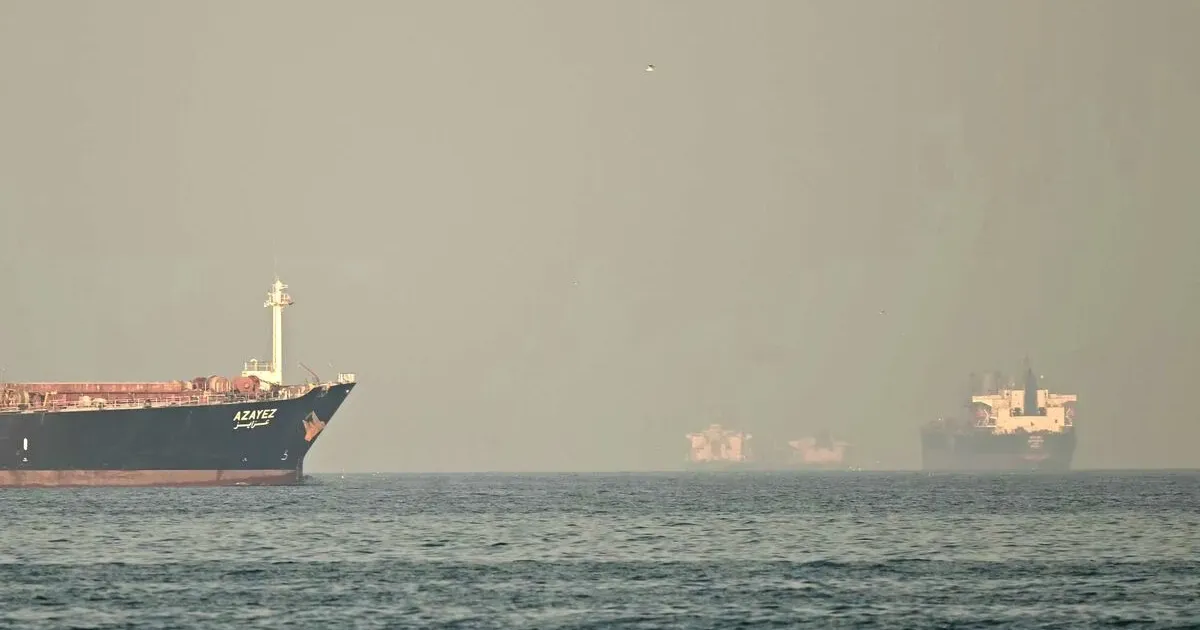
The Hormuz confrontation is no longer only an energy story. Military pressure and shipping risk are moving together. That mix makes each official signal more consequential. Iran asserted control over the Strait of Hormuz on March 30, 2026, despite a month of intensive military strikes by US and Israeli forces. Military operations aimed at neutralizing Tehran's maritime capabilities have successfully eliminated high-ranking commanders and destroyed inland infrastructure, yet the strategic bottleneck of the world energy trade stays firmly under Iranian influence. Naval intelligence reports suggest that Iranian forces have refined their asymmetric tactics, using mobile missile batteries and swarming drone technology to monitor every vessel attempting to transit the narrow waterway. This persistent presence has effectively granted Tehran a veto over global energy flows.
Israel and US forces targeted several command centers in the past forty-eight hours, seeking to break the blockade. Bloomberg Economics reported that while these strikes have sharply degraded conventional military assets, they have failed to dislodge the specialized units managing maritime interdiction. Strategic analysts observe that Iran has prioritized the maintenance of its naval chokepoint over the defense of its own territorial airspace. This focus allows Tehran to exert maximum economic pressure on Western allies without needing to win a traditional blue-water naval engagement.
Shipping data shows a 60% decline in daily tanker traffic compared to the previous year. Maritime security consultants emphasize that Iran has deployed advanced sea mines that are difficult to detect with current minesweeping technology. This technical advantage has forced the US Navy to adopt a more cautious posture, slowing the pace of escort missions. So, the volume of crude oil reaching global markets has dropped steeply, creating a supply-side shock that is rippling through commodity exchanges.
Crude Oil Markets Hit Multiyear Highs
Brent crude futures reached $115 a barrel on March 30, 2026, as traders factored in the possibility of a prolonged regional conflict. Energy analysts at several major investment banks have revised their price targets upward, with some forecasting $130 oil if the blockade persists through the summer. New York Times Business reports indicate that economists are now pricing in a potential global recession. High energy prices act as a regressive tax on consumers, reducing discretionary spending and increasing the cost of industrial production in both the East and the West.
Global markets remain sensitive to any escalation in the Persian Gulf. Investors have started moving capital into safe-haven assets, including gold and government bonds, as the risk of a broader regional war grows. Energy-intensive industries in Asia, particularly in South Korea and Japan, are reporting serious margin compression due to the surging cost of imported fuel. The economic pressure is creating diplomatic friction between Washington and its allies who are more vulnerable to energy price spikes.
Petroleum reserves in the United States and Europe are being tapped to stabilize prices, though the impact of these releases has been minimal. Commodity traders note that strategic reserves cannot compensate for the total loss of Iranian and Gulf exports if the Strait of Hormuz remains closed for several more months. Domestic gasoline prices in the US have already jumped by 40 cents per gallon in the last three weeks alone. Retailers report that this sudden increase is beginning to affect consumer behavior during the spring travel season.
European Central Bank Faces Inflation Pressure
Euro-area consumers have reported a meaningful surge in inflation expectations during the month of March. Data released by the European Central Bank shows that the public now anticipates price growth to stay well above the 2% target for the foreseeable future. The shift in sentiment complicates the central bank's efforts to manage monetary policy. Frankfurt officials are now caught between the need to support a slowing economy and the requirement to contain a new wave of cost-push inflation. Rising energy costs are the primary driver of these heightened expectations.
Frankfurt-based analysts suggest that the European Central Bank may be forced to delay planned interest rate cuts to prevent inflation from becoming entrenched. Beyond the immediate impact on fuel prices, the conflict is raising the cost of imported goods due to higher shipping rates. These secondary effects are starting to show up in producer price indices across Germany and France. Manufacturing output in the euro area fell for the fourth consecutive month as energy costs weighed on the industrial sector.
Consumer confidence across the continent has reached its lowest point since the energy crisis of 2022. Households are bracing for higher utility bills and more expensive groceries, as modern agriculture relies heavily on petroleum-based fertilizers and transport. Unlike previous shocks, the current price spike is occurring at a time when many European economies are already stagnant. The combination of high inflation and zero growth increases the risk of stagflation across the 20-nation bloc.
Structural Differences From Previous Economic Shocks
Analysts at Bloomberg Economics argue that the current crisis differs fundamentally from the supply-chain disruptions seen during the 2020 pandemic. Global demand is currently softer, and the labor market is not experiencing the same level of tightness that characterized the post-Covid era. The lack of widespread demand pressure may prevent the Iran war from causing a scale of inflation comparable to the early 2020s. Manufacturing capacity in many sectors is underutilized, which provides a buffer against rising input costs.
Inventory levels for most consumer goods are currently higher than they were during the pandemic. Retailers built up serious stocks over the last two years, which allows them to absorb short-term shipping delays without immediate stockouts. However, these inventories will eventually deplete if the Strait of Hormuz remains impassable. The longer the war lasts, the more likely it is that these structural buffers will be exhausted. Businesses are currently in a race to find alternative suppliers outside of the Middle East.
Supply-chain diversification has progressed sharply over the last five years, reducing the world's reliance on any single region. Many countries have invested in renewable energy and nuclear power, which provides some insulation from oil price volatility. Despite these advancements, petroleum still accounts for a significant part of global transport energy. The transition to electric vehicles is not yet far enough along to negate the impact of $115 oil on the global middle class.
Hormuz Escalation Risk
Hormuz is the point where military escalation and energy security meet. Even limited disruption can force traders, insurers and governments to price a risk that sits at the center of global supply.
The next phase depends on whether Iran signals control or confrontation. Shipping patterns, naval deployments and oil price moves will show how seriously markets read the threat.