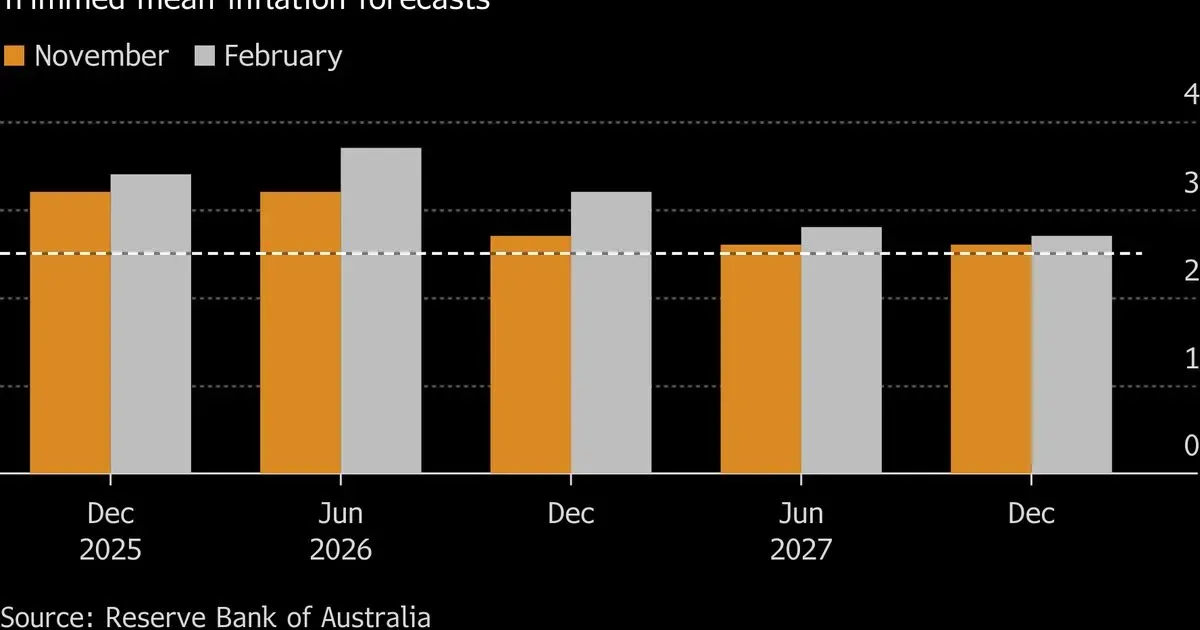
Energy inflation pushed Australia and South Korea toward unusually direct policy responses. Central bankers and transport officials are now reacting to the same oil shock from different directions. Markets began repricing risk before either government could present a stable plan. The policy mix matters because rate decisions and driving limits send different signals to households. On March 30, 2026, Australia prepared for higher interest rates while South Korea considered driving limits as crude prices moved toward $120 a barrel.
Consumer price indices across the Pacific region reflect the instability of the Strait of Hormuz. Energy costs spiked 14 percent in the last quarter alone. Policy makers in Canberra worry that these costs will trigger a wage-price spiral if left unchecked. The Reserve Bank of Australia maintains its focus on returning inflation to the target band of 2 to 3 percent. Current projections place the benchmark rate at its highest level since 2008.
Australia Central Bank Targets Seventeen Year High Borrowing costs for Australian households have reached levels unseen by an entire generation of homeowners. Luci Ellis indicated that the previous pauses in rate hikes are over. Westpac Banking Corp bases its forecast on the persistence of geopolitical risk premiums in the oil market. Higher transportation costs have already increased the price of imported electronics and fresh produce in Sydney markets. Retailers passed these expenses to consumers within weeks of the initial supply shock.
Inflationary pressures continue to mount despite earlier attempts to stabilize the Australian Dollar. International investors have shifted capital toward safe-haven assets, weakening the local currency against the greenback. This devaluation makes fuel imports even more expensive for local distributors. The central bank must now choose between economic growth and currency stability. Interest rates are the primary tool available to prevent a total collapse of purchasing power.
South Korea may widen restrictions on driving to include the general public if oil prices breach $120 a barrel as it seeks to cushion the impact of the Iran war on its energy supplies, the country's finance minister said.
South Korea Prepares National Driving Restrictions
South Korea's Finance Ministry is drafting emergency measures to restrict vehicle usage for the first time in 35 years. These regulations would target the general public if the price of oil exceeds $120 per barrel. Finance officials in Seoul are monitoring daily shipments from the Persian Gulf with increasing alarm. Crude oil is the lifeblood of the Korean industrial sector and its enormous petrochemical complexes. A sustained price surge threatens to stall the nation's manufacturing exports.
Public transport networks in Seoul are preparing for a sizable influx of commuters if the driving ban takes effect. Government agencies already operate under a restricted vehicle rotation system. Expanding this to private citizens is a sharp escalation of the state's response to the energy crunch. National reserves are being managed to ensure that hospitals and emergency services have priority access to diesel and gasoline. The last time the country saw such interventions was during the global oil shocks of the late 20th century. The ongoing Iran war forces central banks to raise interest rates across the globe to combat inflationary pressures " interest rate hikes. Energy security has become the top priority for the South Korean cabinet. Diplomats are scouring the globe for alternative suppliers in West Africa and the North Sea. These sources, however, come with considerably higher shipping costs and longer transit times. Logistics companies have warned that sea freight rates are climbing alongside fuel prices. Refineries in Ulsan have already reduced their output to manage thinning margins.
Trump Proposes Direct Intervention in Iranian Oil
Donald Trump suggested that the United States should take control of Iranian oil fields to stabilize global markets. This proposal was delivered during a recent briefing where he addressed the ongoing conflict in the Middle East. He argued that the current administration's approach to the Iran war is insufficient to protect American economic interests. Taking the oil would serve as a direct counter-measure to the supply disruptions currently choking the global economy. His rhetoric has sparked intense debate among international law experts and military strategists.
Republican lawmakers have largely aligned with this more assertive stance on energy resources. They argue that energy independence requires a physical presence where the resources are located. Military analysts suggest such a move would require a huge deployment of ground forces and naval assets. The logistical requirements of seizing and holding foreign oil infrastructure are immense. Crude prices fluctuated wildly following the publication of these remarks in the Financial Times.
International reaction to the proposal has been swift and generally critical. European allies expressed concern that such actions would lead to a wider regional war. Beijing called for a return to diplomatic negotiations to resolve the shipping crisis. Energy markets reacted with immediate volatility to the prospect of seized Iranian assets. Brent crude traded at $114 per barrel as the news reached trading floors in London and New York.
Energy Markets Face Broad Supply Disruptions
Global shipping lanes are currently ghost towns for tankers without heavy military escort. Insurance premiums for vessels traveling through the Middle East have increased tenfold since January. These costs are being added to the final price at the pump for every driver from Brisbane to Busan. Supply-chain managers are reporting delays in the delivery of essential chemicals and plastics. Every industry that relies on petroleum-based inputs is feeling the financial squeeze. Investors are bracing for a prolonged period of high volatility. Stock markets in Asia closed lower for the fifth consecutive day on March 30, 2026. Tech companies are particularly vulnerable as their manufacturing hubs in East Asia face rising operational costs. Higher interest rates in Australia have already dampened domestic consumer spending. The cycle of rising costs and tightening credit is creating a difficult environment for small businesses. Global energy demand shows no signs of meaningful decline despite the price hikes.
Strategic petroleum reserves are being released by several nations to provide temporary relief. These releases are a short-term fix for a structural supply problem. Long-term energy policy is now being rewritten in real-time by nervous governments. The transition to renewable energy is being accelerated in some regions while others return to coal and nuclear power. Reliable energy at a predictable price is no longer a certainty for the world's major economies.
Energy Shock Policy Test
Military force has replaced monetary policy as the primary lever of global economic stability. The suggestion by Donald Trump to seize Iranian oil is not merely campaign rhetoric but a recognition that the post-war order of free-flowing energy is dead. Central banks are pretending they can manage this crisis with interest rate hikes, yet they are essentially trying to put out a forest fire with a water pistol. Australia's 17-year high rates will not reopen the Strait of Hormuz nor will they magically lower the cost of a barrel of crude.
South Korea's plan to ban private driving is the most honest policy move of this year. It admits that the era of unlimited consumption is over. The global economy is shifting into a survivalist mode where national governments must dictate the movement of their citizens to keep the lights on. It is a return to 1970s-style state interventionism, and it is likely just the beginning. The facade of the globalized, borderless market is crumbling under the weight of ballistic missiles and naval blockades.
Relying on the Reserve Bank of Australia to fix a geopolitical disaster is a fool's errand. We are moving into a period where raw power and geographic control dictate wealth. Investors who continue to bet on a return to normalcy are ignoring the clear signs of a fractured world. The real currency of 2026 is not the dollar or the pound, but the physical control of the pump. Power comes from the barrel.