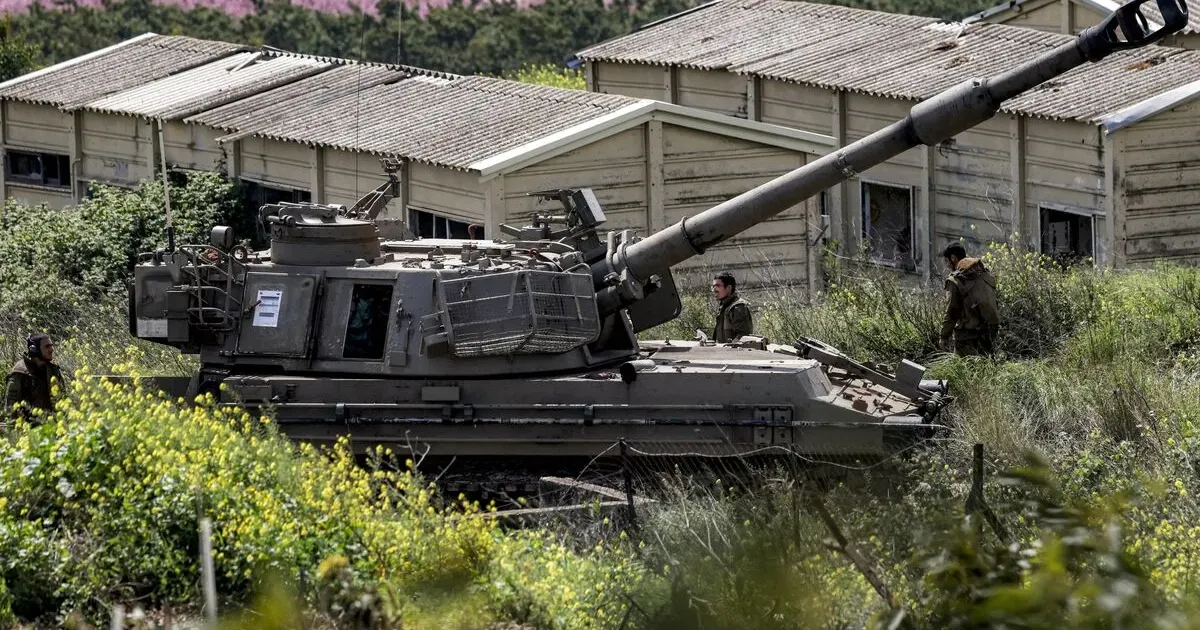
Energy markets and sovereign debt moved together as the Israel-Iran conflict widened. March 30, 2026, saw the Bank of Israel freeze interest rates as the ongoing conflict with Iran triggered a heavy expansion of sovereign debt. Central bankers in Jerusalem maintained the benchmark rate for a second consecutive time to address mounting inflation concerns. Financial stability remains a secondary concern to the immediate fiscal requirements of the war effort. Escalating defense spending continues to pressure the domestic economy while global markets react to the prolonged military engagement.
Parliamentary approval of a revised 2026 state budget highlighted the severity of the fiscal situation. Lawmakers sanctioned a document that prioritizes military supplements at the expense of civilian services and long-term social programs. Funding for this expanded defense posture relies heavily on additional borrowing. Israel faces a dual challenge of managing a wartime economy while convincing international creditors of its long-term solvency. Current projections indicate a sharp downward revision in growth forecasts for the coming fiscal year.
Israel Shifts Fiscal Strategy Toward War Debt
Budgetary adjustments in Jerusalem reflect a permanent shift toward a high-debt environment. Legislators voted to implement deep cuts across multiple ministries to redirect capital to the $15 billion defense supplement. This shift marks a departure from previous years of fiscal conservatism. Reliance on international debt markets has increased as domestic tax revenues suffer from a labor shortage caused by military mobilization. Investors now demand higher premiums on Israeli sovereign bonds to compensate for the geopolitical risk.
Economic output has stagnated in key sectors such as technology and agriculture. Security demands have pulled thousands of workers from the private-sector into active service. Foreign direct investment remains cautious as the timeline for a resolution with Tehran remains uncertain. Inflationary pressures have not abated despite the central bank's restrictive monetary policy. High borrowing costs are expected to persist well into the next fiscal cycle. Local businesses struggle with the combined weight of high-interest rates and diminished consumer demand.
Energy Markets Brace for Strait of Hormuz Disruptions
Shipping lanes in the Strait of Hormuz face severe logistical constraints as maritime security deteriorates. Global energy prices fluctuated wildly throughout the first-quarter of 2026 in response to Iranian naval maneuvers. These disruptions have direct consequences for large-scale industrial initiatives far from the Mediterranean. Ineos, the chemicals giant led by Jim Ratcliffe, reported serious risks to its flagship projects due to supply-chain failures. Delays in raw material deliveries have forced the company to reconsider its operational timelines.
Chemical production depends on the consistent flow of hydrocarbons through the Persian Gulf. Maritime insurance rates for tankers have tripled since the escalation began. Energy market ructions have provided a temporary boost to certain petrochemical margins, yet the overall impact is negative. Supply-chain managers are scrambling to find alternative routes that bypass the primary conflict zones. Freight costs for European manufacturers have reached levels not seen since the global pandemic era. Shipping companies are now rerouting vessels around the Cape of Good Hope to avoid the volatility. The government's revised 2026 state budget underscores the immense financial pressure mounting as oil prices reach record highs.
Investors see Jim Ratcliffe's chemicals group boosted by energy market ructions from Iran conflict, but the long-term logistical delays threaten core project delivery timelines.
Logistics experts warn that the global trade system cannot sustain a permanent closure of the Strait of Hormuz. Port congestion in alternate hubs has started to slow the movement of consumer goods. Energy-intensive industries in the United Kingdom and the United States face rising input costs that threaten to reignite dormant inflation. Analysts at Bloomberg Economics suggest that a sustained oil price spike could trigger a global recession. Strategic petroleum reserves are being monitored closely by international energy agencies.
G7 Leaders Convene Over Global Inflation Risks
G7 finance ministers opened crisis talks this morning to coordinate a response to the Middle East economic contagion. Leaders from the world's largest economies expressed concern over the fragility of the post-war recovery. Debt sustainability in emerging markets is a primary point of contention. Rising energy costs have complicated the efforts of central banks in London and Washington to achieve their inflation targets. International cooperation on maritime security is now a requirement for economic stability.
European security has become entangled with the Middle Eastern theater through unconventional means. Reports of drones entering Finnish airspace and targeting Baltic ports have alarmed Northern European capitals. These incidents suggest that the conflict between Israel and Iran has global reach. Baltic shipping lanes serve as a critical corridor for grain and industrial materials. Any disruption in these waters would amplify the price shocks already felt in the energy sector. Security officials in Helsinki have increased patrols around critical infrastructure nodes.
Market analysts are tracking the correlation between Middle Eastern military developments and European energy futures. Volatility has become the baseline for global commodities trading. Small and medium enterprises across the Eurozone are particularly vulnerable to these sudden price swings. Governments are facing pressure to provide energy subsidies even as their own debt levels remain high. The financial interdependence of the modern world ensures that no region remains insulated from the costs of the Israel-Iran war.
Debt Markets Under War Pressure
Does the global financial system possess the resilience to withstand a permanent state of Middle Eastern hostility? National security has finally cannibalized economic logic in Jerusalem and Tehran. This transformation of the Israeli economy into a debt-funded fortress is not a temporary measure. It is a fundamental reconfiguration that will haunt the region for decades. Western allies are currently underwriting a conflict that is actively destroying the global trade stability they claim to protect. The reliance on sovereign debt to fund 2026 military operations creates an unstable house of cards that a single major credit downgrade could topple.
Washington and London are sleepwalking into a stagflationary trap. While investors might see short-term gains in energy volatility, the underlying industrial base is eroding under the weight of logistics failures and high-interest rates. The G7 talks are a performative exercise in damage control rather than a solution to the structural problem of a closed Strait of Hormuz. What is unfolding is the end of the era of cheap energy and secure maritime transit. The global economy is no longer a neutral platform for trade but a primary weapon of war. This is a permanent loss of efficiency. Hard reality dictates that the cost of doing business has just moved to a higher, more dangerous plateau. The bill is coming due.