Donald Trump warned the Iranian national football team to avoid entering the United States on March 17 as the military conflict between the two nations shattered the logistics of the 2026 World Cup. Rising geopolitical tensions have already triggered a massive retreat in global equity markets since the outbreak of hostilities on February 28. Supply chains are buckling under the pressure of regional instability, while energy-dependent economies in Asia struggle to contain a sudden oil price spike. The geopolitical friction now threatens to derail the most significant sporting event in the Western Hemisphere.
South Korea and Japan are absorbing the most severe economic impact among developed nations outside the immediate combat zone. Investors in Seoul and Tokyo have reacted with heavy selling as the Strait of Hormuz remains a primary theater of military operations. Because these nations rely almost exclusively on imported crude to power their industrial sectors, any disruption in Middle Eastern maritime traffic translates directly into manufacturing headwinds. Industrial output projections for the second quarter have been revised downward across the semiconductor and automotive sectors.
Asian Markets Sink Under Crude Oil Price Pressures
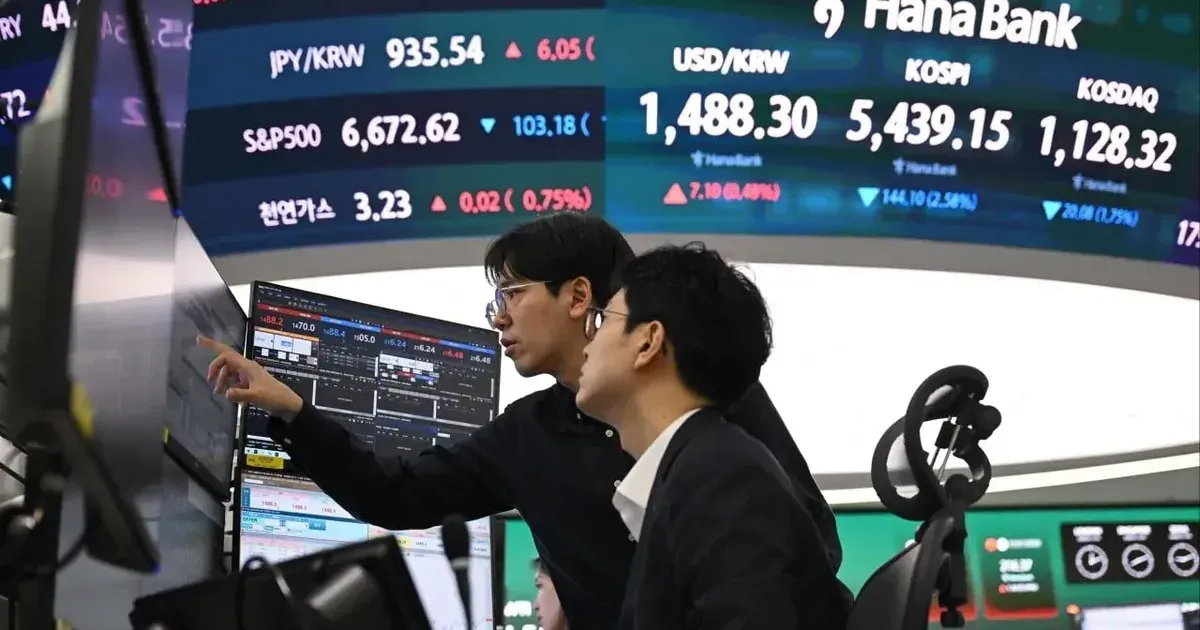
Stock market indices in East Asia continue to mirror the volatility of the energy sector. The Kospi index in Seoul has slumped 12 per cent since the US-Israel war with Iran broke out late last month. This decline reflects fears that South Korean refiners will be unable to secure sufficient supply to meet domestic demand. Government officials in Seoul moved last week to cap retail oil price increases to prevent a total collapse in consumer spending. Inflationary pressures have reached levels not seen in over a decade as transport costs soar.
Meanwhile, the Nikkei 225 in Tokyo has slid nearly 9 per cent during the same period. Japanese traders are particularly concerned about the vulnerability of liquefied natural gas shipments. While Japan has strategic reserves intended to last for 90 days, the prospect of a multi-year conflict has led to panic buying in the futures market. Energy security now dictates foreign policy in Tokyo and Seoul. Trading volumes in safe-haven assets like gold and the Swiss franc have surged as capital flees the Pacific Rim.
Still, the impact is not limited to the stock tickers of East Asia. Global shipping firms have started rerouting vessels around the Cape of Good Hope to avoid the Persian Gulf. This detour adds approximately 10 to 14 days to transit times between Asia and Europe. Freight rates for tankers have quadrupled since the first missiles were fired at the end of February. Insurance premiums for any vessel entering the Arabian Sea have become prohibitively expensive for smaller logistics operators.
Gulf Nations Face Deep Recession as Energy Exports Stall
Gulf economies are bearing the brunt of the conflict as infrastructure damage and blockades paralyze the region. While high oil prices typically benefit these states, the inability to safely export crude has neutralized the windfall. Al Jazeera reports that the risk of a prolonged recession is now the primary concern for finance ministries from Riyadh to Doha. Tourism revenue has evaporated as international airlines cancel flights to any destination within 500 miles of the Iranian coastline. Major hubs like Dubai International Airport have reported a 40 percent drop in passenger traffic.
In fact, the economic damage extends far beyond the oil fields. Construction projects worth billions of dollars have been halted due to the unavailability of migrant labor and rising material costs. Investors who once viewed the Gulf as a stable alternative to European markets are now liquidating their local holdings. Capital flight from the region reached $25 billion in the first two weeks of March. This exodus of liquidity is putting immense pressure on currency pegs throughout the Middle East.
By contrast, some analysts suggest that the conflict will force a permanent restructuring of global energy trade. Nations that previously relied on the Middle East are now seeking long-term contracts with producers in West Africa and South America. Even so, the immediate shortfall cannot be easily filled by alternative suppliers. The global economy remains tethered to the stability of the Persian Gulf for roughly 20 percent of its daily petroleum needs. Refineries in Europe are already reporting a reduction in throughput due to the lack of heavy sour crude.
FIFA Debates Moving Iran Matches to Mexico City
Iran is holding active discussions with the global governing body FIFA regarding the relocation of its scheduled matches from American soil. The Iranian football federation argues that its players cannot safely compete in the United States given the current state of war. Tensions reached a boiling point after the White House issued a specific warning to the Iranian delegation. Safety remains the primary hurdle for the Iranian delegation. Mexico has been identified as a potential neutral host for these high-stakes fixtures.
President Donald Trump said last week that Iran's team should not travel to the tournament "for their own life and safety"
Separately, FIFA officials are weighing the logistical nightmare of moving matches on such short notice. Stadiums in Mexico City, Guadalajara, and Monterrey are already scheduled to host other tournament games. Adding the Iranian fixtures would require a complete overhaul of the security and broadcast schedules. To that end, Mexican authorities have indicated they are willing to provide additional military protection for the Iranian team if the move is approved. FIFA has not yet issued a final ruling on the request.
But the relocation of matches is only part of the problem facing the tournament organizers. Thousands of Iranian fans who purchased tickets and travel packages are now unable to obtain visas for the United States. Many supporters also face financial ruin as the Iranian rial plummeted to record lows against the dollar. The prospect of empty stadiums during the group stages has worried sponsors and commercial partners who expected record-breaking attendance. Television networks are also reconsidering their advertising rates for games involving the Islamic Republic.
Ethical Crisis Clouds United States World Cup Hosting
Ethical conflicts surrounding the 2026 World Cup grow more complex with each passing week of the war. Critics argue that the United States cannot fulfill its role as a neutral host while actively engaged in a military campaign against a participating nation. The situation creates a precedent that FIFA has long sought to avoid in its century-long history. In previous conflicts, the governing body has banned nations like Yugoslavia or Russia from participating entirely. Yet, the 2026 tournament presents a unique scenario where the aggressor is the primary host.
For instance, civil rights groups in Europe and South America have called for a boycott of matches held in American cities. They point to the irony of a "peace-building" sporting event taking place in a country launching airstrikes on the home soil of its competitors. According to DW News, several European federations are under pressure from their domestic fans to make a political statement during the opening ceremonies. The German and Norwegian teams have been particularly vocal about the moral contradictions of the 2026 schedule. These protests could lead to a fragmented tournament with uneven participation.
In turn, the financial viability of the World Cup is now at risk. Security costs for the event have tripled as the Department of Homeland Security prepares for potential retaliatory strikes on US soil. The original budget for the tournament did not account for the massive military presence now required at every venue. Every stadium in the 16 host cities must now be equipped with advanced anti-drone technology and chemical sensors. These expenses are being passed on to local taxpayers who are already dealing with the economic fallout of the war.
The Elite Tribune Perspective
Why should the world expect a sports tournament to remain untainted by the blood of a regional war? The naivety of FIFA officials, who believed they could host a global festival of unity while the host nation incinerated its opponents, is as staggering as it is predictable. For years, the international community has allowed the intersection of sports and politics to be treated as a minor inconvenience rather than a fundamental moral collision. Now, we are left with a World Cup that is a garish backdrop to a humanitarian and economic catastrophe.
The United States cannot claim the mantle of a welcoming host while its President issues veiled threats against visiting athletes. If the tournament proceeds as planned, it will be a hollow exercise in corporate branding rather than a celebration of the beautiful game. Moving Iranian matches to Mexico is a cowardly half-measure that avoids the central issue of hosting integrity. FIFA should have either suspended the hostilities or stripped the hosting rights the moment the first missile was fired. Instead, they have chosen to prioritize broadcast contracts over basic ethical consistency.
The tournament is no longer about football; it is a logistical hostage of a war that neither side seems willing to end. The global markets have already voted with their capital, and the verdict is a total loss of confidence in Western stability.