Tehran officials confirmed that Iranian forces shot down two United States military aircraft during a high-altitude engagement over southwestern Iran. State media outlets distributed images of twisted metal and scorched avionics to substantiate claims of a successful strike against American air power. The April 4, 2026 shootdowns turned the air campaign into a larger regional risk. Recovery teams belonging to the Islamic Revolutionary Guard Corps are currently scouring the rugged terrain for a missing pilot. Reports indicate the lost aircraft include a sophisticated F-15E Strike Eagle and an A-10 Thunderbolt II. This development marks the first time Iran has downed US manned combat jets in more than two decades.
Pentagon officials acknowledged the loss of the F-15E but have withheld confirmation regarding the second aircraft mentioned in Iranian reports. Search and rescue operations are presently hampered by active anti-aircraft batteries positioned along the Iranian border. High-altitude surveillance drones continue to circle a crash site west of the city of Ahvaz. Local witnesses described seeing a large fireball before the wreckage plummeted into a rural agricultural zone. Ground forces have cordoned off the area to prevent civilians from approaching the debris field.
US Air Superiority Faces Iranian Defense Systems
Combat operations on this scale suggest a meaningful failure in electronic warfare countermeasures designed to protect multi-role fighters. Analysts in London and Washington are scrutinizing how Iranian missile batteries bypassed the sophisticated jamming suites of the F-15E Strike Eagle. Russian-made S-400 systems or indigenous Iranian variants like the Bavar-373 likely played a role in the engagement. Such a technological breach forces a total re-evaluation of Western air doctrine in the Persian Gulf theater. Radar signatures recorded by regional monitors show the intercept occurred at an altitude where US jets typically operate with impunity.
Military records show the last time a US fighter was lost to enemy fire in the region was during the initial phases of the Iraq War. Iranian state television has exploited the event for domestic propaganda, airing interviews with soldiers who claim to have operated the missile launchers. One broadcast featured a high-ranking commander stating that no foreign entity can violate Iranian airspace without facing immediate kinetic consequences. Evidence suggests the A-10 was providing close air support for a covert extraction mission when it was targeted by a shoulder-fired missile. Debris from the attack is being transported to Tehran for technical exploitation.
Missile Barrages Strike Residential Districts in Israel
Tel Aviv faced a separate but related crisis as Iranian long-range missiles successfully penetrated the Iron Dome defense umbrella. Israeli media reported extensive damage to residential neighborhoods in central Israel, leaving dozens of buildings uninhabitable. Emergency services arrived at the scenes of multiple impact craters to find fires burning out of control. Military censors have restricted the release of casualty figures to maintain public order. Air raid sirens echoed across the country for the third time in twenty-four hours.
Retaliatory strikes by the Israeli Air Force hit targets across the Lebanese capital of Beirut earlier today. Defense Ministry spokesmen claimed the operation targeted Hezbollah infrastructure used to coordinate drone launches. Smoke plumes rose from the Dahiyeh suburb as secondary explosions suggested the destruction of underground munitions depots. Witnesses in Beirut reported that at least four residential towers were leveled during the bombardment. Civil defense teams struggled to pull survivors from the rubble of a collapsed medical clinic in the city center.
Israeli Prime Minister Benjamin Netanyahu met with his war cabinet to discuss a potential ground incursion into southern Lebanon. Military planners are concerned that Iranian missile stocks are larger and more precise than previously estimated. While some intelligence suggests the recent barrage used older liquid-fueled rockets, other evidence points to the use of solid-fueled Fattah hypersonic missiles. Radar tracking data confirms that several projectiles reached their targets in less than seven minutes. Damage to civilian infrastructure in the city of Holon resulted in a total blackout for several city blocks.
Regional Energy Infrastructure Under Direct Attack
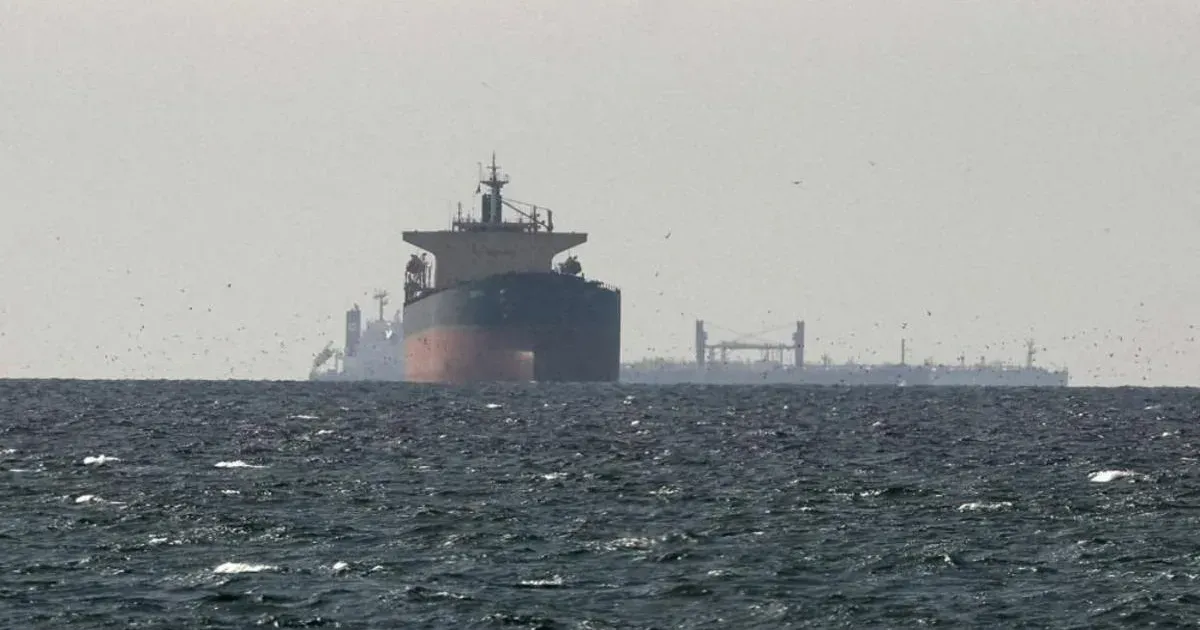
Recent US intelligence reports say Iran is unlikely to open the Strait of Hormuz any time soon because its grip on the world’s most essential oil artery provides the only real leverage it has over the US.
Economic shockwaves traveled through the global markets after a drone strike hit foreign-owned oil storage facilities west of Basra. Iraqi security sources confirmed that the drones originated from an unknown location before striking the tanks at high speed. Large fires erupted at the port city, sending black smoke billowing over the Persian Gulf. BP and Shell, which maintain substantial interests in southern Iraq, have evacuated nonessential personnel from the region. Crude oil prices jumped 8% in the hours following the news of the facility damage.
Security around the port of Basra has been tightened to prevent further disruptions to Iraqi exports. Local authorities fear that the conflict is spilling over into neutral territory to pressure global energy supplies. Iranian-backed militias in Iraq have denied involvement, yet US intelligence points to drone signatures consistent with Shahed-series loitering munitions. This is the second time in a month that energy assets have been directly targeted by airborne threats. Tanker insurance rates for the Persian Gulf have tripled since the 36 days of intensified hostilities began.
Tehran maintains a calculated posture regarding the world’s most critical maritime chokepoint. Intelligence gathered by Reuters indicates that Iranian naval forces are shadowing Western merchant vessels but have stopped short of a total blockade. Controlling the flow of oil remains the primary diplomatic tool available to the Iranian leadership. Closing the strait would likely trigger a full-scale American invasion, a scenario Tehran currently seeks to avoid. Naval patrols in the Gulf of Oman have been doubled to monitor for sea mines deployed by Iranian fast-attack craft.
Commanders at US Central Command are weighing the risks of a direct strike on Iranian launch sites. Recent losses in the air have made planners hesitant to commit more manned assets to the fight. Shipments of liquefied natural gas from Qatar have been redirected around the Cape of Good Hope to avoid the potential combat zone. International maritime organizations have issued a formal warning to all vessels operating in the North Arabian Sea. Stability in the global energy market now depends on the restraint shown by both Tehran and Washington. The current situation suggests that neither side is ready to de-escalate a war that costs $100 million daily.
Iran Shootdowns Challenge US Air Superiority
The shootdowns undermine the assumption that US aircraft can operate without severe risk in Iranian airspace. Commanders now have to weigh rescue needs, retaliation pressure and the possibility of further losses in the same campaign.