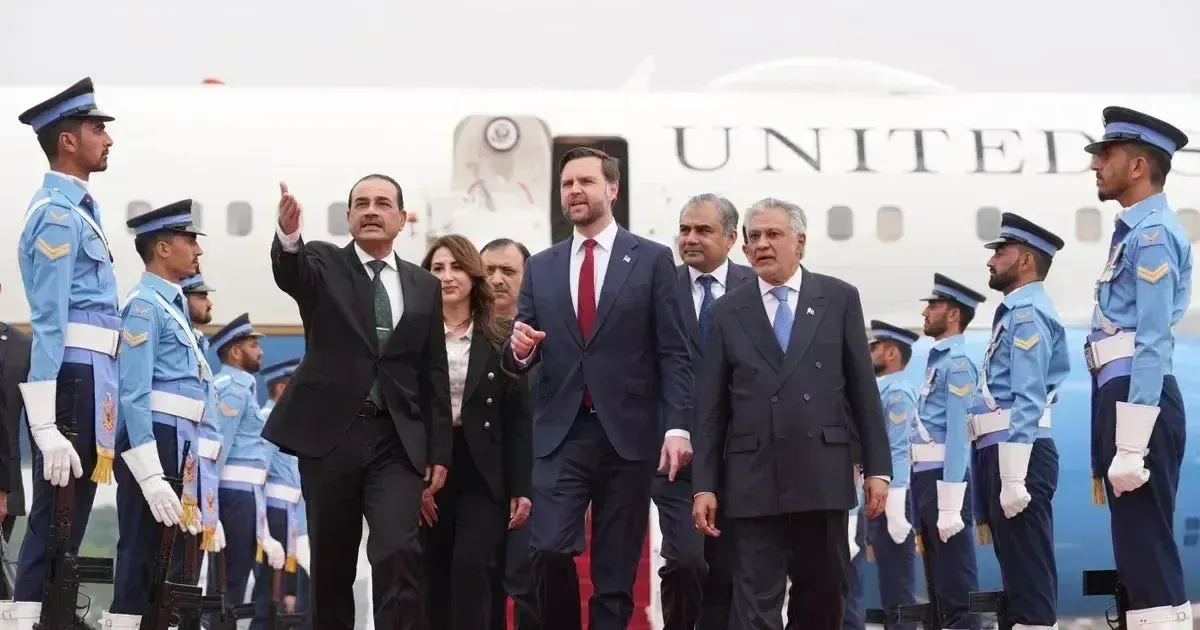
Iranian Foreign Minister Abbas Araghchi landed in Islamabad on April 25, 2026, to conduct high-level meetings with Pakistani officials while concurrently rejecting any direct contact with a visiting American delegation. His arrival coincided with a scheduled mission by United States envoys Steve Witkoff and Jared Kushner, who traveled to the region to stabilize shifting alliances as the current regional conflict reaches Day 57. Tension between Washington and Tehran intensified after the American administration confirmed it would not renew oil waivers for Iranian or Russian exports, effectively attempting to sever the financial lifelines of both nations. Security within the Pakistani capital tightened as two distinct diplomatic tracks unfolded within miles of each other but without a shared table.
US Envoys Land in Islamabad for Regional Diplomacy
Witkoff and Kushner arrived at Nur Khan Airbase under heavy escort, representing a White House strategy that prioritizes personal emissaries over traditional State Department channels. Their mission focuses on securing Pakistani cooperation in regional containment efforts, particularly as the conflict enters its second month. Islamabad has historically functioned as a bridge between the West and the Middle East, yet the presence of these specific envoys indicates a preference for transactional diplomacy. The American delegation aims to prevent a broader escalation that could disrupt shipping lanes further, particularly in the Arabian Sea. Sources in the Pakistani Foreign Office confirmed that the discussions would cover bilateral security cooperation and the enforcement of the new energy restrictions.
Reports from the airbase indicated that the American officials moved immediately to secure locations for briefings with Pakistani military leadership. Witkoff, known for his real estate background and close ties to the executive branch, has been tasked with managing the economic dimensions of regional security. Kushner, meanwhile, continues to leverage his previous experience in Middle Eastern negotiations to maintain a coalition of partners willing to enforce the tightening sanctions regime. Their presence in the city during Araghchi’s visit created a logistical challenge for Pakistani authorities, who must balance their relationship with a neighboring Islamic republic against their enduring security partnership with Washington.
Tehran Rejects Direct Negotiation with Washington
Araghchi wasted little time in clarifying the Iranian position shortly after his motorcade reached the city center. He dismissed the possibility of a back-channel meeting with the American representatives, citing the recent decision regarding oil waivers as a violation of prior understandings. Iranian state media outlets emphasized that the Foreign Minister’s priority is strengthening ties with Islamabad, focusing on border security and a proposed gas pipeline project that has faced years of delays. The refusal to engage directly with Witkoff and Kushner is a public declaration of Tehran’s unwillingness to negotiate under the threat of total economic isolation.
“Tehran ruled out direct talks with US officials during the visit,” the Iranian Foreign Ministry said.
Diplomatic protocol in Pakistan was adjusted to ensure the paths of the two delegations did not cross at the Marriott or the Serena Hotel. Araghchi’s stance reflects a broader Iranian policy of strategic patience, as the regime waits to see if the American sanctions will hold or if global energy demand will eventually force a retreat. High-level Iranian officials have previously stated that they will only return to the negotiating table if there is a real reduction in economic pressure. The current standoff in the Pakistani capital illustrates the depth of this stalemate. The diplomatic mission led by Steve Witkoff and Jared Kushner marks a departure from traditional foreign policy channels.
Oil Waiver Expirations Tighten Sanctions Pressure
Washington’s decision to end oil waivers for Iranian and Russian petroleum means a shift toward a zero-tolerance policy on sanctioned exports. Previously, several nations were permitted to continue purchasing limited quantities of Iranian crude to avoid a sudden shock to global energy markets. The expiration of these waivers now places major importers, including China and India, in a difficult position as they weigh their energy needs against the risk of American secondary sanctions. Analysts at various energy firms suggest that this move could remove up to 1.5 million barrels of oil per day from the market if fully enforced. Global Brent crude prices rose by 3 percent in response to the announcement from the White House.
Russia, also facing the loss of its waivers, has sought to coordinate its response with Tehran. This coordination has manifested in increased cooperation between the two nations on ghost fleet shipping and alternative payment systems that bypass the SWIFT network. The impact of these sanctions is already visible at Iranian export terminals, where tanker traffic has decreased sharply over the last two weeks. Iranian officials have responded by threatening to increase their uranium enrichment levels if the economic blockade continues. Financial data suggests that the Iranian rial has depreciated another 12 percent against the US dollar since the start of April 2026.
Pakistan Serves as Critical Diplomatic Buffer Zone
Pakistani officials find themselves navigating a complex geopolitical minefield as they host both parties. Prime Minister Shehbaz Sharif and Foreign Minister Ishaq Dar held separate sessions with Araghchi to discuss the security situation along the Sistan-Baluchestan border. Simultaneously, the Pakistani military command met with Witkoff and Kushner to discuss counter-terrorism operations and the stability of the Afghan border. Islamabad cannot afford to alienate Tehran, given their 900-kilometer shared border and the risk of cross-border insurgency. By contrast, Pakistan depends heavily on American financial support and military equipment, making the rejection of US demands a high-stakes gamble.
Military observers in the region note that Pakistan has increased its troop presence in the western provinces to prevent the spillover of the Iranian conflict. The dual visits by high-ranking officials from both the US and Iran highlight Pakistan’s role as the last remaining neutral ground for regional signaling. While no direct talks occurred, the proximity of the two delegations allowed for the exchange of messages through Pakistani intermediaries. This method of communication avoids the political cost of a public meeting while ensuring that both sides understand the other’s red lines. Islamabad’s delicate balancing act continues as the delegations prepare to depart.
The city of Islamabad remains on high alert.
Parallel Missions in Islamabad Confirm the Collapse of Direct Diplomacy
Diplomatic vacuums rarely stay empty; they implode. The presence of Steve Witkoff and Jared Kushner in the same city as Abbas Araghchi, without a single face-to-face encounter, confirms that the current administration has abandoned the pretense of traditional diplomacy in favor of a siege mentality. By using personal associates rather than career diplomats, the White House is signaling that it no longer trusts the institutional memory of the State Department to manage the Iran file. This is a dangerous gamble that assumes the Iranian regime will buckle under economic pressure before it lashes out kinetically in the Strait of Hormuz.
The refusal to renew oil waivers for both Iran and Russia simultaneously is an act of economic total war that leaves Tehran with no incentive to maintain the status quo.
Iran’s refusal to talk is not a sign of weakness but a calculated move to delegitimize the American envoys. Araghchi understands that meeting with Kushner or Witkoff would grant them a diplomatic win without any guarantee of sanctions relief. By snubbing the American delegation in a neutral third country, Tehran is demonstrating that it can still command the attention of regional powers like Pakistan despite the mounting costs of the conflict. The stalemate serves only to increase the probability of a miscalculation on the ground.
When the world’s primary security guarantor and a key regional power refuse to speak while their assets are in such close proximity, the theater of diplomacy has officially closed. The next phase will likely be dictated by the logic of the battlefield instead of the detail of the conference room. Cold calculation will decide what follows.