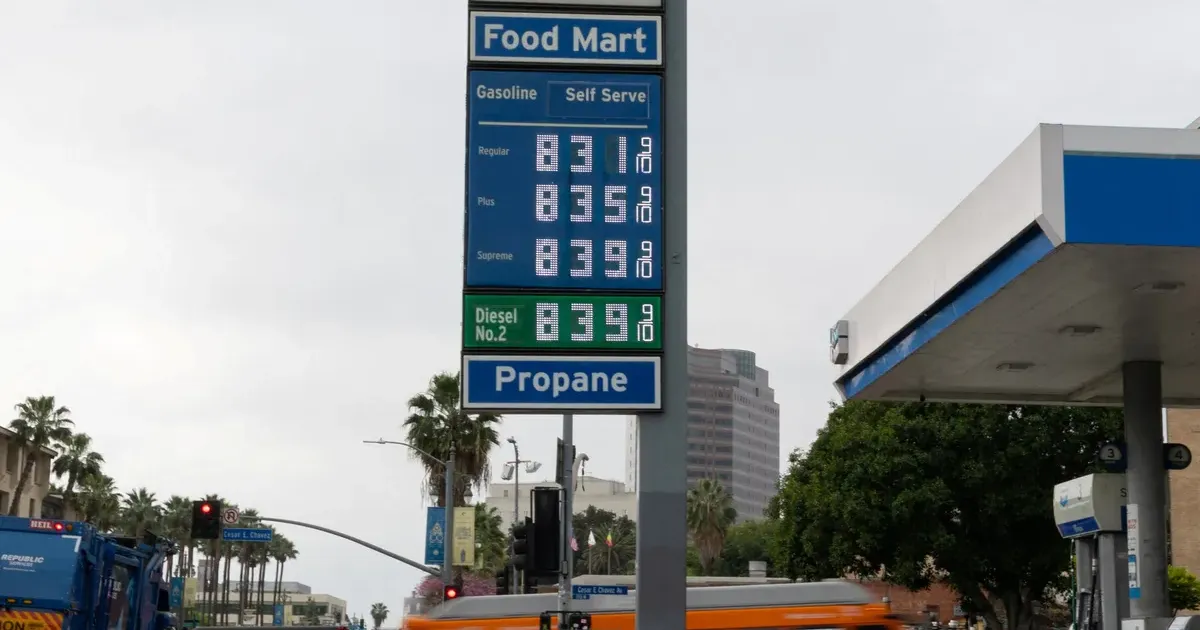
President Trump confronted a deepening political crisis on March 21, 2026, because the widening war in Iran paralyzed global energy distribution networks. Military actions involving Israeli strikes on Tehran and the subsequent retaliatory measures by Iranian forces have halted the flow of liquid natural gas and crude oil through one of the world's most sensitive maritime passages. Financial analysts are now revising their inflation forecasts upward as the costs of the conflict begin to filter through the entire global supply chain. This disruption is not merely a temporary logistical hurdle but a structural dismantling of the energy security established over the previous decade.

Israel’s precision strikes on the South Pars offshore gas field triggered a cascade of logistical failures that now threaten the stability of the Western economy. While initial reports suggested the damage might be contained, subsequent satellite imagery and field assessments indicate a total loss of production capacity in critical sectors. Matt Bauer, a commodity strategist at Ned Davis Research, noted that oil markets have largely faced logistics disruptions until now. Physical destruction of production capacity is a far more permanent threat to global price stability than simple shipping delays.

Energy experts warn that the time required to repair high-tech extraction facilities in a war zone is measured in years rather than weeks. Even a total ceasefire tomorrow would not immediately restore the flow of energy to pre-war levels. The technical complexity of the infrastructure at South Pars means that specialized components, many of which are manufactured in the West, cannot be easily transported or installed while hostilities persist. Market participants are bracing for a prolonged period of volatility.

Infrastructure Damage Slows Global Natural Gas Recovery

Qatar’s energy minister, Saad al-Kaabi, informed international observers that the attacks on regional facilities wiped out 17% of his nation's natural gas export capacity. This sudden contraction in supply has left major importers in Asia and Europe scrambling for alternatives that do not exist. Kaabi indicated that nearly 13 million tons of liquefied natural gas will remain sidelined annually for up to five years. For one, the destruction of liquefaction trains and storage tanks creates a bottleneck that cannot be bypassed by simply rerouting ships to other ports.

Productive capacity will be offline for an uncomfortably long time, meaning energy prices are likely to fall much slower than they rose.

Kyle Rodda, a senior financial market analyst at Capital.com, argues that the market has yet to fully price in the long-term nature of this infrastructure damage. By contrast, previous energy shocks were often driven by political decisions to withhold supply, which could be reversed with a single diplomatic agreement. The current crisis involves the literal melting of the machinery required to fuel the global economy. This creates a floor for energy prices that will remain elevated regardless of shifts in geopolitical sentiment.

Ships that previously traversed the Persian Gulf with regularity are now seeking refuge in neutral waters or taking the costly journey around the Cape of Good Hope. Insurance premiums for maritime freight have quintupled in the last three weeks alone. To that end, the added costs of shipping are being passed directly to consumers in the form of higher surcharges on everything from household electronics to basic foodstuffs. The maritime industry is currently operating in a state of high alert.

Strait of Hormuz Blockage Paralyzes Fertilizer Shipments

The effective closure of the Strait of Hormuz has introduced a secondary crisis that threatens global food security. Natural gas is the primary feedstock for nitrogen-based fertilizers, and the region is responsible for a staggering portion of the world's seaborne supply. Roughly one-third of global fertilizer exports and nearly half of the world's urea supply pass through this narrow waterway. Any vessel currently carrying these essential agricultural inputs is effectively trapped behind a naval blockade.

American farmers are entering the spring planting season with dwindling stocks of essential nutrients for their crops. According to the American Farm Bureau, those who did not pre-order their fertilizer supplies months in advance are now facing shortages and price gouging. Lower crop yields are a mathematical certainty if farmers cannot access the chemicals needed to nourish their fields. In fact, the ripples of the Iran war are moving from the gas pump to the dinner table with alarming speed.

Still, the impact is not distributed evenly across the globe. Developing nations that rely on spot-market purchases of fertilizer are being priced out by wealthier states that can afford to pay a premium for limited supplies. The competition for basic agricultural inputs could spark civil unrest in regions already struggling with food inflation. Small-scale farmers in sub-Saharan Africa and Southeast Asia are particularly vulnerable to these price spikes.

European Union Navigates Low Gas Reserves and Market Pressure

Across the Atlantic, Dan Jørgensen, the European Energy Commissioner, has urged member states to adopt a strategy of extreme flexibility to prevent a total energy collapse. European gas reserves have plummeted to under 30% of capacity following a colder-than-average winter. The level is the lowest seen since the initial energy crisis of 2022. Jørgensen has requested that countries lower their mandatory storage refilling targets from 90% to 80% to ease immediate price pressure.

Lowering these targets is intended to stop the frantic bidding wars that occur when every nation tries to fill its tanks at the same time. Yet, the strategy carries significant risk. If the next winter proves equally harsh, a 80% storage level may not be sufficient to keep homes warm and factories running. European governments are forced to choose between current economic pain and future energy insecurity. The EU Gas Storage Regulation allows for this flexibility, but it does not create new gas out of thin air.

Meanwhile, the European Commission is encouraging an early start to the refilling process to avoid an end-of-summer rush. By spreading out purchases over several months, officials hope to stabilize the market. Separately, some member states are pushing for a return to coal or an extension of nuclear power plants to bridge the gap. These internal debates are straining the political unity of the bloc.

Economic Disruption Reshapes Republican Midterm Election Strategy

Domestic politics in the United States have been upended by the rising cost of living associated with the conflict. Voters who initially supported the administration’s hardline stance on Tehran are becoming increasingly frustrated with the price of gasoline. Democrats have seized on this discontent, attempting to tie the economic pain directly to the White House's foreign policy. The Republican message of affordability and fiscal responsibility is being drowned out by the daily reality of five-dollar-a-gallon gas.

In turn, GOP strategists are struggling to pivot their messaging toward national security and the necessity of the war. They argue that the long-term threat of a nuclear-armed Iran outweighs the temporary economic discomfort. Even so, internal polling suggests that economic concerns are the primary driver for independent voters in swing districts. The upcoming midterm elections will serve as a referendum on the administration's ability to manage a global crisis without bankrupting the middle class.

Public opinion is shifting as the war moves from the television screen to the wallet. While the initial strikes were met with a patriotic surge, the reality of a prolonged conflict is setting in. The political cost of the war may ultimately be higher than the military cost. Every cent added to the price of fuel is a potential vote lost for the incumbent party.

The Elite Tribune Perspective

Military planners and White House advisors frequently fall into the trap of believing that modern warfare can be surgically detached from the global economy. The current devastation in the Persian Gulf proves that there is no such thing as a localized conflict in an interconnected world. By targeting the energy infrastructure of a major producer, the coalition has effectively self-sanctioned the global West. The arrogance required to assume that 17% of the world’s gas capacity could be removed without consequences is staggering.

We are seeing a repeat of the policy failures that defined the early 2000s, where the enthusiasm for regime change blinded leaders to the inevitable economic blowback. If the goal was to weaken Iran, the result has been a self-inflicted wound that empowers our competitors in the East who are more than happy to provide alternative, albeit more expensive, energy routes. The American voter has little patience for grand geopolitical maneuvers that result in their inability to afford a commute to work.

President Trump’s gamble that the public would trade their standard of living for a vague victory in the Middle East is looking increasingly like a terminal political error. There is no victory in a war that leaves your own citizens cold and hungry.