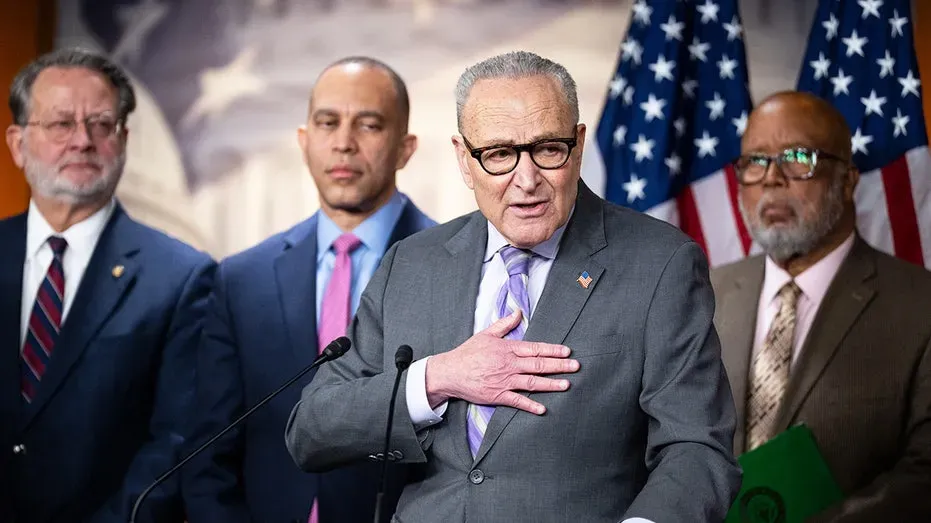
Senate Majority Leader John Thune confirmed that the Department of Homeland Security will remain shuttered after a fifth failed vote to restore agency appropriations. Failure to reach a consensus in the upper chamber has pushed the funding lapse into its 35th day, matching the second-longest government shutdown in American history. Republican leadership had failed to peel away enough opposition votes to bypass the filibuster, leaving the primary national security apparatus of the United States in a state of partial paralysis. Financial constraints are now hitting the essential services that millions of citizens rely upon for travel and domestic safety. Senate Democrats' rejection hardened the Homeland Security funding fight. Lines at major international airports have transformed into logistical nightmares as security protocols slow to a crawl. Thousands of federal employees are now facing their third consecutive week without a paycheck, yet they are mandated to report for duty under essential personnel designations. Republican senators argue that the continued resistance from across the aisle is a deliberate attempt to undermine border enforcement. To that end, the legislative floor has become a theater of procedural roadblocks and bitter recriminations. Democratic leadership maintains that the current bill is a non-starter because it includes unconditional funding for detention and deportation efforts. Still, the impact on the ground is undeniable as the Transportation Security Administration struggles to staff checkpoints. Reports from travelers at Hartsfield-Jackson Atlanta International and O'Hare International indicate wait times exceeding four hours during peak periods. Such delays are only the most visible symptom of a much deeper institutional rot caused by the fiscal impasse.
Senate Minority Leader Chuck Schumer has repeatedly asserted that his caucus will not provide the votes necessary for any bill that maintains current Immigration and Customs Enforcement policies. He and his colleagues have attempted to introduce standalone measures designed to pay airport screeners and Coast Guard members while leaving the more contentious border funding for later debate. Republicans have consistently swatted these proposals down, viewing them as a tactical maneuver to strip away the leverage needed for border security. This stalemate ensures that the agency responsible for everything from cyber defense to counter-terrorism remains underfunded.
According to John Thune, the Democratic stance is dictated by an activist base that is increasingly hostile toward the very existence of immigration enforcement. He described the situation as a refusal to respect the standard appropriations process. Thune told reporters that the legislative process is being held hostage by fringe demands that do not reflect the safety concerns of the broader public. Even so, the numbers required to break the deadlock remain out of reach for the Republican majority. The current impasse has no clear expiration date. Security experts express growing alarm over the degradation of morale within the Department of Homeland Security. When federal agents work without pay, the risk of insider threats or simple fatigue-related errors increases exponentially. In fact, two recent shootings in the domestic interior have heightened the sense of urgency, though that urgency has yet to translate into a legislative breakthrough. Negotiators spent most of the day trading blame rather than exploring new compromises.
Airport Security Operations Face Mounting Pressure
Travelers are the first to feel the sting of the political gamesmanship in Washington. TSA agents, many of whom live paycheck to paycheck, are starting to call out of work in record numbers, citing financial hardship that prevents them from even commuting to their shifts. By contrast, the administration continues to insist that the border mission must take priority over administrative convenience at airports. This prioritization has led to a funneling of resources that leaves other agency components dangerously thin.
But the logistical strain is not limited to the terminals. The Coast Guard is also operating on a skeleton budget, impacting maritime drug interdiction and search and rescue missions. For instance, several patrol deployments in the Caribbean have reportedly been scaled back to conserve fuel and supplies. These operational shifts go largely unnoticed by the general public until a crisis occurs at sea. Meanwhile, the political rhetoric in the capital remains focused on the optics of the southern border.
Funding for the Cybersecurity and Infrastructure Security Agency is also caught in the crossfire. As foreign adversaries continue to probe American power grids and voting systems, the agency tasked with defending them is operating with limited administrative support. Yet the debate in the Senate remains fixated on the number of beds in detention centers rather than the resilience of the national digital infrastructure. For one, the lack of a formal budget prevents the long-term planning required to counter sophisticated state-sponsored hacking groups.
Immigration Enforcement Reforms Stall Negotiations
Disputes over the operational mandate of ICE are the central friction point in this 35th day of the shutdown. Democrats are demanding significant reforms to how the agency handles asylum seekers and a reduction in the total number of detention facilities. Republicans view these demands as an attempt to implement a de facto open-border policy. Because neither side is willing to blink, the department is still a shell of its former self. To that end, the White House recently characterized a Democratic counteroffer as an unserious attempt at negotiation.
Thune argues that the Democrats are beholden to their base, which is screaming for the defunding of enforcement agencies. He suggests that this internal party pressure has made it impossible for Schumer to reach a sensible middle ground. Separately, the administration has signaled that it will not accept any deal that reduces the number of enforcement agents on the ground. This refusal to compromise on personnel numbers has effectively frozen the talks.
Pressure is building from within the Republican caucus to find a way out of the crisis. Some moderate members are quietly expressing concern that the longer the shutdown lasts, the more likely the public will blame the party in power for the resulting chaos. In turn, the Democratic strategy seems to be one of attrition, waiting for the public outcry over airport lines to force a Republican surrender. The result is a total cessation of meaningful legislative work on any other topic.
Tom Homan Leads High-Stakes Border Czar Meetings
During the public bickering, Tom Homan has taken a lead role in trying to find a technical solution to the funding gap. The border czar held a second consecutive day of meetings with Senate appropriators on March 20, 2026. Homan is known for his hardline stance on enforcement, but his presence in these meetings suggests the administration is looking for a way to translate its policy goals into language that might peel off a few moderate Democratic votes. He is acting as the primary liaison between the Oval Office and the Capitol. homeland-security funding fights expose the gap between border rhetoric and governing arithmetic. Rejecting a package is easy to message; replacing it with a durable coalition is harder.